Assassin’s Creed Origins: The Hidden Ones Review

ACOrigins_2018_03_25_18_41_17_709.jpg

Developer: Ubisoft Montreal; Publisher; Ubisoft

Release Date: January 23rd, 2018; Reviewed On: PC

PC Specs: Core i5-3500 3.2GHz; 16 GB DDR4 RAM; Gigabyte GTX 1070 8GB


Assassin’s Creed Origins: The Hidden Ones adds a 10-hour chunk of additional content to the base game’s progression, although it doesn’t offer radical improvements or unique content that can’t be found across the vast map of ancient Egypt. With a short and simplistic premise to its plot, the Hidden Ones lacks the surprises I’ve seen in the original main questline, however I wouldn’t call the story here boring by any particular standards. Along with a new region, The Hidden Ones brings the same activities from the main game: treasure locations, enemy camps and side quests are plentiful, and once again, revealing the map is done by entering a region. The Sinai oasis doesn’t differ much in types of biomes present on the map from the base game, however it is a significantly more mountainous region which sometimes necessitates more climbing than one would like. All in all, it is more of the same like the main game, which isn’t necessarily a bad thing as Origins is an excellent game to begin with, but The Hidden Ones perhaps plays it too safe for the most part, and won’t offer players any radically new content. But if you wanted more of Assassin’s Creed: Origins, then The Hidden Ones offers a new plotline spread across Sinai’s 3 sub-regions and with added exploration and side questing, offers around 7-10 hours of additional content for the game’s fans to enjoy.
20180325184336

The Hidden Ones takes place 4 years after the conclusion of the main plot, and tasks Bayek with travelling to the Roman-controlled peninsula of Sinai to assist the Hidden Ones (or the Assassins’ Brotherhood in this game) in distress. The plot’s premise starts fairly basic, with 3 main targets to eliminate from the offset across 3 main quests (which I should add are very generous with the amount of XP they reward the player with), and then grows a little more through a few additional quests that lead to the head of the 3 main bosses from before. There are few surprises along the way, and the Hidden Ones has some interesting twists, but other than that, it is a very familiar structure to the base game, but the plotline is much simpler. The recommended starting level for the Hidden Ones is level 38, which only takes a few levels to get to upon completion of Origins’ main plot, however I’d point out that the best time to start this DLC Is around level 40-41. The main quests go from level 39 to level 43 in a quickly manner, so some might want to start the DLC at a later point in character progression, as enemy camps usually feature enemy captains at +2 levels than the main character, at least in my playthrough.

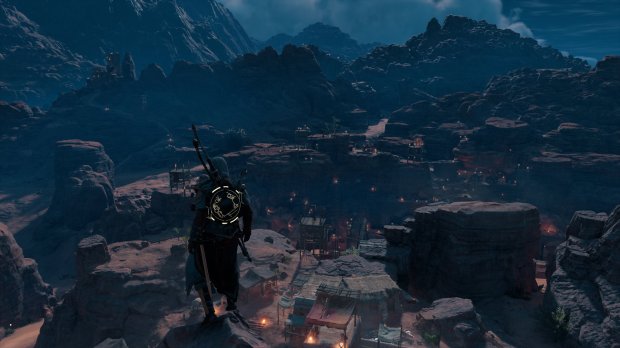
The new region of Sinai is comprised of 3 sub-areas, with 2 village settlements and numerous unknown locations to visit, which range from destroyed temples to large-scale Roman citadels up in the mountain ranges. Visually, the location is no different from any other region in AC Origins, although due to the base game’s vast diversity in regions, the DLC feels rather bland given its made up of mostly mountainous regions. These might be minor complaints, but considering it is a DLC piece, smaller diversity would be expected. No major cities exist in this region, which feels a bit like a step back as there is no detail to be found in the game’s settlements apart from the vastly-detailed temple in the upper settlement on the map. Still, given that the following DLC Curse of the Pharaohs features a large-scale city, as well as plenty of supernatural elements. The Hidden Ones plays by the book: kill 3 bosses followed by eliminating their over-arching leader. As I’ve mentioned above, the Hidden Ones doesn’t offer anything radically new to the player, however it is still a solid piece of additional content for those who may want to enjoy more of the Origins gameplay but have completed 100% of what the game had to offer.
20180326174937

The exploration aspect still remains interesting, as are additional quests the player can pick up to level up before the next main quest. There are still quite a few question marks to find across the region map and many enemies to fight along the journey. The enemies are exclusively Romans, however enemy diversity is still all accounted for, ranging from weak archers and topping out with giant guards with towering shields. The tension of infiltrating enemy camps in stealth still remains, especially if you aim to avoid detection entirely, and increases when you do screw things up. Combat requires precision and skill just like before, but in a fort, you’re sometimes bound to be stuck up against 7 enemies with shields along with a group of lesser foes (it happened to me once and I barely avoided getting killed). The Hidden Ones really doesn’t differentiate much from the base game, and while it does offer a few more hours of plot and the same exploration and challenges of the base game, this DLC plays it completely by the book, which is still not a bad thing. There isn’t much else that comes to mind when talking about the Hidden Ones, and it is just a short chunk of content for those who wanted more of AC Origins, which brings me to wrap up this review.

20180325192225

The game’s Photo Mode allows to capture some incredible screenshots

Despite some complaints I have with the Hidden Ones, it is a very well-rounded piece of additional content to enjoy, and completing its additional tasks is still as interesting as before. Side quests are designed in the meaningful way, which is where AC Origins really shines, and very few include the annoying escort quests we’ve come to expect from Assassin’s Creed, however NPCs in this title certainly have the courtesy to match the player character’s pace. The new region doesn’t offer anything new at all, and looks quite the same as the base game’s biomes, but it is not a bad thing for a small DLC pack. The region of Sinai still packs plenty of enemy camps and different tombs to explore, and with all side questing, takes roughly 7-10 hours to complete that counts as a considerable chunk by usual DLC standards. All in all, it’s worth getting if you really enjoyed Origins and there is plenty of content on offer for the price, but don’t expect it to offer any radical improvements or the mystique plot available in Curse of the Pharaohs. While the Hidden Ones plays everything safely by the book, it still succeeds at what Origins did best and that is never a bad thing if you did enjoy Origins. It’s a decent chunk of additional content that offers more of the same, but given how well the base game has been made at the start, I’d take more of AC Oigins anytime and would recommend it to others.

StarCraft Remastered Review – The Definitive Way to Experience the original Brood War

StarCraft_2018_03_22_00_14_10_426.jpg

Developer, Publisher: Blizzard Entertainment

Release Date: July 30th, 2017; Reviewed On: PC

PC Specs: Core i5-6500, 16GB DDR4 RAM, Gigabyte GTX 1070 8GB


StarCraft Remastered feels instantaneously familiar to those who would have sunk hours into the original Brood War 20 years ago, and through an extensive set of visual upgrades, Blizzard has improved significantly upon the game without altering its gameplay formula. It may be a hard sell for new players, given the continued success of StarCraft 2 on PC throughout the 8 years of its existence and Blizzard showing no intentions to stop with the updates, but StarCraft Remastered offers something different: a chance to experience a popular PC classic running on modern systems with support for up to 4K resolutions. The Remaster offers a plethora of visual improvements, all of which serve to enhance player experience, however the gameplay was left completely unchanged, which in some cases can serve to StarCraft’s detriment more than its advantage. Seeing a similar design philosophy, few differences can be drawn between StarCraft Remastered and its original release apart from visual upgrades, although the excellent execution of the re-release makes it a definitive version to experience, and frankly, StarCraft Remastered proved to be a large success as Blizzard still tends to enjoy an expansive fan following. StarCraft Remastered is not ideal, and drawing comparisons with StarCraft 2, the gameplay left me with something to be desired, however with that said, StarCraft Remastered is a perfect nostalgic trip into my childhood, which makes the flaws apparent in this version barely noticeable as it would for many players.

StarCraft_2018_03_22_00_15_12_117.jpg

Texture detail is noticeably sharper

StarCraft Remastered looks about as good as you’d expect from a sprite-based real-time strategy, and even sharper textures do not mitigate the outdated visuals. Despite that, the improvements are sharply noticeable, from extensively improved detail in the units and buildings to smooth sailing 60 fps framerate. Those improvements alone make the game worth its retail price, and while the original Brood War has been updated to support modern systems and is available as a free download, the two experiences share little in common overall. StarCraft remastered of course offers extensive resolution options that match modern standards and is certainly far more enjoyable in full screen mode, while the increased framerate additionally benefits the gameplay to a significant extent. The completely original gameplay, on the other hand, leaves some improvements to be desired in places, such as AI pathfinding or the ability to control more than a dozen units at a time, however preserving the original Brood War experience in full was perhaps the leading idea here. Frankly, the remaster proved to be quite successful, and Blizzard’s expertise shows through and through when comparing the updated release side-by-side with the original. Add in an updated multiplayer mode with fairly stable servers and a proper ranker ladder system, and StarCraft Remastered is the definitive gateway to experience the original game, which surprisingly aged quite well for a sprite-based RTS.

The extensive array of visual improvements is immediately noticeable, and StarCraft Remastered’s graphics convey that most effort has been directed toward this part of the game. While if won’t offer an extensive menu of options we’ve come to expect from all major PC releases, StarCraft features all modern resolution options for visual scaling, and given its age, the game is not a particularly demanding system hog. With an additionally upgraded framerate, StarCraft Remastered runs incredibly smoothly, and comparing with the original version, this is one of the best improvements overall. While the original gameplay doesn’t exactly demand fast response times, the better framerate is a nice feature to see, and a fluid 60 fps is a significant leap forward from the sluggish-feeling original. Texture detail shows a significant improvement as well, and the increased resolution of assets allows to see the units in much sharper image quality than before. Pitting the remaster against the original reveals extensive graphical improvements, although in 2017/18, the game has no hope of visually competing with other major releases, but then again, that wasn’t the point. Although these two improvements are major centers of attention in StarCraft Remastered, digging further reveals additional visual improvements that can be quite pleasing for the eye. Character models in briefing screens have seen significant remodeling, and instead of static images, these are now fully-rendered 3D objects, and among other non-significant improvements, add to the overall flare of the game. Again, StarCraft Remastered is not bound to impress anyone despite its upscaled visuals, but significant effort shows throughout to demonstrate Blizzard’s continued dedication to this series.

StarCraft_2018_03_22_00_15_41_933.jpg

Game systems remain completely identical to the original, and while StarCraft Remastered feels significantly behind its successor in terms of pacing, one has to consider that Blizzard didn’t just opt to release the original’s campaigns in StarCraft 2’sengine. The gameplay holds up quite well, making the game just as challenging and addicting as before, except now you can battle it out with other players online once more. To some extent, offering no improvements whatsoever serves to the game’s downside, and the AI’s glitchy path finding in particular leaves something to be desired, as larger groups of units can easily get stuck around base structures. At the same time, the remaster abides by the “don’t fix if it’s not broken” rule, and frankly, few things needed to be fixed with the game 20 years ago in the first place, which indicates just how well the original design holds up in modern gaming. StarCraft Remastered succeeds in completely preserving the original’s core game experience, which can be attributed to fan feedback over the years, and while similar gameplay is found in the original, the remaster is absolutely the definitive edition of the game to experience. There are still some issues present with the original gameplay, however, and the army selection size could have been much bigger than a dozen units at a time like it is in StarCraft 2, which feels really awkward here when controlling massive groups, but for the sake of retaining the original gameplay, it doesn’t detract by a lot from gameplay. And while the move to avoid gameplay change can be questionable, as some elements could have brought this already-excellent game up to par with modern strategy titles, however the original game works well with Remastered graphics, and StarCraft: Brood War remains one of the best RTS games on the PC platform.

The original Brood War’s gameplay remains intact in the remaster, although feels somewhat slow by modern RTS standards. Just like its successor, StarCraft pits zerg, terran and protoss against one another in melee, custom, or free-for-all matches, with a full-feature campaign that is quite worth playing. All of the original game’s maps made it into the Remastered release, and there is a lot of diversity to be found in maps, which range from 2 to 8 players and some even have unique attributes. Compared to StarCraft 2, the original’s game mechanics are far less streamlined and micromanagement intensive, although the strategic element remains in full, with plenty of variety in unit builds to change up the gameplay. StarCraft Remastered’s additional improvements include a simple, but effective multiplayer ladder, which ranks players among multiple leagues similar to what’s on offer in StarCraft 2. While it may not be an extensive overhaul some hoped, the fact players can still enjoy the vanilla StarCraft experience on stable servers speaks of Blizzard’s dedication to the massive e-sport title and even StarCraft 2 is now almost a decade old. With all improvements combined, StarCraft Remastered proves to be the definitive version to experience the original game, and both improved graphics and original gameplay make it a fun RTS to play versus AI or other players.

StarCraft_2018_03_22_00_23_13_736.jpg

StarCraft Remastered doesn’t change the original’s formula to any extent, and fans of Brood War will certainly appreciate playing the newer version. While the original StarCraft can still be enjoyed on modern systems and is available as a free download, the remaster streamlines the experience by bringing improved graphics, increased framerate and updated multiplayer components. With an admission price of under $20, it isn’t a hard sell, and while newcomers might want to be cautious coming to this title from StarCraft 2, fans will appreciate the original experience that’s been preserved in a better visual package. The gameplay shows its age, and won’t be for everyone, especially as its much less fluid than StarCraft 2’s game mechanics, but if you grew up on the original StarCraft and Brood War, then I can definitely recommend StarCraft Remastered. It is the best way to currently experience the game, and modern resolution scaling with a smooth 60fps make the game look fairly decent on computer screens. Blizzard’s decision to preserve the original gameplay ultimately paid off, and while even I prefer the streamlined features of StarCraft 2, the remastered edition still puts me on a nostalgic trip into my childhood. And 20 years following its release, the original StarCraft is still a fan-favourite and holds up really well among modern games with the Remastered edition.

Assassin’s Creed: Origins Review

ACOrigins_2018_02_24_12_40_40_252.jpg

Developer: Ubisoft Montreal, Publisher: Ubisoft

Published: October 27, 2017, Reviewed On: PC

Tested On: Core i5-6500 3.2 GHz, 16 GB DDR4 RAM, Gigabyte GTX 1070 8GB, Windows 10


Assassin’s Creed: Origins is a major reinvention the series desperately needed, and by taking an extra year to work on the template, Ubisoft has brought us something that both feels very familiar, but also completely fresh. They essentially gave us a full-on RPG experience that both integrates well into a large map and the series’ staple game mechanics. This direction is something Assassin’s Creed needed and after 30 hours of rigorous game testing, I can easily say this is the best direction the developers could have possibly chosen. The map’s scale easily compares to the likes of Witcher 3, and unlike the similarly sized Ghost Recon: Wildlands, Egypt is filled with major cities along with unique landmarks of its era. Ubisoft kept modern elements of the series, which I feel was unnecessary with the new RPG focus, but game forces too few of those sections upon the player, which evens out the negatives. On the overall, Assassin’s Creed: Origins is a superb game experience and the series is back in action with an entirely new entry.

20180215153343

The new direction is very welcome for the series and Assassin’s Creed: Origins is not a full-out role-playing game. Provided I have only played a fraction of what the RPG games market has to offer, Origins still plays really amazing and its personally my second favourite RPG game after the stellar Witcher 3. The game’s expansive world provides hours upon hours of content, and after more than 30 hours in, I have yet to discover half of what the ancient Egypt setting has to offer. Bayek’s story is a blast to follow despite some minor issues reflected in poorly written dialogue, and Assassin’s Creed: Origins combines its story, gameplay and world into one excellent package to rank among the best RPGs to have come out in the recent years.

The beauty of ancient Egypt is gorgeously reflected in this game, which benefits the most from running on a high-end PC rig. The level of detail is stellar, and unlike Ghost Recon: Wildlands’ map, the world in Assassin’s Creed: Origins is filled with tons of secrets and explorable tombs. In a sense, the game notably combines the elements from Tomb Raider, Far Cry, Assassin’s Creed and The Witcher series into the one quality release, and because it combines those gameplay traits masterfully, Assassin’s Creed: Origins is not a bad game for doing so. Origins also retains a lot of gameplay elements we’ve come to know from the series, with signature climbing and parkour, although movement here feels more fluid. Speaking of climbing in the graphics section, the draw distance in Origins rivals that of Wildlands and Witcher 3, and its detailed cities further represent the high level of detail. If you can maxx out the settings in full, the game will look stunning, however if you intend to go for anything like 4K, a GTX 1080Ti if not 2 will be required.

20180220221355

AC: Origins features some large-scale cities

Two major elements have been overhauled in this release in the series: exploration and combat. Exploration is much more meaningful now, and you no longer go by revealing icons on the map after climbing viewpoints. Those are still present, but only reveal side quest markers and an array of question marks on the map. Discovering those feels familiar to those who played Skyrim and The Witcher 3, with exploration that feels refreshing for the Assassin’s Creed series. You never know what you’ll find at the next question marker: it might be a ruined temple full of loot or could be an enemy camp, which can sometimes be a few levels higher than the player. This diversity ensures the player would never get bored of exploring the world of Ancient Egypt and Assassin’s Creed: Origins has nailed the authentic RPG feel I’ve come to expect from the likes of Witcher 3 and once again, I find that the move into the RPG territory proved highly successful.

The second, and objectively the most important part is the combat. While Assassin’s Creed: Origins retains most of the series’ signature exploration gameplay outside of combat, the latter feels much more challenging than the hit/counter combat of older games, and also fresh, well at least for the series. Through multiple weapons, fast and strong attack mechanics and dodge/parry, Assassin’s Creed: Origins felt immediately familiar to me after playing many action RPGs; but although its familiar to me and would be to many, these elements offer a fresh start from the repetitive counter-combat we’ve seen out of every Assassin’s Creed game prior. The new combat is a fresh direction for Assassin’s Creed, and I hope the trend follows with its sequels which should ideally now be coming out every 2 years if Ubisoft intend to build upon the strong success of Origins.

20180213140540.jpg

The size of Egypt’s map is absolutely enormous, and with recent entries Ubisoft is gearing up to release massive open worlds for many of their major series. While Ghost Recon: Wildlands didn’t exactly make its open world engaging in any way, or fun for that matter, Origins’ RPG style yet again plays to its favor. After 30 hours in, I still have to discover half of what the entire world has to offer (plus 2 new areas in the released DLC content) or even venture into completely unknown areas. In theory, you can explore the entire world of Origins from the get-go, however regions are broken down by player level required and many require level 30 and above. This is partly the fault of the game’s progression system which I will touch on later, but the player could at least explore these regions at their leisure and many of those would be helpful to see through the game’s Adventure mode if you want to reveal them right away. At the same time, gradually unlocking the map remains fun due to a gratifying feeling of exploring new areas as the game progresses. I have a little under half a map left exploring under my belt and I remain excited to visit and discover these new areas. The organic map discovery is what makes spending upwards of 60 hours on this game a good value proposition, and as previously mentioned, having to then travel to each point of interest from discovering a fast travel point is more refreshing than having all points revealed right away. This design is a huge improvement over the traditional Ubisoft open-world gameplay formula and I’ll be hoping Ubisoft incorporates the specific world design of Assassin’s Creed: Origins into their future titles. Also, can we please see an open-world game out of the next Splinter Cell sequel?

The story in Origins begins as a simple revenge tale, and soon develops into a structure similar again to Ghost Recon: Wildlands. Seriously, how many similarities can these games share? One’s a tactical shooter and the other is an RPG on the opposite side of the gaming spectrum but somehow Origins shares more in common with Wildlands than even its predecessors. Then again, it seems Ubisoft is starting to reinvent its games with the new Ghost Recon. Besides any of that, the story has very solid writing, and eliminating targets is only a part of Bayek’s long journey to avenge his song, get involved in Egyptian politics and even establish an assassins’ brotherhood while he’s at it. As my review is coming quite late, I don’t see why I can’t spoil some of the game as I’m sure many would have played this game already. The story is quite interesting too and rivals that of Black Flag, the Assassin’s Creed game that was the most fun in the last many years.

20180212114248.jpg

Side quests really shine as well, and a few can even be the strongest points of the whole game or at least highlights. Like this one fort that took me hours to beat even when I was 5 levels above the quest level involving that location. While not exactly interesting, its certainly memorable in my case. But there can be other prolonged quests that have multiple stories hidden behind them: a simple search for someone for example may land Bayek exploring an ancient pyramid – quite an abrupt change I would say. Many others may take a while to complete, and don’t be surprised to find quests that last many hours, however they can be extremely diverse and fun and also allow one to learn more about not just the world, but specifics such as Egyptian politics with Greece and Rome, poverty and bandit raids. Many in Egypt seem to be heavily oppressed by one thing or another, but I still found it fun to complete all of these side quests for that sometimes necessary XP. Sometimes Bayek ends up a few levels below the recommended level for next story quest, which can force a bit of a grind and is a slightly annoying feature when those who prefer story quests would want to play through the game. Yet again, since side missions are generally diverse and most are not boring, I don’t mind having to do something new instead of following a somewhat predictable storyline. Paired with enjoyable gameplay, Assassin’s Creed: Origins still remains fun after I’ve put 30 or so hours in.

It would be redundant for the reader to hear yet again about the revamped combat for the series, so won’t touch up on that in this category. The remaining elements that consist of previous Assassin’s Creed gameplay mechanics provide a nice blend to the new RPG combat, although some tweaks are noticeable as well. The climbing is much more fluent and some segments may require more running skill than we’ve come to expect from the series. Leaps of faith are still quite present, as well as sometimes annoying Animus segments. The modern story continues to be boring so I won’t discuss it, but this time the interruptions from Bayek’s journey are minimal. Assassin’s Creed: Origins is still partially a stealth game, which blends nicely with the RPG combat as I still have gameplay choices. I could stab everyone quietly in the camp to take over or I could watch my new swords easily slice up enemies as I just walk into a fight inside. There were a few nice touches such as ship combat segments taken out of Black Flag, but I didn’t find them as fluid or satisfying due to the simple fact they were rather short linear stories. As such, while Assassin’s Creed: Origins got rid of major issues found in its predecessors but retained a lot of gameplay from previous entries in the series, it also introduced a lot of new elements which in the end make a perfect blend between an RPG and the old-fashioned stab-em-up of Assassin’s Creed.

ACOrigins_2018_02_24_12_41_52_996.jpg

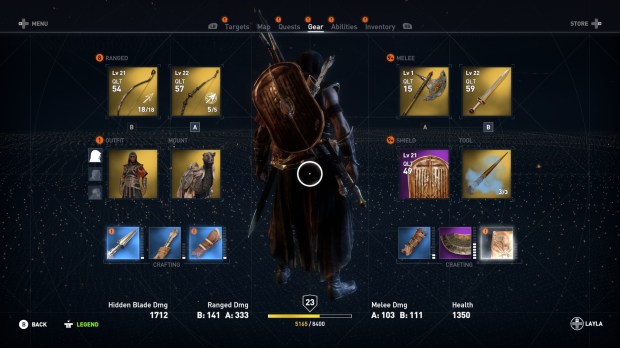
The game’s progression is often at odds with itself and serves as one of the game’s only weaker points. The skill system is not particularly impressive, and few skills actually make a difference or introduce a new combat system. For example, leaping shot is a great skill to have with ranged weapons, but there are far too few interesting ones in the game’s large skill tree. Most skills just offer a boost to XP or money earned and those incremental improvements don’t exactly serve justice to an otherwise stellar RPG. Levelling up is also fairly uneven and I often found myself checking off multiple side quests before I could proceed to the next story mission. As in any other RPG, player levels are earned through exploration, combat and questing and each quest features a suggested level. Gear is also broken down by levels and new loot is tailored to the current player level, although Assassin’s Creed: Origins enables to upgrade most weapons to continuously keep them in the inventory, which I found neat for my legendary weapons acquired with the DLC pack. But seriously, it’s a little bit cheating if you use those. The loot system is fairly generous with high-end or legendary weapons as well, and it’s always useful to keep at least one weapon of each type available – some combat encounters can be best taken on with specific weapons. Collecting loot adds to the fun of the game and kept me engaged throughout my entire playthrough, which is something every RPG needs to have and Assassin’s Creed: Origins otherwise delivered apart from its uneven progression.

What I really appreciated with the loot system was the diversity of weapons it gave me: 4 types of bows, dual swords, regular swords, dual-handed axes, sword and shiel, etc. This shows greater emphasis on player choice and there’s a fair bit of diversity in how the weapons handle plus the combat is extremely satisfying with meaningful hits and executions as in the Witcher 3. The combat’s flow has been designed really well and the screen never gets too busy with action, although the field of view is limited to the disadvantage of the player and its very easy to miss attacks incoming from off the screen (which is how I died a lot of painful times). While a minor issue, a field of view slider wouldn’t hurt or tilt of the camera can be changed to provide both deeper player immersion and eliminate some of these glaring issues. Assassin’s Creed: Origins also avoids the repetition seen in most Ubisoft games and while many exploration elements and travel time can be considered boring, it is all part of the game experience.

20180225195411

Assassin’s Creed: Origins also packs a few interesting features, such as its built-in photo mode that is easily activated by pressing down on both sticks of the controller. It’s a neat trick when you are doing reviews or want to share screenshots with others and while the mode is simple, it didn’t disappoint in taking high quality shots. The camera can also be rotated freely which provides for some great shots of the game’s environment, however its worth noting that the mode is only limited to Egypt and can’t be activated during the modern times. The game’s exploration mode has also been talked about a lot, and comes as part of 3 DLC packs available to download for the game. This mode removes all combat out of Origins and adds commentary about the game’s locations and historic context – it’s basically for those who want to take a break from all the action and enjoy a relaxing game. The other two content pieces – The Hidden Ones and Curse of the Pharaohs I’ll be fully reviewing in the future so they will get their own separate articles.

Assassin’s Creed: Origins gave the series a fresh breath it needed and has established the franchise as a fully-featured RPG which served greatly to its benefit. The overhauled combat is a nice change from previous entries and the RPG focus really shows through progression, questing and the plot. Origins is really enjoyable to play and offers us a setting many have wanted for years with its enormous map of Ancient Egypt. The plot is not complex, but side quests serve to further flesh out the lore of the game’s story and its world, and give players something diverse to do from the main plot. Mission design is executed perfectly for the most part and Assassin’s Creed: Origins offer more player freedom than ever thanks to its multiple weapons and the RPG-style combat. Ubisoft succeeded with reinventing the series and Assassin’s Creed doesn’t feel stale anymore with this entry. If anything, the RPG focus is a feature that should be used in all following releases. Assassin’s Creed: Origins is definitely worth checking out and offers an extensive amount of content to get through.

Titanfall 2 Review – Let me just use that ship as a moving wall

709074.jpg

Developer: Respawn Entertainment; Publisher: EA

Released: October 28, 2016; Reviewed On: PC

Core i5-6500 3.2 GHz, 16 GB DDR4 RAM, GeForce GTX 1070 8GB


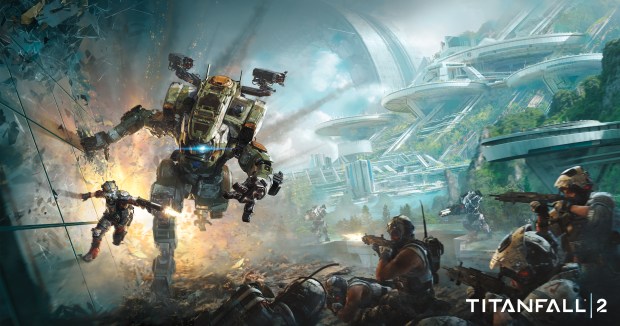
Titanfall 2 features one of the best single player campaigns I have ever experienced, which says a lot for a series which started as a multiplayer-only game sold at full price. The varied missions frame a short but sweet ride through different locales, each offering new gameplay elements or a unique spin on a standard shooting affair. The Effect and Cause mission particularly stands out, utilizing a time travel gadget to navigate levels between two time frames, but many others contribute to create an incredible adventure. Titanfall 2 has improved on essentially every level over its predecessor, and in a good way. Gameplay largely remains the same, but there’s now a campaign mode, along with a large selection of weapons and titan classes. While I was not down on Titanfall and felt it was okay, the sequel improves on everything to create a fun game with a campaign that just shouldn’t be missed out on.

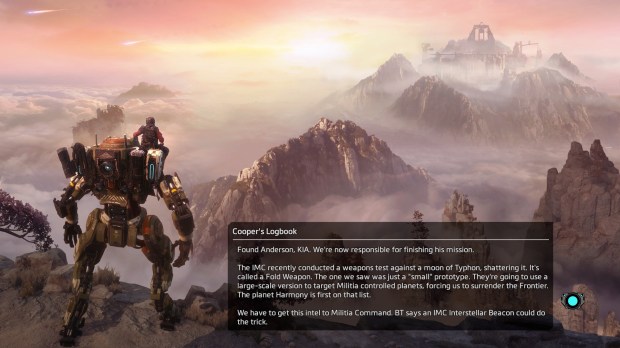
Titanfall2_2017_07_21_20_23_54_592The story mode concerns you as a rifleman thrust into a pilot’s shoes from the get go, who has to adapt to the staggering change of pace in warfare. This leads to a developing relationship between the protagonist and his titan, where the player even has the choice at some dialogue options, which however carries no impact towards the story. Although Titanfall 2 fleshes out some of the lore for the universe, its the action that takes the front seat. I found the story itself to be largely forgettable besides the interesting relationship between a pilot and its titan that is presented through dialogue, but it was a small misstep considering the gameplay was an absolute blast. Despite the events taking place on a single planet, the game environments are really diverse so you’re never in the same spot as the campaign goes on. Each mission offers something new with no repetition, such as the time travel in Effect and Cause or a titan push in one of the latter levels. The gameplay remains a mix of pilot and titan gameplay introduced in its predecessor, and feels just as smooth as it used to. Although the on-foot gameplay reflects the old-school style of shooters, the titan gameplay doesn’t feel sluggish either and there is enough of dashing and power-ups to make it inherently fun blowing up other titans. The campaign is superb and even includes the best chase sequence I have ever played in its Ark mission, where you actually get to jump between a few ships in motion – simply exhilarating.
Titanfall 2 brings a lot of variety to the table and succeeds quite well at it with plenty of tools at the player’s disposal. Although the campaign lacks pilot customization, which is hardly needed, but the titan classes are significantly increased from the first game’s 3. Each titan brings in a new weapon and a set of special abilities, which make them best fit for different combat situations. Whether it is having to deal with large numbers of infantry or a group of enemy titans, class switching can be done on the fly, although it takes a slight bit of a menu to do so. Still, at a press of a few buttons, your titan swaps its class for a different set of attributes and then it is back to exterminating more forces. One thing I could possibly complain about is that Titanfall 2 draws a distinct line between its pilot and titan gameplay, at least in the campaign. Embarking into your titan, BT7274 is almost contextual and the game rarely gives you choice whether to proceed using one method or another. Its usually either one or the other, but the game switches them up a lot so that neither of the sections feel drawn out, besides, either is inherently fun.


Titanfall2_2017_07_21_20_25_43_179Titanfall 2’s level design is one of the best I’ve seen out of any game, and Respawn have gone full out to integrate that with the gameplay. The jetpack is never contextual, and all of the campaign missions pack in semi-open levels with secrets to encourage exploration, but as far as I’m aware, the collectible pilot helmets carry no story context in any way. What those levels do bring, however, is a lot of ways to kill enemies and many paths to take for doing so. For example, if you’re boring you could snipe all the enemies from afar, or instead, as I did, run around them like crazy, while alternating between shooting, gliding and punching the remaining guy in the face. Titanfall 2 works great by enabling player freedom in all but some situations to ensure you’re never bored with what you are doing. I was disappointed to see a lack of pilot on titan combat in the campaign, as you’re never given large weapons to dispose of one, which further grows the separation between combat styles. For the length of the campaign, however, it does little to derail the pace of the entire story. A few boss fights are thrown in for good measure as well, which unfortunately only happen between titans and ‘boss’ is essentially a name for an enemy titan with twice as much health and shield as the rest, but it brings some nice challenge to the levels.
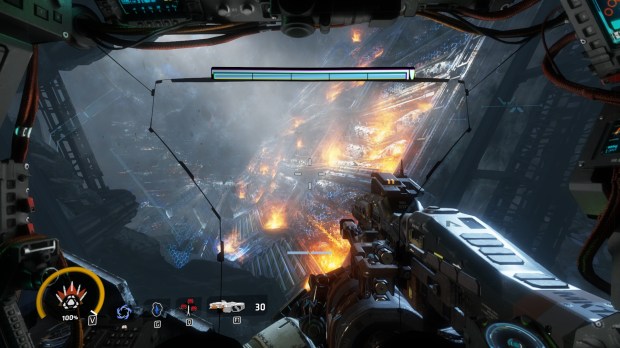
Titanfall 2’s weapon selection is robust, especially in its campaign. Among the many variations on shotgun, pistol and assault rifle, each weapon feels punchy and allows to easily dispose of large numbers of enemy soldiers. In multiplayer, weapons are unlocked through the levelling system as seen in the predecessor, but the choice is increasingly varied. Some weapons feel overpowered, like the EVA shotgun or the smart pistol, which lead to some imbalances in the multiplayer, but they also lead to the campaign turning into a breeze. On that note, the single player is quite easy on normal difficulty and the only few times I’ve died came from either falling or on a rare occasion misjudging how many enemies I’ve had around. For anyone who’s played lots of first-person shooters, challenge comes from higher difficulty presets. Even the mini bosses who are shown to be a formidable threat in their small cinematics can be easily dealt with as long as you dash behind cover when reloading. The multiplayer in turn requires more skill and knowledge of the map to be very successful, along with some team coordination to ensure victory.


Titanfall2_2017_07_21_19_16_00_549Concerning graphics, Titanfall 2 looks quite incredible, which explains the 60 GB space it took on my hard drive. The levels include lots of detail packed into them while the game still runs quite well, although of course system configurations would vary in performance. Something i quite liked about Titanfall 2’s campaign is that level backgrounds are actual places you visit later on, which makes a lot more sense than having them in the backgrounds. The developers made good use of the engine to make the game look fairly close to EA’s Frostbite 3 titles while Titanfall 2 retains its visual style. I wouldn’t call it unique, but the game’s locations show a colour stream rarely seen in most first-person shooters as of late. Sound design is superb as well, alternating between slow atmospheric music and the high-stakes danger scenarios where the music plays a lot faster. The game runs really smoothly and I never experienced frame drops, although at the time of review I had to download the very latest Nvidia drivers to unlock the full suite of resolution options, which I found odd considering my previous update was downloaded around after the time Titanfall 2 came out.


As for multiplayer, Titanfall 2 is very similar to its predecessor, but includes a lot of variety to help extend progression and keep players engaged. Among the varied titan classes and player customization, Titanfall 2 always has something to be unlocked or changed. Unlike the campaign, titan classes aren’t allowed to be switched on the fly to keep the match balance, and only 6 titan classes are available as opposed to 8 in the campaign. Still, the selection and customization are vastly improved over the game’s predecessor, covering both the visuals for pilots and titans, and also skills and character perks. Online matches are fast, which makes it easy to get through using just one titan loadout. And for many, finding a comfort zone in a favourite titan would always be a thing. Titanfall 2 finally allows for customizing the look of your titan, which is no longer confined to the predetermined visuals – a great addition to those who like to have personality in their game. Multiplayer modes remain largely familiar and still combine free running as a pilot and heavy attacks as a titan, though some new changes are welcome. Titan shields are no longer restored on their own, making the machines more fragile than they used to be. Pilots can still climb aboard a titan, but this time they pull out a battery which automatically removes some of the enemy’s health and which can be re-used to give friendly titans a boost. Titanfall 2 encourages teamwork more so than its predecessor, as the original Titanfall was rewarding to individuals rather than the whole team. Multiplayer largely stayed the same, but some new changes make it more enjoyable and the fun of multiplayer is something I’ll keep coming back to.

Titanfall2_2017_07_23_18_42_50_973On the overall note, Titanfall 2 is an excellent first-person shooter albeit with a couple drawbacks, that don’t so much distract from the experience as they leave desiring a little more fine tuning. The game already brings many improvements that players have asked of in its predecessor and features one of the best campaign’s I’ve ever seen in a game, one that paces itself incredibly well and keeps you engaged until the very end. Although its very short, the single player mode provides enough variety to never feel stale, as the player goes from one colourful locale to another. Each level feels unique and many introduce an interesting spin on the regular gameplay. The game is even worth buying for the single player alone, but its online gameplay is also stellar. With its multiplayer, Titanfall 2 further addresses many of the complaints players had in respect to the original game by including customization for both pilots and titans, as well as a larger variety of titan classes to be selected. The customization not only allows to make your titan stand out in the field, but also expands to a choice of multiple character perks and upgrades to diversify playstyles. Titanfall 2 is the right kind of sequel to the original game and all of the improvements make it worthwhile playing, whether you enjoy an exhilaratingly fast campaign or spending hours on improving your multiplayer skills. Either way, Titanfall 2 is an enjoyable experience and I would recommend giving this game a try.


Watch Dogs 2 Review – Hacking San Francisco

watch_dogs_2_4k_8k-wide.jpg

Developer: Ubisoft Studios; Publisher: Ubisoft

Released: November 29, 2016; Reviewed On: PC

Core i5-6500 3.2 GHz; 16GB DDR4 RAM; GeForce GTX 1070 8GB


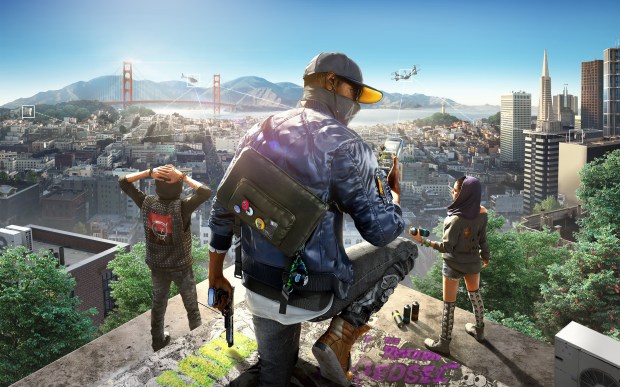
Improving over every aspect of its predecessor, Watch Dogs 2 blew my expectations out of the water. Its portrayal of hackers still remains goofy, and apparently all you need is a cell phone and an app to break the system. Yet, its GTA-like world design and the gorgeous San Francisco setting create one of the most entertaining games to have come out in 2016. I for one, didn’t hate the original Watch Dogs (mostly because I haven’t paid attention to its massive hype train) and found it to be a generic, but still fun experience. Watch Dogs 2 in turn is a sequel done right, and although its ideas conflict against one another significantly more than in the past, it offers an engaging story and open mission design, along with a dense and detailed sandbox. At the end of the day, it is fun to hack underground pipes (yeah somehow you can do that) to explode a car coming after you, or to run on a rampage provided you can survive.

Watch Dogs 2 learns a lot from the mistakes of its predecessor, including the notion that it’s probably best to step far back on the media hype train. Sure, we’ve seen plenty of trailers and gameplay before release, yet Watch Dogs 2 didn’t promise us incredible graphics, nor a “living” world. The goofy tone of the game works to its advantage to create a fun experience, unlike the bland grey colours of Chicago in Watch Dogs. Not to mention its protagonist, Aiden Pearce, and don’t even get me started on him. Thankfully, Watch Dogs 2 introduces a group of likeable characters who strive to achieve change in digitalized society. Marcus Holloway and his friends constantly throw jokes around and often act goofy, especially the intro sequence where everyone gets drunk. By the end, I still didn’t really care for the supporting cast, but they were nice to talk to between most of the missions when I had to come back to the HQ. I found the plot to be quite interesting, and there’s plenty of criticism to be found relating to the real world, which addresses problems of our digitalized age. Watch Dogs 2 even features 3D printing to create all your weapons and tools; like how cool is that.

watchdogs2_2017_02_03_20_30_12_699

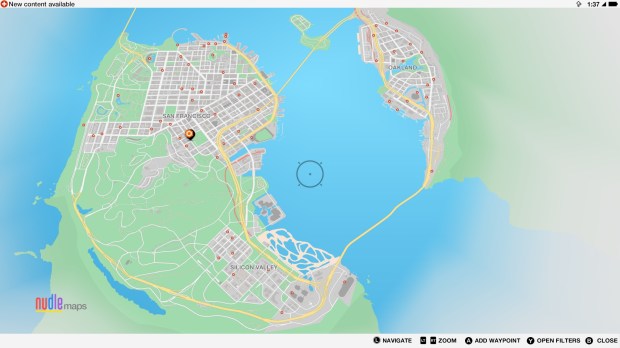
San Francisco Bay area is far from biggest maps in open-world games, but Ubisoft made sure to pack in all important landmarks and incredible levels of detail. Unlike greys and browns of Chicago in Watch Dogs, the new city is a goofy and colourful setting, full of things to do. In typical fashion of Ubisoft sandbox games, San Francisco is filled to the brim with meaningless side activities that only serve to fill up that progression bar, however I managed to find plenty of interesting tasks to fill up my thirty or so hours it took to complete the game. Despite the repetitive nature of its side activities, Watch Dogs 2 never got to the point where I was completely bored – there was always something to do and I even often found myself simply cruising down the streets of San Francisco.

As with any other Ubisoft game, Watch Dogs 2 fills up fast with side activities. Both the map and your phone, which acts as a mission hub, soon become cluttered with icons and records. Among the flow of the main storyline, the game contains side missions, races, crime events, hacking, various collectibles – you name it. In a typical manner to all other sandbox games, these serve to fill up the experience bar, disguised here under the “followers” system. Somehow, everything you do enhances traffic through DedSec’s mobile app, which gives your crew access to people’s computers for processing power. With that said, in the end, all it comes down to is unlocking the final main mission, which already sits in your phone log from the very start of the game. It just goes to show how mundane Ubisoft’s sandbox games have become – there is no sense of a connected story, just a “to do” list of tasks. Although this is one of my biggest complaints, I’ve also found some things to like here. In example, the city’s points of interests are no longer laid out on the map and you have to individually locate them all and use your phone to take pictures. The game is filled to the brim with finer detail, which is there to enhance player experience.

watchdogs2_2017_01_31_18_28_09_632

Watch Dogs 2 continues the series on by blending stealth and action gameplay, which are still very much at odds here. You can still easily blast your way through multiple cars’ worth of enemies, but Marcus’ durability in firefights is not any better than Aiden Pearce’s. The tone of the story also encourages non-lethal progress, which is where I have gripes with the game’s story. Watch Dogs 2 has a huge disconnect between its story and everything the player can do in the game, which often reflects in mission objectives too. I’d go from listening to Marcus talk about social freedoms and change, yet the next minute I’m blowing up 2 cars and killing enemies. None of my rampage would be reflective in the next story bit either, as characters would go about with the scripted plot. It’s not a big complaint but I do feel like the game’s tone wants a non-lethal approach over anything. Thankfully, options in Watch Dogs 2 are diverse, and either approach offers many tools.

Naturally, hacking brings many ways to approach an objective and Marcus’ fancy skills with a computer can get him anywhere. The two drones at your disposal – a jumper drone and a quad copter – allow for easy mapping of enemy positions for a stealth approach, although its more fun to ignore all that. If I ever got detected, I’d simply shoot everyone dead and proceed with the objective. The AI guards are fairly simple, and even large groups still don’t have what it takes to do a lot of damage, although don’t forget your health also drops really fast. Naturally, you can hack into anything in the game with a press of a button, turning the environment to your advantage. Marcus can easily interface with CTOS, a digital system powering everything in the city, which lets the player control traffic lights, blow steam pipes, listen in on people’s conversations and so on. With it, you also have to hack into cameras for unlocking doors, while Marcus sits down with his computer. Some times like those, I got detected, so I’d recommend hiding somewhere for best results. A lot often, however, stealth really feels dull from repetition, which is why I seldom used it. Going through the same motions gets boring quite fast, and there’s plenty of that over the 30 hours of gameplay.

watchdogs2_2017_01_31_18_51_32_238

The skill tree in Watch Dogs 2 focuses a lot on hacking abilities, and over time, Marcus is able to use more and more parts of CTOS 2.0 to his advantage. While not a lot can be done at the start, I was soon able to manipulate traffic, blow up steam pipes and even cause parked cars to move on their own. It’s all cool at the start when you try it, but can get stale during the game’s runtime. Added to that, at least half of the skills web is absolutely useless, in usual fashion of Ubisoft games. The City Disruption tree is the only one really worth investing into, while most offer incremental upgrades over the existing tools. Each skill is worth 4-8 research points as well, which can be a total waste for the boring skills, but thankfully you get 6-8 points for every time you level up. More powerful skills require to obtain Key Data from restricted areas, so it’s just another thing to do on the list of side activities. But after all, its fun to wire other people’s money to your bank account.

Marcus has a full arsenal of 3D printed weapons, including shotguns, sniper rifles and grenade launchers. The shooting doesn’t feel as responsive as I would have liked, and the cover system is simply awkward. Moving from cover to cover just doesn’t feel right, and the character either clips to it or runs backward out in the open. Considering how many enemies flank you, it got annoying after a while, although I still wouldn’t say I died a lot on the game’s standard difficulty. Most of the time, my screen was just filled up with red, and health regenerates ridiculously fast even for an action game. Again, its hard to see this relate to peaceful intentions of DedSec in the game’s story, but I’d rather have it over tranquilizer guns, so Watch Dogs 2 wins either way. Guns have never ruined a sandbox game, and Watch Dogs 2 makes great use of variety to give players freedom.

watchdogs2_2017_01_31_21_09_27_309

On that notion, the police in Watch Dogs 2 are bound to get really frustrating. Their frequent response is shoot first, ask questions later, and they get pissed at you over the smallest things. Upon stealing a car near a police vehicle once, I was met with a hail of gunfire – so much for discretion. But hey, at least you don’t get murdered for speeding. Eventually, you grow your arsenal to deal with all of that, however Marcus’ resilience doesn’t change a bit – you still die a lot. Despite that, I still preferred to use guns for most of the main missions, and really why wouldn’t you. There are no repercussions to shooting up an entire building full of guards, and Watch Dogs 2 doesn’t even fail you for messing up stealth like I’d expect an Ubisoft game to do. And now that I mention stealth, expect to fail that a lot (unless you’re one of those perfectionist types). NPCs would call 911 for the stupidest reasons, such as the one mission where you have to get into a New Dawn church building. I tried to access the roof through raising a platform and next thing I know I have a couple cop cars coming my way. Pretty sure trespassing is not supposed to get me shot, but Watch Dogs 2 police clearly don’t give a shit.

To that extent, car chases can take frustratingly long, especially dealing with 4-star heat. Cops are relentless even against minor crimes, and floaty car handling does nothing to improve the manners. Cars generally drive well, and there is surprising variety in how different vehicles feel, but when I need precision to squeeze into a small alley, all bets are off. More often than not I’d happen to crash right after enemies lose sight of me and that gets me right back into the sights of the helicopter sniper. Unlike in its predecessor, Watch Dogs 2 allows to fire from a moving car, and often to hilarious results. Blowing up tires causes enemy cars to flip over and crash, although it is not the only way to get rid of pursuit. Marcus easily manipulates traffic lights, and exploding steam pipes is usually the best solution. Cars themselves are very diverse, although I recognized most of them from the previous game. Variation reflects the city’s contrast, and the more expensive cars can be found in Marin or Silicon Valley, and of course, you’ll see Teslas driving around. I never got bored from driving around either, and although there are certain points the game lets you fast-travel to, it takes away from the enjoyment of driving in San Francisco. Still, it is very useful to have that just in case the commute becomes a hassle, and Watch Dogs 2 does well with its map design.

watchdogs2_2017_02_03_20_06_41_397

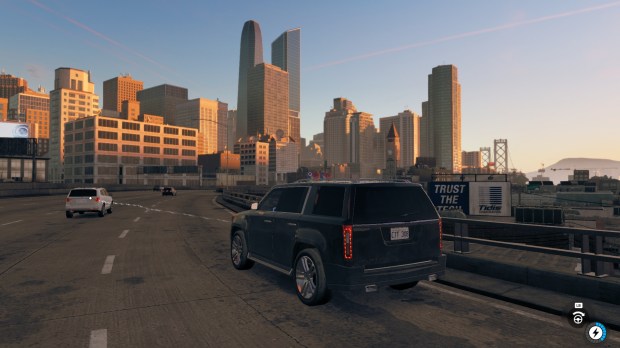
Visually, Watch Dogs 2 looks really impressive, although you’d want to have a beefy system to back it up. The PC port is a lot better this time and no longer runs like shit, however its also quite advanced and even with a GTX 1070 on 1080p, I had to disable some high end settings like upscaling and Ambient Occlusion, which is something to keep in mind. The trade-off is worth it though, and Watch Dogs 2 looks incredible, especially during the daytime. San Francisco is filled to the brim with detail, ranging from dense vegetation to many of its parks to light reflections as you drive downtown in the middle of the night. Paired with extensive draw distances on PC,  San Francisco feels huge, although its combined map is still quite smaller than biggest open-worlds. The city appears incredibly diverse to make a fun playground different to most games. Watch Dogs 2 creates a stark contrast between its areas, yet manages to connect them seamlessly at the same time. Still, driving near the city’s core, you can spot poverty and gang hangouts, while the expensive houses in outlying hills reflect a very peaceful atmosphere (frequently interrupted by me if I happen to be driving a muscle car).

Watch Dogs 2 does a lot right to improve the disappointment of its predecessor, although it is still not a perfect game. The repetition in its open-world design is still there, and most of main missions can’t impress, but the developers took steps to make the game feel slightly different from the company’s typical output. Ubisoft have created a really fun sandbox by setting the game in San Francisco, which is a joy to explore. The vibe of the game has been changed significantly, replacing the boring revenge story and dull Aiden Pearce with a cast of funny relatable characters. Although its often at odds with itself, this move has worked great to place the series in the right direction, and despite the non-violent story contradicting with explosive action gameplay, Watch Dogs 2 is a lot of fun to play.

WatchDogs2_2017_01_31_18_43_21_558.jpg

The Verdict: 

Watch Dogs 2 is a step in the right direction for the series and heavily improves on the original. Although a lot of repetition can still be found in this game, San Francisco is a great playground for numerous activities and Watch Dogs 2 offers extensive variety in its gameplay tools. It’s one of the most fun open-world games I’ve played in a while, and definitely worth checking out.

Far Cry Primal Review – Boredom is a Dangerous Beast

far_cry_primal_2016_inscription_107130_1920x1080

Developer: Ubisoft Montreal; Publisher: Ubisoft

Reviewed On: PC

Core i5-6500 3.2GHz; 16GB DDR4 RAM; GeForce GTX 1070 8GB


I didn’t have high expectations going into Far Cry Primal, and a lot of the things made me stand corrected. A Far Cry with no guns and explosions? I thought upon the game’s announcement. Doesn’t sound all that exciting. And indeed, the age setting of Far Cry Primal does a lot to detract from the fun of Far Cry we’ve gotten used to. Sure, the change of setting brings some variety into the somewhat stale series, but the typical Far Cry gameplay formula suffers from a lot of repetition. Many elements that fit the series perfectly receive a big photos, but many of them serve to bring more annoyance than anything. I will go into depth on each of my major complaints as I go along with this review, but Far Cry Primal is the game to skip out on if you’re invested deep into the series.

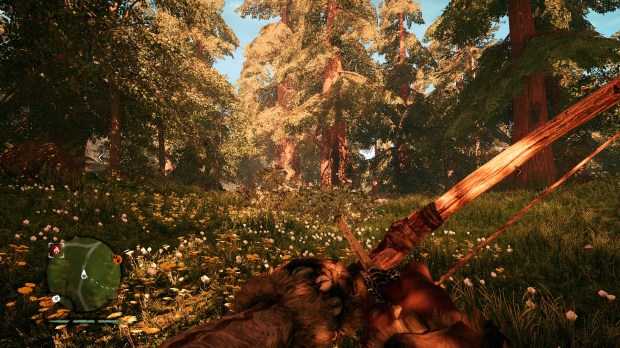
To start with some positives, Far Cry Primal looks absolutely amazing. The Dunia engine is not the most demanding in games, but it renders dense forests with incredible levels of detail. Travelling through the south regions of the game world, I grew to appreciate the dense vegetation brought to life in Primal. In some ways, the setting benefits the quality of the environment, which has been made more varied and incredibly dense. As a result, the game looks stunning, especially if you have powerful hardware to back it up. The screenshots captured do not come close to reflecting the image quality seen on a screen, although demonstrate the graphical effects of this detailed game. Far Cry Primal sets a new standard for first-person shooter environments, and adds a new ceiling for future Ubisoft titles to look up to.

FCPrimal_2017_01_24_20_43_39_985.jpg

The dense forest is absolutely gorgeous

As it is, Far Cry Primal appeals largely to fans of the now long-running franchise, and attempts to diversify the regular shooter formula. It fails multiple times in attempting to do so, and the setting hasn’t been built upon enough to call it a fully-fledged sequel. Far Cry Primal sets the world in 10000 BCE, and as you would expect, the guns are gone. So are the cars, the explosions, sniping, and many other elements I grew to like in the Far Cry franchise. What the setting brings instead is tons of gathering, animal taming, dull melee weapons, along with traditional staples of not only Far Cry, but quite largely every Ubisoft game released within the past 3 years. Traditionally, Far Cry Primal also requires time to grow powerful and progress further, requiring completion of forgettable story missions and checkmarks worth of side activities.

At start, I’ve had to do some extra work within the game’s interface menu, and as soon as it is available, I would first recommend doing exactly that. Far Cry Primal’s user interface and HUD are the most cluttered I’ve seen out of a video game. Some can say it is nice of Ubisoft to offer extensive options in game’s screen, however it is an absolute necessity to turn half of these off. The worst offenders I’d recommend disabling are Gathering Animations (they drive you crazy after about first 50 times), Tooltips (the game is super easy to learn) and the Found Items Readout. These tweaks take away a lot of clutter as you gather materials and proceed with missions, and Primal offers the options to shut down many other elements of the UI.

FCPrimal_2017_02_05_19_44_17_060.jpg

Primal’s map gets quickly bloated with bonfires and camps

Far Cry Primal follows the usual pattern set by its predecessors. You set bonfires ablaze to reveal sections of the map (i.e. radio towers minus the climbing), liberate outposts to make the region safer, complete side missions to unlock skills and so on. There is nothing surprising about Far Cry Primal at all, and it never showed me anything I haven’t seen before. I’d go as far as to say that Far Cry Primal is more of a cut-and-paste of Far Cry 4 than 4 was of 3. Where Far Cry 4 brought some subtle changes to improve the game experience, Far Cry Primal follows exactly in its predecessor’s steps, right down to the random events. Defend members of your tribe, save a captured member of a tribe, kill animals. Sound familiar? It is because Far Cry 4 had all of that, albeit with some name differences.

Far Cry Primal reuses a lot of assets from its predecessors, and in fact, it feels way too much in this entry. Back to when Far Cry 4 was judged for copy-pasting a lot from Far Cry 3, the game at least tried to bring a lot of new elements and mostly succeeded with offering new tools and mission variety. To Far Cry Primal’s case, it doesn’t even try to offer anything distinct. Few hours in as the world opened up, and I might as well have been playing Far Cry 4 over again, or as I like to say, the less fun version of it. All character animations remain exactly the same for any activity and even the grappling hook remains stuck in the series’ DNA. Who would have thought that people at that time knew enough to make a claw with attached rope to climb hills. Wow, progress. Indeed, many attributes seem to be there for the sake of it, but thankfully this makes Far Cry Primal a lot more entertaining than Early Access survival games.

FCPrimal_2017_01_24_20_59_05_453.jpg

Stabbing people is still fun

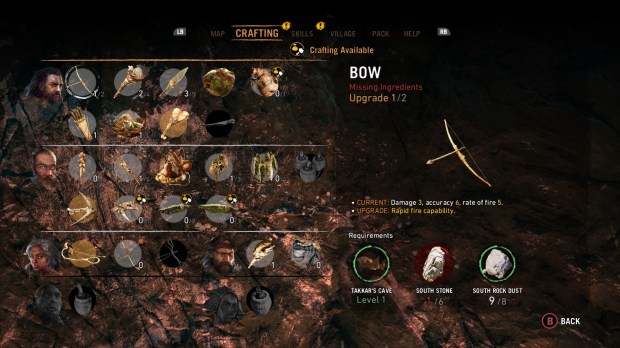
The skill tree is even more confusing than ever, and Far Cry Primal is filled with even more useless skill points. 2 Points for gathering +1 skin from each animal? what a waste I thought, but as usual, anything earns you skill points fast. Each of the main characters you meet offer different abilities that help your character survive the harsh world. Well, I shouldn’t say help survive. Far Cry Primal is far from a survival game, no matter how much it wants to say with its setting. Aside from the Hardcore mode and Perma-Death options available through the Apex edition, Far Cry Primal is a joyful adventure through a dangerous world. Endless gathering adds nothing meaningful to the experience and feels like a chore after a brief period of playing. What’s worse is that you can’t avoid it either, as tools and weapons require materials to be crafter. Along the note, weapons in Far Cry Primal absolutely suck, with an awful melee system to come along with the issue. Since guns are no longer there, Primal replaces them with a bow, spears and a club. Now, instead of shooting the enemy in the face, I have to bash them in the head with my stone club. Stone age people are really that boring.

Far Cry Primal is therefore focused on a few ranged weapons and the melee combat, however the latter received very little attention during development. Primal’s melee combat is really simplistic: bash, bash, bash; which feels incredibly clunky and awkward. It quickly gets repetitive and there is a lack of development along the progression curve. Faithful to the series, Far Cry Primal starts with a weak character, and the player only feels really powerful at the mid-point. So, to have any actual fun, its down again to crafting and experience. The ranged weapons are very limited, and only the double bow feels any powerful. Far Cry Primal also offers players a variety of different tools, which all somewhat mimic the diversity in Far Cry 4. The binoculars are now replaced with a flying owl, which is just a tedious way of scouting the enemies, and natural bombs have very little impact compared to something as fun as a brick of C4.

FCPrimal_2017_01_26_22_30_04_835.jpg

What else is there? Since the main character feels rather weak, Far Cry Primal introduces a beast-taming system, kind of similar in what we saw with the Shangri La in the predecessor. Except now, the player can tame virtually any type of animal, which can later be used to aid in attacking enemy camps. While I’m on the complain train, Far Cry Primal’s animals absolutely infuriate me. They’re all over the place because of the wild setting, and I can’t even remember the number of times I was going to my destination only to be attacked by a bear in the forest. And since I didn’t have guns, I had to bash it to death with my club, which of course got me killed first. Dense forests are filled with wild life, and only after tedious crafting, I was able to have powerful weapons. Wild life cam be useful, but when I ran into 3 bears that day, it’s more of an inconvenience.

Oh, and I almost forgot to mention the story, and that is because I really couldn’t care less for it. Far Cry Primal features the same premise – your character becomes totally invested in helping free the region through various means, and at least in this title, the reason to defend one’s own people represents a goal that’s more clear. The developers have created a brand new language to fit Far Cry Primal’s setting and each of its 3 tribes gets a slight difference in dialect. I personally found this to be really cool, but with that said, neither the characters nor any of the main missions happened to engage me. Far Cry Primal’s characters are of course crazy, although the third time hasn’t worked out to be a charm for the series. The characters are just poorly written and lack any real sense of personality, and their crazy traits just annoy more than anything. Villains are not likeable either and their reasons to hate you are poorly explained. From what we gather at the start, everyone hates your tribe for living in the region, and that’s the entire plot.

FCPrimal_2017_01_24_20_28_46_308.jpg

Frankly, I couldn’t care a bit about my tribe and story missions fell in line with simple objectives like kill, destroy or hunt. The most outstanding pieces remain the drug scenes, and these were some of my favourite parts of the whole game. To Primal’s credit, it diversifies these missions significantly, making them more interesting than those in Far Cry 4. Despite these moments, the rest of the story is stagnant with favours and endless crafting requirements. I’ve probably spent more time looking for materials so I could get the next mission from the character than actually completing missions, although Far Cry Primal is quick to reward with materials from the stash. Still, I couldn’t care less for upgrading my village other than crafting new weapons and tools.

Far Cry Primal takes time getting used to, and I will even admit that the game grew on me as I became more powerful. Far Cry Primal takes longer to complete, largely due to many crafting restrictions, but once all my weapons were level 3, I could easily deal with large enemy numbers. And the Heavy Takedown skill is just as helpful to learn as before. The map really opens up, and most of it is accessible at the very start, though you need to get powerful to beat many outlying camps. Far Cry Primal still reflects the comfort zone of the series, and although it switches things up with an ancient setting, it is very familiar. However, I’d like to point out that with this title, Far Cry feels completely stagnant and Primal feels boring for at least first 5 hours. Developing your character and improving tools diversifies your options of approach, but you still can’t snipe everyone in a camp, I miss having a sniper rifle. Now that Far Cry Primal has lowered in price, it is worth picking up for the fans, but it feels a lot like an expansion that’s really stretched rather than a full sequel.

fcprimal_2017_01_25_06_17_38_327

The Verdict:

Far Cry Primal is yet another addition to the series, and hasn’t surprised me at any point during my 30+ hours playing it. Ubisoft attempted to innovate by setting the game in a pre-historic setting, but a lot of it only serves to the detriment of the game. Character progression is a lot slower and revolves around constant crafting, which makes Primal even more dull at the start than its predecessors. Although the game eventually gets better, Ubisoft’s usual open-world design is still there, and with Primal, the developers step even further away from a good plot or any plot at all. If you really enjoy the formula of Far Cry games, then this is just another one but with a different setting, and unfortunately, its even more aggressively boring.

Mirror’s Edge: Catalyst Review – It’s a Long Way Down

Mirrors_Edge_Catalyst_16.jpg

Developer: DICE; Publisher: Electronic Arts

Reviewed On: PC

Core i5-6500 3.2GHz; 16GB DDR4 RAM; GeForce GTX1070 8GB


I emerge into the sunlight of the city’s rooftops, walking a few steps further towards the edge. In the distance, I see the tall frame of a skyscraper tower and the neon glow all around it. As the light recedes, the detail below me becomes very apparent, but it’s also a long way down. Mirror’s Edge: Catalyst is great at creating these moments, which keeps the pace going in between high tension chases and clever environment puzzles. The game world is filled by spectacular skyscrapers and running along the rooftops creates a great sense of momentum. First-person parkour feels very realistic, and Mirror’s Edge has always been great at capturing the sense of speed. Mirror’s Edge: Catalyst plays fantastically, and although its parkour might not be perfect, the game delivers on the freedom of movement and variety of accessible tools.

Mirror’s Edge parkour system remains excellent, and its a lot better in Catalyst. Almost every aspect has been improved and movement feels a lot faster. Mirror’s Edge: Catalyst expands the parkour in many different ways, mostly by offering some interesting tools at your character’s disposal. The original Mirror’s Edge felt rather shallow with its preset array of moves that followed a simple pattern, but Catalyst mixes it up with different abilities. Among them, the most outstanding is the Mag-rope – a grappling hook with a lot of functionality. The Mag-rope can be useful for traversing between rooftops set far apart, although places for the grappling hook are not positioned everywhere, neither they are for ascending buildings. Mirror’s Edge: Catalyst presents a similar problem I’ve found in Far Cry 4 – possibilities for ascending tall surfaces that are unfortunately in limited numbers, and it feels just as annoying here. However, to the game’s credit, there is already lots of freedom available for moving around the city and where the spots for grappling are available, they provide a lot of satisfaction to use.

mirrorsedgecatalyst_2017_01_01_16_04_26_765

I wasn’t very impressed with the plot in Mirror’s Edge: Catalyst and it feels just as shallow as it did in the original. Since it has to revolve around the game’s central concept, the plot is weak and there isn’t much room for improvement. A lot of important events happen off-screen and more often than not, the character is tasked with simply running to a panel and pressing it. Gameplay flow does a great job at directing attention away from the weak story and it allows to enjoy the game even if it isn’t particularly involving with its plot. The cutscenes look outstanding though, and some spectacular explosion events are scripted within the game’s story. The weak plot is easy to overlook, and while it won’t deliver the spectacle or depth of many existing games, Mirror’s Edge: Catalyst chooses gameplay over story and I’m okay with that.

The game’s open-world design structure has me in two minds about it. On one hand, this opens up the game’s city significantly and enables a lot of freedom in traversal. Multiple paths litter the city and its relatively easy to find a way to get to a destination. Mirror’s Edge: Catalyst allows to get creative as well, and the developers scatter varied tools for movement among the level. However, the issue with the open-world design emerges when running between mission markers becomes long and tedious. To add to the commute, the move to an 0pen map brings out the usual guests in side missions and a vast array of collectibles. The missions are not inherently awful, and the collectibles add a drive for city exploration. However, it’s really disorienting when the map is littered with small objectives, but they can add nice distraction from the flow of main story missions.

mirrorsedgecatalyst_2017_01_05_08_55_12_330


The game’s map really opens up as you go along, and a large portion of the city is already accessible halfway through. Mirror’s Edge: Catalyst has a fast-travel system to help with tedious commutes, although it is very limited. The player can only travel to safe houses, and those have to be unlocked through a GridNote puzzle beforehand. Parkouring along the rooftops remains the most efficient method of travel, one that also lets players see the city’s visual spectacle. Exploring on the other hand is little rewarding – grid leaks and control chips scattered around the city do little to advance player progression or unlock access to new tools. They simply exist to advance the game’s completion percentage, although its still fun to just explore the big city and find new pathways.

The City of Glass in Mirror’s Edge: Catalyst provides for one of the most spectacular settings too, with its flow of neon lights and weather effects. The game’s release on the Frostbite 3 engine has served to greatly benefit the levels of detail seen in the setting, and it lets the City of Glass shine. The view is often breathtaking and incredibly far draw distances provide a spectacular picture. The game’s world has a huge amount of white, but its nicely varied up whether it’s the yellow Construction district or the purple neon of Residential District’s billboards. The red colours indicate a path to follow, very much in the style of the original, however this works through the new Runner’s Vision feature, which highlights items within the world. Mirror’s Edge: Catalyst constantly changes its environments, and although the setting can’t help but show off a futuristic vibe, distinctions can clearly be seen when moving along. At night, the city looks even better when all the neon glow is present and it really helps deliver the atmosphere of the world across. The Frostbite 3 engine is quite spectacular and it really shines in an open-world game like Catalyst. Pairing up the game with powerful hardware ought to do the trick, and on my GTX 1070 I’ve been able to achieve solid performance while all the settings were cranked to ultra.

MirrorsEdgeCatalyst_2017_01_02_09_19_17_993.jpg

Mirror’s Edge: Catalyst is not a perfect game however, and in fact, many of the original’s mistakes have found their way over into the new entry. Most notably among those, the melee combat system is not particularly well improved, and remains as awkward as it was in the first game.Mirror’s Edge: Catalyst varies it up with multiple attack combos against different types of enemies, but the first-person fist combat feels much out of place as it did with the first one. Guns are thankfully gone, so you no longer have to deal with an awkward shooter slotted into a first-person running game, and Mirror’s Edge: Catalyst provides a contrived reason for why guns can no longer be used. However, they weren’t a feature that I particularly miss and it doesn’t deserve much attention. Melee combat carries the game pretty well, only if it wasn’t more annoying than I’d like. Most cases have the option of running away to evade the fight, but the game has a habit of forcing players into locked rooms filled with enemies, where fighting is the only option. Often with disastrous results too, as the enemies get tougher as the game goes on, and the not-so-smooth dodge move would get me killed often.

Despite that, more often than not I would fall off a building by accident, sending me plummeting down fast into concrete. Navigating the city is tricky at times, as plenty of wide gaps are present. Those are occasionally mixed up with bridges or rails to get across, but often require to follow down a specific path. Mirror’s Edge: Catalyst made me die quite a lot more from falling than fights, either because I thought the height was low enough to stay alive, or because the path I took happened to have a big chasm in front of me. These moments are not game-breaking, but nonetheless I ran into a few loading screens on the way, and these have a tendency to break the pacing. Mirror’s Edge: Catalyst doesn’t look to suffer from many technical issues either, and over the time i played it, significant glitches didn’t happen. On the multiplayer side, the game offers online leaderboards and friend challenges. Any given path can be made into a run that then allows to compete among friends. The online features aren’t much, but for some people it can create additional value through extra content.

MirrorsEdgeCatalyst_2017_01_01_17_16_44_585.jpg

Mirror’s Edge: Catalyst is not flawless, but it is a very enjoyable game, assuming you like the notion of first-person parkour and no guns.  Mirror’s Edge: Catalyst is excellent at parkour and provides a lot of variety through its multiple paths and some useful tools. The game’s move to open-world and EA’s Frostbite 3 Engine has resulted in significantly higher detail across the board and the city usually looks spectacular from any angle. Paired with excellent parkour, the world becomes a joy to explore, although repetition becomes apparent the longer you play the game. The melee system remains flawed like it did in the original, and simply feels too awkward to use within a game like Mirror’s Edge. Guns are thankfully absent, as first-person shooting was even worse in Mirror’s Edge, but the game’s tendency to make enemy encounters inescapable produces frustration. With that said, all elements come together very well in this game, creating one of the best looking and playing titles of 2016. The entire progression curve doesn’t make the game exceptional, and many could find it boring, however Mirror’s Edge: Catalyst is still worth checking out.


Need for Speed Review – Drift Around Much?

thumb-1920-603314

Developer: Ghost Games; Publisher: Electronic Arts

Reviewed On: PC

Core i5-6500 3.2GHz; 16GB DDR4 RAM; GeForce GTX 1070 8GB


Drifting around the streets in the newest iteration of EA’s long running franchise reminds me a lot about the older NFS titles. Need for Speed does a lot to capture the feel of Underground 2 and does many things right to complete the formula. Despite its flaws, Need for Speed is a solid experience, and I personally found it to be one of the best racing experiences on PC in 2016. The game offers a lot of content and a wide selection of cars, with many classics that will no doubt be appreciated by fans of the older titles. Car customization returns after a long absence, and as someone who really enjoys those mechanics, I found myself to lose a lot of time in the garage. The game is not perfect and retains some of the problems the more recent games have, but overall, it feels like a faithful return to formula for the racing series.

Need for Speed looks very impressive and runs on the Frostbite 3 Engine, which has been prevalently used in the latest EA titles. Despite the limitations of its night setting, Need for Speed throws in some nice reflection to compliment its amount of detail. The game is certainly very impressive, and receives the similar level of treatment that DICE throws at its Battlefield titles. The night setting reveals the detail in light reflections which demonstrates the full power of the game engine. Need for Speed might not be the most detailed game when it comes to car models, but its fleet selection looks quite impressive. Not everyone will take the liking to its consistent night-time setting, but Need for Speed takes full advantage of its resources. Although I have tested the game way past its release game at the time of getting Origin Access, the release proved to be stable, and aside from some network issues I haven’t experienced any obvious concerns. Need for Speed runs consistently excellent on my system, with all settings cranked up and a consistent 60 fps performance. The game can be expected to perform similar to other Frostbite 3 titles in terms of scalability and performance across a variety of setups. In the newest iteration, Ghost games includes an extensive graphics options menu and the absence of annoying 30 fps lock found in NFS Rivals. The wide range of graphics presets makes Need for Speed scalable across a variety of systems and the game looks most spectacular on highest settings.

0011

Ventura Bay’s hills provide for some sweet drift spots

Need for Speed doesn’t offer an extensive garage to match the likes of Forza or Gran Turismo, but its offering is sweet. The game features some of the nicest cars available to race on, ranging from Japanese tuners to Italian exotics. A lot of cars from previous games make an appearance, and I appreciated those rides along with the game’s detailed customization. Need for Speed brings back the much missed car customization system, and especially the Japanese tuners can be extensively modified. Moving up the range however, exotic cars offer very little room to customize the new ride. Car customization is really hit and miss, it mostly works great but more powerful cars restrict player choice. At the lower end of the spectrum though, a small but sleek range of bumpers, spoilers, splitters, hoods and body kits provide enough satisfaction in personalizing your ride. Despite the restrictions however, it is nevertheless sweet to be able to modify a Nissan GT-R or Lamborghini Huracan.

Need for Speed packs in a beefy single player career mode tied in with an entertaining, but completely pointless story. Cutscenes serve more as a distraction than anything, and the cheesy tone of the game’s characters is often cringeworthy. The premise of the plot is that you’re part of a racing crew striving to get noticed out in the streets. The plot follows the basic points of gaining respect, called REP in this case. Player progression is central to the events and the crew do nothing more but provide a consistent stream of events. Still, they come to grow on you and further progression into the game changes crew reaction to player character, albeit at no choice. The career does a great job at providing many hours of content, and faithfully presents the quality of old Need for Speed games. The title is primarily single player, although there are some PvP options which I haven’t indulged in. Its career mode makes up the core of the experience, and I stuck to the traditional experience of building reputation and my garage. Noticeably, some issues come into play concerning the career mode, especially the game’s online integration. The number of times I experienced interrupting server issues, even at this point after release is far too many to count. Yet the overall experience is considerably more enjoyable than NFS Rivals and its backdrop adds a bit of nostalgia for the older games.

0021

At least I can still modify some of the McLaren 570S

The events are offered in multiple types, spread across Speed, Style and Traditional Racing. The entirety of the plot focuses on participating in various disciplines set by your crew members, which adds a nice touch but doesn’t do enough to steer away from the blatant path of the main plot. The variety in events was good enough to keep me engaged in playing and some car presets turned out to be better at one task than another. I mostly kept my Lancer Evolution MR IX for drift events, while higher performance cars like the AMG GT and the 570S are all about high speed. Performance upgrades make it possible to considerably increase the power of any given ride, and are spread across multiple upgrades named after real engine counterparts. The extensive garage is most likely to warrant another play-through, and it would be interesting to play around with multiple combinations of car types. Proceeding through events earns recognition from top stars of either racing types, which are represented here in live-action cutscenes. Ken Block makes a guest appearance as one of the recognizable figures in motorsports. The story is well-represented through real actor performance, although its role demands are quite simple. Characters do barely more than talk about things with a lot of fist bumping involved. The considerable amount of racing events offered throughout the career complete the package.

Like many games in the series before it, Need for Speed is a fairly easy experience. The traits of simulation are gone since Shift 2 Unleashed and the game is very approachable with its arcade style racing. Drifts are extremely easy to pull off in spite of many walls and tight road bends but it yields a degree of satisfaction in getting the best score. Multiple presets can be changed to further distinguish between point-to-point racing and gymkhana drift events. Car tuning is not as extensive as you’d see in simulation driving games, but it at least allows to specialize a ride to drift more or less. No difficulty presets are available to choose, but instead Need for Speed forces challenge at times through unfair AI, although it is completely random. Opponents can keep up with you even if you’re in a much better car, but at other times they fall far behind, which is disastrous when doing the Drift Train events. Game difficulty is spread very unevenly – most of times it is not too hard at all to win sprint and circuit races, at others the AI beats me by 2 seconds in a lapped time trial, with no chance of improving my time to beat that (keep in mind that the opponent is also driving a Nissan 240SX vs my McLaren 570S). Need for Speed doesn’t present any significant frustrations and despite its shaky difficulty, it never feels absolutely unfair.

venturabayfreepartsmap

Need for Speed boasts a well-sized open-world with its city of Ventura Bay. There are plenty of sights to see and roads to drive on to make the experience more of a traditional sandbox starring cars. Need for Speed offers no particularly interesting side objectives, aside from some collectible parts the main focus of the game remains on racing and cars. Don’t expect to find much besides racing for entertainment, and although some collectible cars or challenges could have added more to an already satisfying experience, it isn’t a deal breaker at the end. The city of Ventura Bay is relatively large, and offers plenty of driving around its core and outer areas. Similar to that of many old Need for Speed games, the city is broken down into multiple “islands” connected by highways, but unlike those old titles, the world in the newest game is open from the start. Aside from city areas, there are options to drive up to the hills for some sweet drifting down long tight bends. Those provide for the most satisfying drift spots along with industrial areas, but Need for Speed is intent on giving the player the options to drive sideways anywhere. Tight turns and intersections litter Ventura Bay at every moment and allow for some spectacular drifts given the player is skilled at the game. Its almost if the game wanted you to drift at all times. The world map is not outstandingly big, but not really small either. Still, surprisingly, I actually found the concept of driving in an open-world racing game to be quite dull with Need for Speed. The game requires too much travelling around, which is eventually bound to get aggressively boring, and its not even the fault of the size of the open world. Need for Speed simply requires too much driving back and forth between events and cutscenes and it doesn’t do the game any favours. Although the franchise has never had fast-travel systems before, Need for Speed makes me wish it was the game to introduce that feature. Racing is still a lot of fun, but the tediousness of the commute significantly ruins the pacing and sometimes it’s enough to even quit the game.

Issues in Need for Speed are by no means numerous, but some of them carry quite an impact. Besides aforementioned issues with online connectivity and constant travelling, Need for Speed also tends to take a while to load between menus. Even on PC, although I don’t run it from an SSD, the loading times can add up to at least a couple of minutes before the game can be started. The game’s online connectivity plays a major factor in this, as loading screens are dependent on going through a connection process. Need for Speed is mostly seamless, but features loading screens every time the game is launched and any moment you go into your garage. These can mostly be dealt with, although at times annoying, and those who install the game on an SSD would be able to see some improvement in this area.

0009

Overall, the newest Need for Speed managed to turn out quite good after all, despite average scores from many game critics. It isn’t a game that would appeal to everyone, and even the group who liked NFS games of the old may find itself divided. Nevertheless, Need for Speed has a wide appeal to many gamers, whether as just another sequel in the series or because the game actually brought back visual customization. Despite some of the issues and the presence of always-online connection, Need for Speed retains many elements from the old games to make it an enjoyable experience. The game offers some of the nicest cars to drive, which are made more appealing by a wide range of body parts. Racing is very enjoyable, especially in high performance cars, and Need for Speed offers a sizeable open world to explore. Drifting around the mountain range or city streets is incredibly satisfying, despite the lack of any additional activities within the game. Need for Speed is a great return to form for the series, and delivers on most aspects to re-create the old-fashioned street racing.

Forza Motorsport 6 Apex Review – A sweet slice of Forza gameplay in Windows 10

forza6apex_announce_01_wm

Developer: Turn 10 Studios; Publisher: Microsoft Studios; Price: Free

Reviewed On: Windows 10

Core i5-6500 3.2GHz; 16GB DDR4 RAM; GeForce GTX 1070 8GB


I’m racing a brand new Ford GT down the streets of Rio de Janeiro. The ride is exhilarating, with realistic handling that strives for my attention. The next corner is coming up fast as I move through the competition. Forza 6 Apex demands precision, each corner presenting a chance of losing control. I hit the brakes hard, slowing down just on time to pass into the corner, gaining a small advantage over the rest of the pack. Sometimes, Forza 6 works in the player’s favour, but more often than not aggressive driving results in a disaster. Maybe Forza 6 isn’t for someone like me, but I grew to enjoy it over the time, and while the Windows 10 Apex edition lacks in serious content, its free asking price serves to demonstrate not only the experience of Forza Motorsport 6, but also the technical achievement of its PC Port.

Forza 6 Apex presents familiar menus at launch, with a clean interface that shows just the essentials. As a Universal Windows Platform App, it works well, presenting no frustration and no notable issues. Diving further into the game, lack of features is immediately noticeable. Forza 6 Apex lacks multiplayer of any sort, significantly limiting the experience. For most, Forza 6 Apex will serve as a quick slice of Forza gameplay if they never owned an Xbox, and paves the way for future games in the series on the platform. The social multiplayer elements are present in the form of online leaderboards, which is not something to especially strive towards. Forza 6 Apex in this way demonstrates a curve towards features commonly found in free-to-play racing games. Anyone looking for the split-screen feature to carry over will find themselves disappointed as well, although the option for local multiplayer would have certainly made the game more enjoyable with friends. All things considered, the lack of mentioned features is not surprising given the free edition of the game, which can still be found carrying a ‘Beta” tag on its store page.

What is available then? For a start, the game features a short but sweet single player, with 13 races split across varying disciplines. Each event consists of objectives to complete which grant medals, although once all 3 are earned per event, there is no real reason to go over them again. Which is unfortunate, because half the cars for each event are usually locked behind further progression and the only way to try them out is to go back and repeat over. That isn’t to say that racing itself isn’t fun and for the thrill alone it is worth revisiting past events, and different cars are always nice to try out. On top of the single player sit daily events, which present another opportunity to earn medals, although I was surprised to notice much of the content gated behind DLC. That’s correct, the free ‘Beta’ release of Forza 6 includes an in-game store with additional events and cars available to those who decide to go premium. On top of the free game, the DLC doesn’t seem to be a bad concept, but its offer is hardly worth it. Additional cars and a round of events won’t keep me playing the game to justify it. Without the added DLC, the single player content is fairly limited and presents little reason to keep playing once the events have been completed.

forza-motorsport-6-ford-gt

Despite the significant content reduction for the free release, Forza 6 Apex retains the core elements of its full-price Xbox One release. Detailed graphics and realistic handling both find their place into this iteration, providing for a vertical slice of gameplay to mirror the depth of the core game. Forza 6 Apex demands precision, and features one of the most realistic handling models I have seen alongside Project CARS and Assetto Corsa. The insignificant single player elements has had no impact on the overall quality of the release, and Forza 6 Apex holds up to offering a similar quality to Forza Motorsport 6. The cars handle tight in corners, demanding control through every moment. A wheel off track can often lead to devastating results and more often than not a race has to be restarted. To its credit, the game features deep customization of its driving elements, striking all nodes to make the experience as easy as possible or as demanding as one can handle. Multiple driving assists can be enabled or switched off to tailor the experience for any skill level.  Forza 6 Apex is quite accessible with full assistance, although still doesn’t quite match the likes of Need for Speed or Forza Horizon in over-the-top driving. On the hardest difficulty, Forza 6 is demanding, but never leads to the point of frustration. Experienced gamers will find a lot of features to like, and customizable assists allows the game to appeal to an even broader audience.

Forza 6 Apex includes a few interesting elements to round off the experience. First of all, I got lost in the robust photo mode that has been included with the release. Forza 6 Apex features a very simplistic photo mode, which yet allows to capture some incredible screenshots. A few simple tweaks allowed me to capture desired moments from multiple angles and the results tended to be quite impressive. I wasn’t a big fan of a lack of a dedicated save folder for those photos and they got easily lost in the process of some software issues.

forza6apex_announce_07_wm

Forza 6 Apex shines on high-end system, and its an impressive achievement on a technical level. Tested on my system, the game ran with absolutely no issue on the highest settings and a stable 60 fps, and fully takes advantage of DirectX 12 as the series moves towards a multi-platform release. The stability of the game is fairly impressive, considering how multiple full-price Windows Store releases were plagued with technical problems. When its allowed to take advantage of a powerful system, the game looks stunning and demonstrates some impressive lighting and effects. I was especially fond of the weather effects implemented in Forza 6. The rain not only looks impressive, but impacts gameplay in real-time. Water effects are represented with accurate detail to compliment the overall package.

Forza 6 Apex contains no noticeable performance issues as far as I was able to tell. The game includes a FPS counter in its options menu as a handy tool to show how fast the game is running without any external applications. Graphics options allow for limited, but acceptable tweaking to squeeze performance out of lower end systems. Generally, the game handles pretty well, considering it is a tech demo for a game. It did not present me with any problems to take away from the overall experience.

Forza Motorsport 6 Apex is a nice package to demonstrate Forza gameplay on Windows 10 systems. The free ‘beta’ version available to download from the Microsoft Store provides all the essential gameplay experience of Forza Motorsport 6, albeit with greatly reduced single player content. The game offers a worthwhile experience to any gamer in general, but especially those interested in racing games will find a lot of depth to find here. A limited, but sweet amount of cars and tracks make up this game to show a couple of hours of satisfying experience. If backed up by a powerful system, Forza 6 Apex further shines with its quality graphics and incredible level of detail. Customizable experience makes the demo widely appealing to gamers of different skill levels, although it demands some attention. For its free price tag, Forza 6 Apex is a great game for entertainment, and although it lacks in depth and many significant features, the demo contains all the essential components of Forza racing experience. It’s a game worth trying, considering its also completely free.