The Best weapons in Mass Effect games

MassEffectAndromeda_2017_07_24_17_34_03_350.jpg

The Mass Effect series is widely regarded as one of the best sci-fi franchises in the gaming industry, and apart from last year’s Andromeda, the original trilogy is also regarded as some of the best games ever created. In this stellar RPG experience, it is easy to miss out the set of game mechanics the series offers and especially its action, backed up by an extensive set of solid weapons in the arsenal. Although weapons are just a small part of the overall Mass Effect experience and it is easy to overlook them, the arsenal in Mass Effect packs some of the best weapons in gaming, and across 4 entries, the series features some of the best guns to be found in gaming. Across a range of shotguns, sniper rifles, assault rifles and heavy weapons, Mass Effect offers something for every plathrough style as well and with extensive sets for each type, there is something to be found for everyone. This list is formed on my objective opinion only and won’t represent everyone’s picks, but spread across multiple games and weapon types, part of it would tailor to everybody’s taste. These weapons are organized in no particular order, but the 10 chosen are the best weapons in the Mass Effect franchise.

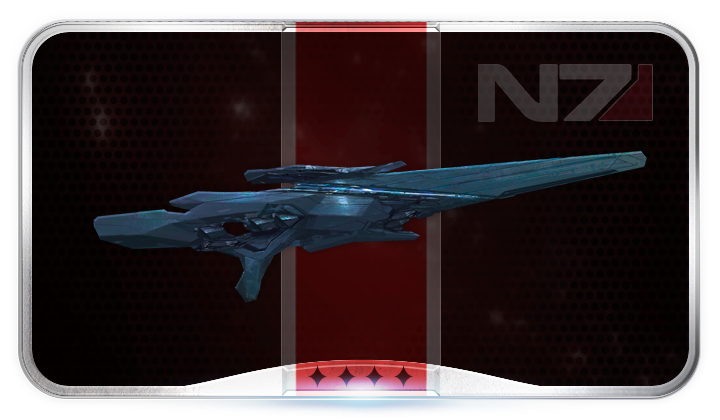
Particle Rifle

The Prothean Particle Rifle obtained from Mass Effect 3’s From Ashes DLC mission is an assault rifle limited only by the heat formed from discharge, enabling continuous firing until it overheats. To add to that, this rifle packs a serious punch and allows to eliminate multiple enemies with ease once you upgrade the ammo capacity, which keeps the fast-paced flow of combat. With its unique design, the particle rifle is one of the best weapons in the entire series and its capabilities overpower most other guns in the arsenal and while heat management becomes crucial at times and introduces an unnecessary micromanagement element, it never interferes in the action. While Mass Effect: Andromeda features a similar weapon in form of the P.A.W. rifle derived from Remnant tech, I never found its punch as satisfying as the Particle Rifle in Mass Effect 3 and the damage of the Prothean weapon is significantly higher than the Remnant rifle in the next entry.

N7 Crusader Shotgun
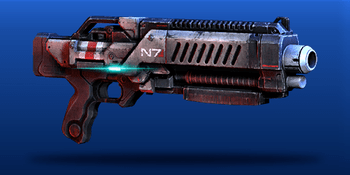
The N7 Crusader Shotgun has the highest DPI out of all shotguns available and only the Krogan-engineered M300 Claymore rivals the power of the Crusader. The N7 Crusader is seriously heavy and thus most players won’t use it, but the tradeoff can sometimes be worth it. The Crusader eliminates most enemies with a single shot, and especially works best in Charge-based Vanguard builds with its serious damage but short range, giving biotic-light players an opportunity to create a powerful assault build. Equipping the Crusader leaves little room for other weapons, which is one of its downsides and even the highest level of Light Materials upgrade barely fixes that, but its incredible power makes it a serious tool for competitive players, who can still opt to add a pistol and an SMG into their loadout.

Reaper Blackstar

Nothing says “Collateral Damage” more than the experimental Reaper Blackstar. Available in Mass Effect 3 on multiple missions, the weapon can be used in instances against overwhelming odds, and the game is generous enough to let players use the Blackstar on multiple occasions. Although developed by Human researchers, the prototype is heavily based on Reaper tech, which means serious damage is to be expected from it. The Blackstar delivers a powerful punch that can eliminate a brute or a harvester with one shot. The downside is a long charge time before the shot, which makes its timing crucial on missions where this weapon is available as you definitely don’t want to waste its high damage output. The Reaper Blackstar is one of the best weapons in the game, and although Mass Effect 3 removes the opportunity to carry heavy weapons, its limited use is made worthwhile by the sheer power it delivers.

Collector Heavy Beam
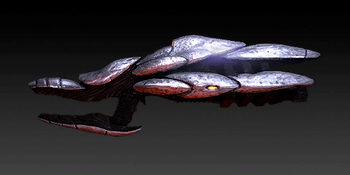
Back when the player character could carry heavy weapons in Mass Effect 2, the Collector Heavy Beam is the most powerful in the game, and available to those with DLC packs installed. Many no doubt wish it offered unlimited ammo, the limited capacity of the Collector Beam is still enough to get Shepard out of the toughest enemy encounters. Similar to the particle rifle, the Collector Beam fires continuously, however instead of overheating, it is depleted once all ammo has been used up. The damage output significantly increases the more the beam is discharged, which makes it particularly strong against heavy mechs encountered in the game. The Collector Beam is much more powerful than the game’s other heavy weapons, and can also  be used on larger groups, which gives it a lot of versatility, thus earning it the spot on this list.

Black Widow Sniper Rifle

If you actually manage to have good luck with a stealth build, the Black Widow is the ultimate sniper rifle in the arsenal and makes long-range combat a breeze for skilled players. Combined with the cloak ability, the Black Widow is a serious threat to enemies, however the rifle’s heavy weight somewhat limits the ability to use biotics. For ranged combat, however, the Black Widow is ideal, and for those who prefer to stay still, it is an ideal murder weapon, given it eliminates most enemy threats with a single headshot. Its design is military-grade through and through, but there’s some beauty to it, although you won’t be focused on that while sniping off enemy heads and while its limited capacity can prove to be a disadvantage, higher damage is a worthy tradeoff in a stealthy character build.

M96 Mattock Assault Rifle

The conventional Mattock rivals damage levels of the Prothean Particle Rifle, and while it won’t offer unlimited ammo, there are plenty of crates in the world to replenish it. Firing in single-shot bursts, this assault rifle packs a serious punch with each hit and only a few rounds are necessary to eliminate most targets, which makes it another powerful contender on this list. Unlike most weapons on this list, the Cerberus-made Mattock is also available across multiple games, first being given to players in Mass Effect 2 and available on offer in both 3 and Andromeda that followed. The Mattock is extremely satisfying to use and is only one of the few assault rifles out of the broad arsenal that can be considered truly great, which made me choose it more often than not when replaying Mass Effect 2 or 3.

M560 Hydra Rocket Launcher
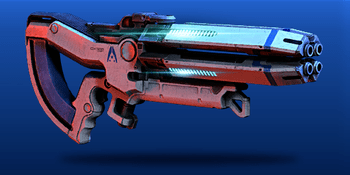
I’ve always liked the fact that Mass Effect never had conventional rocket launchers and the M560 Hydra proves that at many levels. While the power of its 4 combined rockets significantly lacks behind a single shot of the Reaper Blackstar, it is good enough to eliminate most heavy mechs in the game. Additionally, the Hydra packs in more ammunition which makes it great for multiple discharges in combat, and can easily eliminate Brutes before they even reach the player character. While I’d rank it third among the heavy weapons on this list as the Hydra is not  a particularly impressive rival to those, but its unique attributes still make it a worthy contender among the best weapons.

Sweeper Assault Rifle

The Sweeper assault rifle based on Remnant tech is a sweet weapon players can build in-game and I found it to be one of my all-favorite assault rifles to use in the series. The Sweeper fires in 3 shot bursts and features high damage to eliminate most targets quickly, and generally is among the more interesting assault rifles in the entirety of Andromeda arsenal. The Remnant tech is a research tree worth investing in for all kinds of players and there are multiple high damage weapons available to construct once the blueprints are researched. The Sweeper is among the best Remnant weapons available in Mass Effect: Andromeda and I’ve used it for most of my first time playing the game. With its high damage output and precise accuracy, the Sweeper handles better than the laser-beam P.A.W. Rifle and its satisfying punch makes it one of the best weapons not just in Andromeda, but the series in general.

N7 Hurricane SMG

Among SMG and Pistol categories, few weapons pack a serious punch to grant them a place at this list, but the N7 Hurricane just barely makes it under the requirements. Compared to the rest, its damage is relatively limited, however its precise handling and large ammo capacity make up for that by giving players a light versatile weapon that goes along well with heavy weapon and shotgun character builds, as well as biotic-focused players. The N7 Hurricane is quite far from powerful, and is only worth using on base enemies with no shields, but tackle on a few upgrades, and this Submachine Gun can be satisfying to use as a sidearm.

Omni Blade

It will be amiss of me to avoid including melee weapons into this list, but the Omni Blade is a seriously powerful melee tool that works well with Vanguard Builds and its striking power eliminates melee enemies with ease. While the Omni Blade has been seriously downgraded in Mass Effect Andromeda and is far from enjoyable to use, the Mass Effect 3 version is a stellar melee weapon available by default in the game. The animation for melee hits in particular is very well designed and shows Shepard lunge forward with an omni blade on each hand, making for an extremely satisfying tool available for melee combat.

Inferno Sniper Rifle

The Inferno is highly capable, and similar to the Prothean-based Particle assault rifle, avoids reloading through heat management, which allows for a few high-precision shots to be fired in quick succession. This sniper rifle is not limited by its ammo capacity, which makes it useful in extensive combat sections in Mass Effect: Andromeda, and while its damage output is quite low to compete with Black Widow, the Inferno has its own unique traits to make it a memorable weapon in the entire series, which earns it a spot on this list.

*all images are credited with their original sources


Things I’d like to see in the next Assassin’s Creed

ACOrigins_2018_02_24_12_40_52_164.jpg

Assassin’s Creed: Origins significantly reimagines the way an Assassin’s Creed game should be designed, and its new RPG direction gave us one of the best games in the entire franchise. It is up for speculation whether Ubisoft intends to release a new game every 2 years on a new schedule or if we’re about to start getting sick of annual releases like in the past, but Assassin’s Creed: Origins lays a solid foundation for future games to follow that might allow Ubisoft to release new and interesting annual releases. So far rumors on a new Assassin’s Creed are very minimal, but one could guess about potential leaks at E3 2018 or the internet. As Origins is still very fresh in the gamers minds’ with Curse of the Pharaohs that was recently released, it is not a concern so far whether we’ll get a sequel in 2018 or the following year, but here are the features many would want to see from the next Assassin’s Creed outing. While the list is mostly formed from my own opinion, the features I speak of are in no doubt wanted by many gamers. Here’s what I’d like to see in the next Assassin’s Creed game.

*all images used have been captured in Assassin’s Creed: Origins

Setting – Ancient Greece

20180213141522.jpg

Assassin’s Creed: Origins has perhaps the best-designed world in the entirety of the series and its ancient Egypt setting has been flawlessly executed as the game transitioned from Action to an RPG with character progression, numerous quests and diverse gear. Following on from Origins, the next Assassin’s Creed could explore settings like Ancient Greece or Rome with similarly vast and diverse worlds that Ubisoft can build in a similar way to Origins. Ubisoft could potentially follow up with a direct sequel to Origins set in ancient Greece, although introducing completely new characters is also a great option to keep the series fresh. A similar gameplay format to Origins would be ideal for the sequel as well, although I’ll talk about it in detail later in the list, and we can have another excellent Assassin’s Creed on our hands. Ancient Greece serves best as a setting, and can potentially introduce a better overall plot more involved with the world’s politics and struggles, but regardless of which setting Ubisoft chooses, a sequel to Origins can prove to be another excellent game in the series.

More Ship Gameplay. Give players their own ship.

20180210161833.jpg

We haven’t seen a ship-based Assassin’s Creed game since Rogue in 2014 that was essentially a copy-and-paste game formed from Black Flag, although AC Origins features multiple naval missions that involve similar gameplay to the adventures of Edward Kenway, however still lacked personal elements such as ship customization or diverse missions based on the gameplay. The new Assassin’s Creed could bring back more sea-based gameplay and even give players their own ship perhaps. Set half the game in the Mediterranean Sea and islands allied to ancient Greece and we can have a really excellent game that blends AC Origins and Black Flag into a one well-designed game. Ubisoft could also give players the ability to dock in multiple cities and then free roam a large portion of the world on a mount to complete quests. Switch it up with sea-based exploration and gameplay both in the open world and the game’s plot and we can have a really interesting game on our hands and perhaps the strongest Assassin’s Creed yet. With that said, ship combat is also one of the best gameplay systems in the entire series and many gamers no doubt would want to see another Assassin’s Creed game based around naval exploration and combat.

Meaningful skill system.

ACOrigins_2018_02_24_12_42_09_045.jpg

The skill tree in Origins wasn’t particularly interesting

With the new RPG direction, Ubisoft nailed about everything in Origins apart from the skill system, which was mostly composed of XP bonuses and various other dull abilities and only gave players a few really interesting skills to play with. In the sequel, Ubisoft really needs to improve upon the skill tree by giving players more interesting attributes to invest in. Perhaps give us a better skill system through numerous passive abilities or more interesting actives like the Charge Attack in Origins, and the skill tree can be much perfected. Another ancient setting also begs for more interesting tools that the main character could use and introducing an entirely separate skill tree dedicated to passives and gear wouldn’t be a bad idea. The goal would be to eliminate the endless boring skills seen in Origins and give players a more meaningful progression and skill systems to create an even better game than the already excellent Origins.

Keep game design from Origins

20180210150011.jpg

AC Origins has the strongest game design of all releases in the franchise, supported by relatively high review scores across the board, and keeping all of it intact would be crucial to create a sequel just as good as Origins. RPG gameplay has proven to work really well in the framework of Assassin’s Creed and is one of the highlights that make Origins very enjoyable across 60+ hours of gameplay, which makes sense to follow up with a similarly-designed game in the future. There are very few flaws in the gameplay of AC Origins and the involving combat was also one of the strongest points in the entire game, giving players something more challenging than a counter-hit formula of its predecessors. Having taken 2 development years to overhaul many of the game’s systems, Ubisoft should stick with the formula they came up with and only focus on improving these gameplay systems. The RPG design also made up for some very interesting side quests that fleshed the world out and as such, it only makes sense to stick with the new direction for at least a few games moving forward. AC Origins’ game design was one of the strongest points in the game, which allowed the game to secure high scores across the board in gaming media, and Ubisoft should retain all of the Origins’ systems to secure commercial success for the series.

World Size Same or Bigger than Origins

20180211181014

With Origins, Ubisoft have created the biggest open world yet for the series, giving players a large varied world with multiple major cities to explore. For the sequel, the developers should focus on changing some exploration systems such as collectibles, that haven’t been all that engaging in the form of animal nests and relic locations, as well as on further expanding the size and density of the game’s world. If we were to stick with the ancient Greece setting, this will allow developers to create large-scale cities and various villages with the overall world size similar to Origins if not larger. AC Origins has lots of interesting locations to visit and explore, which makes up for a lot of the fun during gameplay and the diversity ensures players don’t get bored of exploring these regions for treasure, viewpoints or enemy camps. A sequel should follow up on the same structure and give players a multitude of locations contained within an overall world map. Given the scale Origins achieved, Ubisoft already has a solid foundation for game world design and can build upon it further in the sequel.

Retain Meaningful Side Quests

20180210132339.jpg

Side quests in Assassin’s Creed: Origins were one of the strongest points in storytelling, putting the drama of the main plot to shame, and significantly fleshed out the world of ancient Egypt through dialogue that provided backstory on the struggles of Egypt, additionally introducing new characters that the protagonist already knows in the game. Side quests provided for numerous laughs throughout their completion, and the amount of thought placed into these can sometimes be staggering. For example, in Origins, side quests ranged from exploring depths of ancient tombs to reflecting the struggle of Egyptians against unofficial occupation by Greece, to solving murder mysteries and so on. The constant variety in side quests always introduces something new to the game, which makes completing those missions not only compelling, but sometimes satisfying with the outcome. A sequel should thus just follow a similar template and expand even further on the diversity of side quests available in the game, which would make for even stronger game design, but again, Origins already set the bar quite high for the series moving forward.

Expand gear variety

20180210130135.jpg

Origins has a pretty much perfect weapon selection for its gameplay design, but we could always go for more and more variety and content. Weapon selection worked really well in Origins and covered every gameplay style available to the player, which made experimenting with builds really satisfying. One major improvement to add would be multiple build slots to allow players an easy switch between multiple character presets. With diverse weapons such as bows, swords, spears, two-handed axes, two-handed swords and various other blunt weapons and sharp pikes, Origins had a perfect weapon variety to cover both heavy offence and stealth builds. Giving players multiple build slots in the sequel would allow players to easily switch between multiple presets, and the sequel would need to expand its weapon variety to a significant extent. Depending on the game setting, we might just see even more weapons in the sequel.

Assassin’s Creed: Origins Review

ACOrigins_2018_02_24_12_40_40_252.jpg

Developer: Ubisoft Montreal, Publisher: Ubisoft

Published: October 27, 2017, Reviewed On: PC

Tested On: Core i5-6500 3.2 GHz, 16 GB DDR4 RAM, Gigabyte GTX 1070 8GB, Windows 10


Assassin’s Creed: Origins is a major reinvention the series desperately needed, and by taking an extra year to work on the template, Ubisoft has brought us something that both feels very familiar, but also completely fresh. They essentially gave us a full-on RPG experience that both integrates well into a large map and the series’ staple game mechanics. This direction is something Assassin’s Creed needed and after 30 hours of rigorous game testing, I can easily say this is the best direction the developers could have possibly chosen. The map’s scale easily compares to the likes of Witcher 3, and unlike the similarly sized Ghost Recon: Wildlands, Egypt is filled with major cities along with unique landmarks of its era. Ubisoft kept modern elements of the series, which I feel was unnecessary with the new RPG focus, but game forces too few of those sections upon the player, which evens out the negatives. On the overall, Assassin’s Creed: Origins is a superb game experience and the series is back in action with an entirely new entry.
20180215153343

The new direction is very welcome for the series and Assassin’s Creed: Origins is not a full-out role-playing game. Provided I have only played a fraction of what the RPG games market has to offer, Origins still plays really amazing and its personally my second favourite RPG game after the stellar Witcher 3. The game’s expansive world provides hours upon hours of content, and after more than 30 hours in, I have yet to discover half of what the ancient Egypt setting has to offer. Bayek’s story is a blast to follow despite some minor issues reflected in poorly written dialogue, and Assassin’s Creed: Origins combines its story, gameplay and world into one excellent package to rank among the best RPGs to have come out in the recent years.

The beauty of ancient Egypt is gorgeously reflected in this game, which benefits the most from running on a high-end PC rig. The level of detail is stellar, and unlike Ghost Recon: Wildlands’ map, the world in Assassin’s Creed: Origins is filled with tons of secrets and explorable tombs. In a sense, the game notably combines the elements from Tomb Raider, Far Cry, Assassin’s Creed and The Witcher series into the one quality release, and because it combines those gameplay traits masterfully, Assassin’s Creed: Origins is not a bad game for doing so. Origins also retains a lot of gameplay elements we’ve come to know from the series, with signature climbing and parkour, although movement here feels more fluid. Speaking of climbing in the graphics section, the draw distance in Origins rivals that of Wildlands and Witcher 3, and its detailed cities further represent the high level of detail. If you can maxx out the settings in full, the game will look stunning, however if you intend to go for anything like 4K, a GTX 1080Ti if not 2 will be required.

20180220221355

AC: Origins features some large-scale cities

Two major elements have been overhauled in this release in the series: exploration and combat. Exploration is much more meaningful now, and you no longer go by revealing icons on the map after climbing viewpoints. Those are still present, but only reveal side quest markers and an array of question marks on the map. Discovering those feels familiar to those who played Skyrim and The Witcher 3, with exploration that feels refreshing for the Assassin’s Creed series. You never know what you’ll find at the next question marker: it might be a ruined temple full of loot or could be an enemy camp, which can sometimes be a few levels higher than the player. This diversity ensures the player would never get bored of exploring the world of Ancient Egypt and Assassin’s Creed: Origins has nailed the authentic RPG feel I’ve come to expect from the likes of Witcher 3 and once again, I find that the move into the RPG territory proved highly successful.

The second, and objectively the most important part is the combat. While Assassin’s Creed: Origins retains most of the series’ signature exploration gameplay outside of combat, the latter feels much more challenging than the hit/counter combat of older games, and also fresh, well at least for the series. Through multiple weapons, fast and strong attack mechanics and dodge/parry, Assassin’s Creed: Origins felt immediately familiar to me after playing many action RPGs; but although its familiar to me and would be to many, these elements offer a fresh start from the repetitive counter-combat we’ve seen out of every Assassin’s Creed game prior. The new combat is a fresh direction for Assassin’s Creed, and I hope the trend follows with its sequels which should ideally now be coming out every 2 years if Ubisoft intend to build upon the strong success of Origins.

20180213140540.jpg

The size of Egypt’s map is absolutely enormous, and with recent entries Ubisoft is gearing up to release massive open worlds for many of their major series. While Ghost Recon: Wildlands didn’t exactly make its open world engaging in any way, or fun for that matter, Origins’ RPG style yet again plays to its favor. After 30 hours in, I still have to discover half of what the entire world has to offer (plus 2 new areas in the released DLC content) or even venture into completely unknown areas. In theory, you can explore the entire world of Origins from the get-go, however regions are broken down by player level required and many require level 30 and above. This is partly the fault of the game’s progression system which I will touch on later, but the player could at least explore these regions at their leisure and many of those would be helpful to see through the game’s Adventure mode if you want to reveal them right away. At the same time, gradually unlocking the map remains fun due to a gratifying feeling of exploring new areas as the game progresses. I have a little under half a map left exploring under my belt and I remain excited to visit and discover these new areas. The organic map discovery is what makes spending upwards of 60 hours on this game a good value proposition, and as previously mentioned, having to then travel to each point of interest from discovering a fast travel point is more refreshing than having all points revealed right away. This design is a huge improvement over the traditional Ubisoft open-world gameplay formula and I’ll be hoping Ubisoft incorporates the specific world design of Assassin’s Creed: Origins into their future titles. Also, can we please see an open-world game out of the next Splinter Cell sequel?

The story in Origins begins as a simple revenge tale, and soon develops into a structure similar again to Ghost Recon: Wildlands. Seriously, how many similarities can these games share? One’s a tactical shooter and the other is an RPG on the opposite side of the gaming spectrum but somehow Origins shares more in common with Wildlands than even its predecessors. Then again, it seems Ubisoft is starting to reinvent its games with the new Ghost Recon. Besides any of that, the story has very solid writing, and eliminating targets is only a part of Bayek’s long journey to avenge his song, get involved in Egyptian politics and even establish an assassins’ brotherhood while he’s at it. As my review is coming quite late, I don’t see why I can’t spoil some of the game as I’m sure many would have played this game already. The story is quite interesting too and rivals that of Black Flag, the Assassin’s Creed game that was the most fun in the last many years.

20180212114248.jpg

Side quests really shine as well, and a few can even be the strongest points of the whole game or at least highlights. Like this one fort that took me hours to beat even when I was 5 levels above the quest level involving that location. While not exactly interesting, its certainly memorable in my case. But there can be other prolonged quests that have multiple stories hidden behind them: a simple search for someone for example may land Bayek exploring an ancient pyramid – quite an abrupt change I would say. Many others may take a while to complete, and don’t be surprised to find quests that last many hours, however they can be extremely diverse and fun and also allow one to learn more about not just the world, but specifics such as Egyptian politics with Greece and Rome, poverty and bandit raids. Many in Egypt seem to be heavily oppressed by one thing or another, but I still found it fun to complete all of these side quests for that sometimes necessary XP. Sometimes Bayek ends up a few levels below the recommended level for next story quest, which can force a bit of a grind and is a slightly annoying feature when those who prefer story quests would want to play through the game. Yet again, since side missions are generally diverse and most are not boring, I don’t mind having to do something new instead of following a somewhat predictable storyline. Paired with enjoyable gameplay, Assassin’s Creed: Origins still remains fun after I’ve put 30 or so hours in.

It would be redundant for the reader to hear yet again about the revamped combat for the series, so won’t touch up on that in this category. The remaining elements that consist of previous Assassin’s Creed gameplay mechanics provide a nice blend to the new RPG combat, although some tweaks are noticeable as well. The climbing is much more fluent and some segments may require more running skill than we’ve come to expect from the series. Leaps of faith are still quite present, as well as sometimes annoying Animus segments. The modern story continues to be boring so I won’t discuss it, but this time the interruptions from Bayek’s journey are minimal. Assassin’s Creed: Origins is still partially a stealth game, which blends nicely with the RPG combat as I still have gameplay choices. I could stab everyone quietly in the camp to take over or I could watch my new swords easily slice up enemies as I just walk into a fight inside. There were a few nice touches such as ship combat segments taken out of Black Flag, but I didn’t find them as fluid or satisfying due to the simple fact they were rather short linear stories. As such, while Assassin’s Creed: Origins got rid of major issues found in its predecessors but retained a lot of gameplay from previous entries in the series, it also introduced a lot of new elements which in the end make a perfect blend between an RPG and the old-fashioned stab-em-up of Assassin’s Creed.

ACOrigins_2018_02_24_12_41_52_996.jpg

The game’s progression is often at odds with itself and serves as one of the game’s only weaker points. The skill system is not particularly impressive, and few skills actually make a difference or introduce a new combat system. For example, leaping shot is a great skill to have with ranged weapons, but there are far too few interesting ones in the game’s large skill tree. Most skills just offer a boost to XP or money earned and those incremental improvements don’t exactly serve justice to an otherwise stellar RPG. Levelling up is also fairly uneven and I often found myself checking off multiple side quests before I could proceed to the next story mission. As in any other RPG, player levels are earned through exploration, combat and questing and each quest features a suggested level. Gear is also broken down by levels and new loot is tailored to the current player level, although Assassin’s Creed: Origins enables to upgrade most weapons to continuously keep them in the inventory, which I found neat for my legendary weapons acquired with the DLC pack. But seriously, it’s a little bit cheating if you use those. The loot system is fairly generous with high-end or legendary weapons as well, and it’s always useful to keep at least one weapon of each type available – some combat encounters can be best taken on with specific weapons. Collecting loot adds to the fun of the game and kept me engaged throughout my entire playthrough, which is something every RPG needs to have and Assassin’s Creed: Origins otherwise delivered apart from its uneven progression.

What I really appreciated with the loot system was the diversity of weapons it gave me: 4 types of bows, dual swords, regular swords, dual-handed axes, sword and shiel, etc. This shows greater emphasis on player choice and there’s a fair bit of diversity in how the weapons handle plus the combat is extremely satisfying with meaningful hits and executions as in the Witcher 3. The combat’s flow has been designed really well and the screen never gets too busy with action, although the field of view is limited to the disadvantage of the player and its very easy to miss attacks incoming from off the screen (which is how I died a lot of painful times). While a minor issue, a field of view slider wouldn’t hurt or tilt of the camera can be changed to provide both deeper player immersion and eliminate some of these glaring issues. Assassin’s Creed: Origins also avoids the repetition seen in most Ubisoft games and while many exploration elements and travel time can be considered boring, it is all part of the game experience.

20180225195411

Assassin’s Creed: Origins also packs a few interesting features, such as its built-in photo mode that is easily activated by pressing down on both sticks of the controller. It’s a neat trick when you are doing reviews or want to share screenshots with others and while the mode is simple, it didn’t disappoint in taking high quality shots. The camera can also be rotated freely which provides for some great shots of the game’s environment, however its worth noting that the mode is only limited to Egypt and can’t be activated during the modern times. The game’s exploration mode has also been talked about a lot, and comes as part of 3 DLC packs available to download for the game. This mode removes all combat out of Origins and adds commentary about the game’s locations and historic context – it’s basically for those who want to take a break from all the action and enjoy a relaxing game. The other two content pieces – The Hidden Ones and Curse of the Pharaohs I’ll be fully reviewing in the future so they will get their own separate articles.
Assassin’s Creed: Origins gave the series a fresh breath it needed and has established the franchise as a fully-featured RPG which served greatly to its benefit. The overhauled combat is a nice change from previous entries and the RPG focus really shows through progression, questing and the plot. Origins is really enjoyable to play and offers us a setting many have wanted for years with its enormous map of Ancient Egypt. The plot is not complex, but side quests serve to further flesh out the lore of the game’s story and its world, and give players something diverse to do from the main plot. Mission design is executed perfectly for the most part and Assassin’s Creed: Origins offer more player freedom than ever thanks to its multiple weapons and the RPG-style combat. Ubisoft succeeded with reinventing the series and Assassin’s Creed doesn’t feel stale anymore with this entry. If anything, the RPG focus is a feature that should be used in all following releases. Assassin’s Creed: Origins is definitely worth checking out and offers an extensive amount of content to get through.

10 Games that need to be ported to Android

With Android APIs becoming more powerful by the year, and countless flagship phones packing the latest specs available on the market, the Google Play store still feels void of high quality mobile game releases, and up to this day, simple puzzle games outweigh ports of older triple-A games. As of late we have seen many releases of older titles (5 games in the Grand Theft Auto series and the expansive Star Wars: Knights of the Old Republic and sometimes even new ones (I’m talking about you Telltale), which means that the mobile game market is strong enough to accept even more ports of older games released at reasonable prices. The tech constantly improves and customers already see high-end flagships to rival the power of notebooks in the Razer Phone (read my full review here) as well as the OnePlus 5T. The mobile gaming industry, especially its side backed by major publishers needs to wake up and instead of pumping out endless free to play titles, give us some of the older games we used to enjoy on older platforms, which most don’t have access to anymore. On that note, these publishers will also hugely benefit from releasing these games and would see a demand in older titles. Below is my personal list of games I think should be released on the Android platform, and given current tech and the age of these titles, they would function perfectly if ported over from PC to mobile.

Note: this list represents only my personal opinion and is not correlated to sales figures or developer plans for any of these games.

1. BioShock

BioShock has already been ported in full to iOS, however it would be a good idea for Take-Two to consider moving the game over to Android devices. With powerful APIs like the Qualcomm Snapdragon 835 and high-end flagships like the Razer Phone and OnePlus 5T with 8GB of RAM, BioShock can perfectly run on Android devices and it would be a delight to see that classic released for Android devices. Android is more than capable for handling the specs of BioShock and Take-Two will highly benefit from the platform and their previous porting experience. Lets hope we see the full BioShock game released on Android devices in the future.

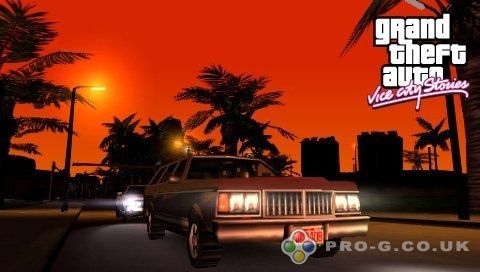
2. Grand Theft Auto: Vice City Stories

Rockstar have been busy porting their entire gaming catalogue over to the mobile systems, starting with the release of Grand Theft Auto 3 on Android in 2011. So far they’ve released every major and side entry in the series, including the expansive GTA San Andreas, with each game following a precise 10 year anniversary. Which makes it strange that we have yet to experience another Grand Theft Auto from the PSP era: the Vice City stories, which I personally think is one of the strongest entries overall. Plus, the expanded character abilities and inclusion of aircraft really made Vice City Stories shine on a handheld. Considering Rockstar ported every of their older games to mobile platforms, including the recent Bully: Anniversary Edition, we would want to see GTA Vice City stories released in full glory in the near future, plus we are dying to see Midnight Club which I’ll talk about below.

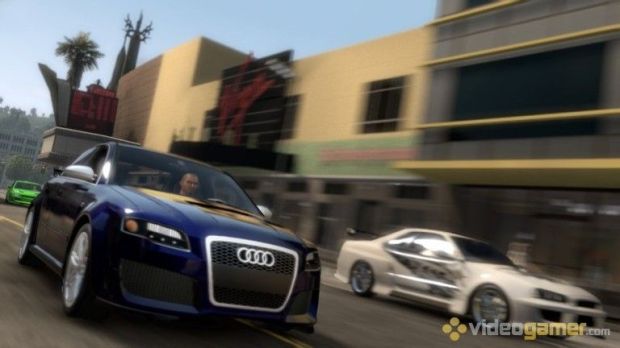
3. Midnight Club 3/Los Angeles

For reasons seemingly unknown, Rockstar games have canned their Midnight Club franchise, and it seems for good too. The last release in the series was Los Angeles, which came out all the way back in 2006 and Rockstar have since been silent about any new regarding the fun racing series they once produced. Despite the absence of Midnight Club, however, Rockstar consistently delivered high-quality titles to the table: Red Dead Redemption, L.A.Noire and the spectacular Grand Theft Auto 5. The reason to release Midnight Club (either the 3rd game or Los Angeles Remix) is because Rockstar have ported over many of their classic Grand Theft Auto games, as well as recreated Bully on the mobile platforms. Rockstar still has a solid back catalogue they could consistently port over to mobile devices, and the open-world fun of Midnight Club games will be simply unmatched on the Android platform. For this list I went with both of these games as they can both be easily ported and have a few different elements to make both games worth playing.

4. StarCraft

Strategy games are not exactly the perfect format for mobile gaming, especially when it comes to smaller phone screens, however on tablets, they are an absolute blast to enjoy and I personally think StarCraft would fit perfectly into this market niche. Although to my knowledge, Blizzard lacks the background to port games over to mobile systems, the company gave us a remastered version of this game, and they’ve also been busy with updating their older titles to be compatible with modern hardware. Even StarCraft Remastered could be ported over to mobile, as that version’s improvements are still a far cry from creating a demanding title. The game would no doubt require some major UI overhauls to function with touch screens, but I am confident that Blizzard can either outsource the porting to another studio or do it themselves. Plus, the continued overwhelming success of Overwatch and Hearthstone has Blizzard holding too much money in their pocket that they could invest in many areas of the gaming market.

5. GRID

Although Codemasters are going strong with their annual F1 series that keeps getting better, as well as the excellent Dirt Rally and Dirt 4, the studio should really consider delving into the mobile market. The first GRID is old enough for any new flagship phone to handle, and while the game still holds its look well on PC, a small downside in graphics wouldn’t hurt an otherwise masterful blend of arcade and sim racing. GRID has a wide appeal to racing fans as it is not serious enough to be annoying, but can be challenging in certain places. As more and more paid games release on the appstore, GRID could fill a racing niche as the mobile market still lacks fully-fledged racing titles, just besides the recent Gear Club (read my full review of that game here). Apart from the free-to-play racing sims like Real Racing 3 and GT Racing 2, GRID has a good spot to fit in if the developers ever considered porting their game to mobile.

6. Any Burnout Game before Paradise

BOPR_Screenshot_4k_04_RearMuscle

Polygon; screenshots for any prior game to Paradise are impossible to be found in HD

Oh Burnout, how much have we missed you. Not only has there not been a new game in the past 10 years (apart from the announced Paradise Remastered which doesn’t count) and technically only 9 years for PC gamers, but EA haven’t even made an attempt to release any of their older Burnout titles which are just as good as the stellar open-world Paradise. I could think of any game from the PS2 or PSP platform, whether its Burnout 3: Takedown or my favourite Burnout Legends on the PSP (Burnout Dominator didn’t make the cut unfortunately) that could be released on mobile devices. Yes we do have high-speed adrenaline racing in form of Need for Speed and the Asphalt series, but these games don’t even come to the level of satisfaction when you send your opponent crashing straight into an oncoming bus. As we see more and more ports of older games on mobile, EA as a company needs to strongly consider delving into their vast back-catalogue which does have quite a few fan favourite titles.

7. Test Drive Unlimted (PSP version)

With Eden Games’ recent release of Gear Club on Android, perhaps the studio is considering getting back into business through the mobile platform. Given the power of current Android flagships, a potential port of Test Drive Unlimited from the PSP platform would make for a stellar open-world racer with expansive elements that the series used to have. Some could argue about choosing the PSP version, but I personally enjoyed the game on the handheld than its PC counterpart much more, which is why I chose this version of the game. With mobile phones increasingly becoming new handheld gaming devices, whether on the go or at home, through some high quality game releases, having a large open-world racer will bring Eden Games big bucks. I am dying to see which developer will make a first step in creating a fully open-world game. And a vast collection of cars and purchasable property makes for a very personalized experience.

8. Need for Speed: Most Wanted (2005)

EA, your current mobile strategy is absolutely wrong. Instead of unleashing endless free to play games based on different series every year, why not take a look back at fan-favourite classics? The older games of the Need for Speed series come to mind, and mobile phones can easily handle older versions of EA engines. 2005 Most Wanted is an ideal game to port over to mobile, as it was the best entry in the older Need for Speed games, although I’d be happy if they’d add Underground and its sequel to the list. EA needs to stop with the free to play average games like NFS: No Limits and look at its back catalogue as it contains many great games that could run on mobile in 2018 and beyond. Need for Speed: Most Wanted offers the best street racing experience you could find in gaming and its in-depth customization system and an extensive career mode would make for a AAA release on the mobile platforms.

9. Star Wars: Knights of the Old Republic 2

Given Aspyr Media has already provided us with a complete port of a stellar RPG Knights of the Old Republic by BioWare, it only makes sense to follow up with a sequel, however it is up to debate as the sequel license belongs to EA and Obsidian. Despite its control flaws when playing on the phone, easily fixed by using a tablet or buying an Android controller like the MOGA Pro, Knights of the Old Republic is still one of the most expansive RPGs on the Play Store and few years in, it still runs well on modern devices. Since KOTOR 2 used the same engine as its predecessor, current Android APIs can more than handle another vast RPG. Here’s hoping we see Knights of the Old Republic 2 on mobile devices some day.

10. Torchlight 2

Torchlight 2 is known to be one of the least demanding games when it comes to computer hardware, and I’ve used to play the game on an Asus Laptop with 4GB RAM and a Core i3. My new Razer Phone is twice as powerful than that, and with the growing list of hack and slash action RPGs being released on Android, notably Titan Quest, I don’t see why Torchlight 2 wouldn’t work on a mobile device. It would need some simplifications of course, such as condensing its list of abilities or enabling convenient controls to switch between spells on the go. Torchlight 2 would be a very addicting RPG on Android and I personally think whatever price the developer could potentially stick on it would totally be worth a 60+ hour experience with a New Game + mode.

Razer Phone Review – Will embarrass other flagship devices

Phone Specifications:

Snapdragon 835 CPU

5.7″ 1440×2560 IGZO UltraMotion Display

8GB LPDDR4 RAM

64 GB internal storage + up to 2Tb expandable storage

4000 mAh non-removable battery


When I’ve finally grown sick of going through a new budget phone every year, it was time to look into a reasonably priced flagship handset, and I’ve found my choice in the last company many would think of when shopping for a mobile device. Razer is a well-established brand in the PC accessories market, but the Razer Phone is their first foray into a creating a well-rounded flagship killer. Spec-wise, the price is very competitive, and the Razer Phone outpaces every single phone in the price zone above it. Razer will sell you a fully unlocked version for $700USD or $900CAD, and I would highly recommend purchasing the phone directly from the company’s website. The benefits of paying Razer directly include high priority international shipping, where I received my phone in Ottawa within 4 days of ordering it. Mind you, it ships from Razer’s warehouse in Hong Kong which makes the shipping dates crazy quick. User experience will vary of course but buying from Razer’s store lets you support the company more directly.

Now on to the phone itself – the Razer Phone gives every flagship device a run for its money and is in fact currently one of the only 2 phones to have computer-grade specs in a smartphone chassis. The other device I’m talking about is of course the OnePlus 5T, also a flagship with specs that almost seem overkill for a mobile device. I will focus on the Razer Phone in this review and show no comparison charts between the two – this review encompasses my opinion of the device after a month’s use.

The short summary of the phone’s hardware already shows really impressive stats, even for a flagship device, and after extensive use I can easily say the Razer Phone is the best phone to get on the market (despite some camera issues which I will touch upon later). The phone features the very first 120Hz-capable display on a mobile, which produces impressive results during gaming and content streaming. The phone is packed to the brim with latest tech to outpace any other flagship, and Razer hands on packed the best speakers into this mobile device.

The Razer phone impresses right away starting with its packaging, which is a fairly large box that has a premium feel. Compared to little phone boxes we see on most devices, Razer ships you a really nice designed box that contains the phone with all required accessories. The packaging is exactly as I’d expect from a $900 flagship and Razer individually boxes its cords and adapters inside the bigger packaging.

IMG_20180302_140031.jpg

The box is very nicely made

Included in the box:

3.5 mm to Type C audio adapter with DAC

USB-C to USB-C cable

USB-C QuickCharge 4.0 plug

2x Razer Logo Stickers


IMG_20180302_140200.jpg

Its a bit of a shame that the charging cable is Type-C on both ends

Since Razer is one of phones to lose a standard audio plug, it is convenient that the company includes an audio adapter as standard with their phone. And further, Razer didn’t just throw in any cheap adapter cable, instead opting for their branded adapter with a DAC sound enhancer built in. One disappointing thing with accessories, however, is there is no USB-C to 3.0 cable included, however a quick trek to Amazon can net you a high-quality Anker adapter for $10 to connect the Razer Phone to standard USB devices. As I’ve yet to acquire that cable, I tend to rely on Dropbox as the main source of transferring files between my Macbook Air and my phone.

Razer Phone’s design is very impressive and its blocky nature only provides a fresh change from the standard fare of endless rounded up devices. The phone is perfectly rectangular, and phone enthusiasts are bound to recognize the design cues from Nextbit Robin that briefly stirred up the smartphone industry. I’ve looked into Razer’s inspiration, and the company indeed acquired Nextbit into the Razer brand, which allowed them to effectively use existing design packed with high end hardware. At the back, the phone features dual rear cameras along with a flashlight, which take up very little space in one of the phone’s upper corners. At the front there is a camera as well, designed to be small to get the most out of those loud speakers.

Screenshot_20180226-214005

Despite the phone’s impressive RAM, Android tends to use about a half on average

The Razer Phone is fairly huge given it carries a 5.7” screen along with large upper and lower bezels that house the speakers. For an average individual, I’ve mostly had no trouble using the device with one hand for typical tasks despite its blocky feel. The corners never get in the way of one-handed use and the phone is easy enough to operate in both portrait and landscape modes, however user experience will largely vary based on individual preferences. The minimalistic design then aids with the grip, given the phone only has side-facing power and volume buttons and the fingerprint sensor is cleverly embedded in the power button. The lack of clutter also makes the phone’s design look very sleek and what you have here is a simple yet elegant device that sets itself apart from standard design trends of the market.

The phone’s brushed aluminum feel is surprisingly deceiving to think the phone is cheaply made out of plastic, and the Razer Phone is indeed built on an aluminum frame like other flagships on the smartphone market. The solid frame design is apparent when holding the phone in hand, however I would quite frankly recommend buying a matching case and a screen protector. You could opt for Razer-branded accessories, however there are plenty of good options available on Amazon, such as this Tudia dual-layer case with resistance protection. The screen is made using non-impressive Corning Gorilla Glass 3 which is a bit outdated, however I see very few scenarios where this is a disadvantage for an otherwise beautiful display panel.

For sound junkies, there is currently no better phone on the market than the Razer, which packs high end audio drivers into its speakers and beyond, features Dolby 5.1 Audio enhancement. Combined with max volume and Dolby, the phone’s sound drivers rival any small Bluetooth speaker and inside, the sound spreads across an entire room. Bluetooth audio hasn’t been compromised on either, and although Razer’s phone is up to Bluetooth 4.2 standards, I found its wireless connection and sound quality much better than most phones you can get. Makes you wonder what went into this Bluetooth trick, but in the end regardless of which connection you go with for your music, you are guaranteed extreme satisfaction from the phone’s audio output.

The main selling feature of the Razer Phone is of course its 120 Hz Ultra Motion display which doubles the response of the screen to create the most fluid picture you can find on a phone. The WQHD resolution of 1440×2560 also aids in producing crisp colors, however based on battery needs, Razer’s display is also one of the most modifiable, though we do see similar features on most flagships these days. For Razer’s main gimmick, the refresh rate can be adjusted manually between 120, 90 and the standard 60Hz refresh rate of other phones. I generally found no need for 120 Hz refresh rate as 90 is an already smooth value. The Razer phone easily shines with its screen to outpace the competition, and I would highly recommend it to all people streaming media from their mobile device.

Screenshot_20180226-214045

Razer has kept the OS mostly clean with only a few Razer-specific features included

To back up the hefty demands of the phone’s screen and its powerhouse processor, Razer have included a generous 4000 mAh internal battery, however don’t get your hopes up thinking it will last beyond a day on a single charge. For a standard mix of user tasks with a hefty dose of music and Wi-Fi, the Razer Phone lasts for a full day, which not many smartphones can provide. Generally, what might seem like a hugely capable battery is actually on par with most modern phones. Razer have ensured their device will run  a full day on mixed use, and delivered, as my battery has never run out before the end of the day. To those means, it was their justification in removing the audio jack to pack in a large battery, and after extensive use of the device, I have no complaints for either.

On the software side, Razer doesn’t disappoint either, providing one of the cleanest third-party Android systems. With a few gaming-specific settings and a little Razer flare, the company has moderately built upon stock Android. As an added bonus, Razer’s partnership with developers of the widely successful Nova Launcher has allowed the company to integrate many of the launcher’s features into their stock OS. The clean experience of the Razer Phone feels quite refreshing from the common market of bloatware found with other companies.

Moving on to the cameras, and this is the area where the Razer phone has received negative feedback. Spoiled by 26MP rear cameras, critics have mentioned plentiful flaws out of the Razer’s camera, however on the overall note, the dual 12MP cameras do a great job at capturing images on the go. Although we’ve far gotten used to the fact of our smartphones replacing high end cameras, the Razer phone is not meant to excel in the camera department, and instead does so with its audio and the display. The selfie camera is also weaker and fails to capture high-detail images, especially when lacking clear focus, but it is a sufficient tool at being an everyday camera. Razer really only takes a clear hit with its lack of attention to camera quality, however the phone’s emphasis on entertainment indicates a clear direction for the phone’s production. The company’s phone may lack high-end cameras many have gotten used to, but it more than makes up for that in other features.

After a month’s use, I can highly recommend the Razer Phone as one of the superb flagship handsets on the market, and despite the company’s lack of involvement in producing phones, this is a very solid contestant for the stale phone market. The Razer Phone offers a well-rounded set of features that distinguish it apart from the standard output of the smartphone industry, counting a set of impressive front-facing speakers and a fluid 120Hz display to deliver a focus on entertainment that also functions as a superb daily driver. Razer is only one of the few companies to offer such an impressive performance package in a flagship device, and apart from some evident camera issues, the phone delivers on all user expectations. Add to that a fairly reasonable price point for a phone that outpaces most of the higher-priced competition by offering a superb display and speakers along with some innovative features previously not seen in the fairly stale mobile market, and you have one of the most interesting flagship phones currently available on the global market. Despite the previously mentioned glaring issues with the cameras that didn’t quite deliver to the standards we are used to with Android phones, I can easily say the Razer Phone is one of the best value propositions when buying a new flagship phone and totally worth its asking price. Razer has ultimately created one of the most innovative and powerful flagships that currently exist on the market and there is a lot of bang for the buck with this smartphone.

Screenshot_20180226-231625.png

The stock Razer theme looks very cool already

Pros:

+ First 120Hz screen on a mobile device with a 2K resolution

+ Highest specs available on the market, 8GB RAM

+ Clean OS with very little bloat

+ High capacity battery and stand-out design

Cons:

– Battery still only lasts a day

– Cameras are lacking compared to competitors


*Note: although I typically do not assign review scores, the Razer phone makes a solid 9.1/10 flagship based on my current experience after a month’s use despite some small camera flaws. If I run into any glaring issues through future use, I’ll make sure to keep this article updated with anything new I find. All images I didn’t take originally are credited to the Razer online store.

10 Best Open Worlds in Video Gaming

The open world format has become widespread across countless game series, becoming almost a standard for a sales success. Unlike the restrictive nature of linear gaming, open worlds allow the developers to go full out in creating expansive and interesting gaming worlds. However, this also means each publisher has to strive to create something new that has never been seen in gaming. We’ve seen this trend increase with Ubisoft’s open world output, and EA follows closely behind. Not every developer succeeds at creating a great or unique world, as it is a difficult process. Across the more recent games I have picked out 10 open worlds i consider to be both some of the best and also those to feature unique and interesting content. These 10 open worlds offer countless hours of entertainment, which makes their respective games a worthwhile buy for any gamer.

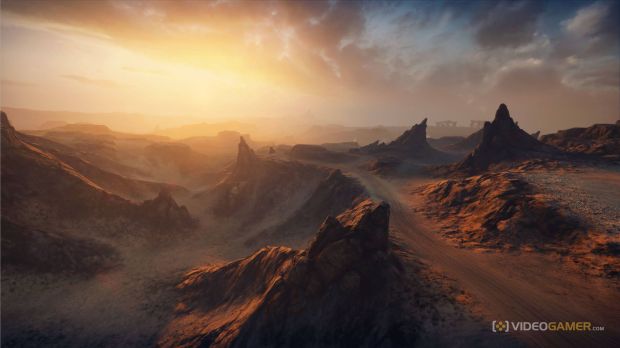
Wasteland – Mad Max

Mad Max by Avalanche studios gave us a glimpse of a violent apocalyptic world where oil and scrap essentially serve as currency. The designers’ vision created the best representation of a wasteland occupied by forces of a powerful warlord with the end result accomplishing the death of said warlord. However, Mad Max at its release seriously experienced open-world fatigue players developed through endless sandbox game releases. But apart from the game’s repetition and some gameplay flaws, Mad Max’s desert world truly stole the prize. The game’s large map provides plenty of diverse environments and unique landmarks to discover, although its melee combat could be much expanded upon. Eliminate endless outposts, scrap collection and retain the excellent car combat, and Avalanche studios has potential to further flesh out the world. Mad Max’s beautiful but deadly desert is a place worth revisiting with the good old Interceptor vehicle.

Seoul – Agents of Mayhem

AOM_Release_Final_2018_02_22_00_16_20_126.jpg

Volition gave us something new with their futuristic setting in Seoul for their Agents of Mayhem release, and the city’s existence in this list is based upon its unique futuristic setting that we rarely see in video games (Mirror’s Edge is the only example I can think of). Although we would have loved to be able to use the superpowers of Saints Row 4, Volition needed to ground the series back in reality with an open city to explore. Agents of Mayhem may not have lived to its hype, but it is a solid open-world action game and its unique setting makes it one of the best gaming locations to experience.

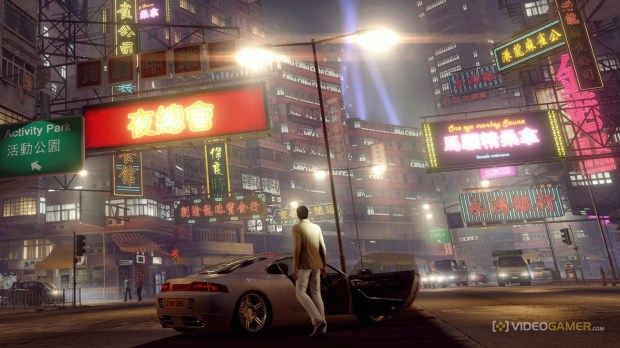
Hong Kong – Sleeping Dogs

Back in 2012, Square Enix published the most unique setting in video games at the time – a city far distant from the regular fare of US-based locations. Its detailed representation of Hong Kong culture allowed the game to be as immersive as possible. It is always fun to explore new cities, and Sleeping Dogs is a perfect game to delve into Hong Kong’s culture with both its story as well as its beautiful setting. Add to that the HD resolution textures given to us on the PC, PS4 and Xbox One releases, and Sleeping Dogs still holds up graphically well since its release in 2012. Although Sleeping Dogs 2 is unlikely to ever happen, other developers should explore unique cities, perhaps Singapore or Dubai as emerging settings to create genre diversity.

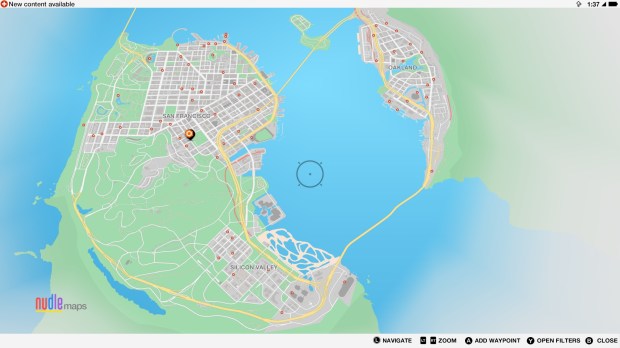
San Francisco Bay – Watch Dogs 2

watchdogs2_2017_01_31_18_51_32_238

Gamers don’t often see a representation of San Francisco in gaming, but Watch Dogs 2 did the best one yet when it delivered a sizeable map of the Bay area to explore. We further got to see famous landmarks and cruise down wide roads while completing an entertaining plot that also carries a series tone about our increasingly digital world. The original Watch Dogs also deserves a mention for its Chicago setting which goes unused, but it is definitely the sequel that gave us one of the best open world games to get immersed in. The Bay area in Watch Dogs 2 accurately represents the digital world and contains plenty of quirks to reference the darker side of Silicon Valley.

Los Santos – Grand Theft Auto 5

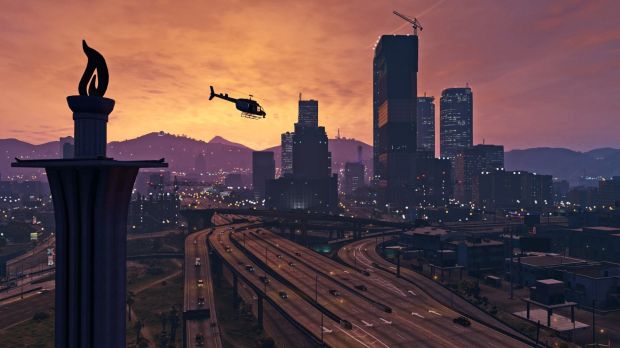
No one is capable of creating the massive cities to the scale Rockstar are masters at, and GTA 5’s Los Santos and the surrounding county prove the point perfectly. Los Santos still shines in detail on current platforms, especially if you option for the PC version which looks spectacular. Rockstar went multiple steps further, and crammed in as much detail as possible to produce one of the most intricate open worlds where its easy to get lost for a full day’s worth of a gaming session. The expansive nature of the game’s world and of course the series signature gameplay still make Los Santos an entertaining trip to return to. That is unless you concurrently play GTA Online and are permanently stuck in the wacky world of Los Santos.

Australia – Forza Horizon 3

Didn’t you ever want to blast across Australian outback in a hypercar the likes of Lamborghini Aventador or cruise by the beach in a BMW M5? Regardless of the answer, Forza Horizon 3 has the best racing playground in the entire history of arcade racers. With diverse environments, weather effects and a ginormous fleet of cars to take out for a spin, Australia shines in Horizon 3, and also happens to be another underused setting for video gaming worlds. For a racing game, Australia is an absolute paradise to navigate around, and Horizon 3’s extensive career mode will sink many hours of free time into driving around a diverse and beautiful island. Paired with 4K and HDR (if your rig can handle it), Forza Horizon 3 is up there with the best looking games in 2018.

Rook Island – Far Cry 3

The setting of Far Cry 3 still remains memorable, and Ubisoft haven’t given us a better setting for its explosive shooter series since (perhaps the state of Montana will be a more fun playground). Rook Island is a joy to explore and still looks good in 2018. I had a hard time deciding between Far Cry 4’s Kyrat and Rook Island, but Far Cry 3 still remains the best title in the series to this date and continuously returning to it, I have yet to get bored from replaying the game. Whether you explore it at day or at night, Rook island is filled with enemies and wildlife, but thankfully the player is provided with some really effective means of personal protection. Time to stock up on some sweet firearms and make another trip to Rook Island just in time Far Cry 5 takes us into the depths of Montana.

Entire world – The Witcher 3: Wild Hunt

witcher3_2018_02_22_00_02_18_032.jpg

I use part of Velen’s map to show the detail crammed into the world

It is simply staggering how much detail CD Project Red have been able to integrate into the massive world of Witcher 3, which currently boasts the largest gaming world in gaming outside of the MMO crowd. Prior to its release, most wondered if the developer could deliver on their original promise of an expansive world, excellent story and meaningful side quests. They’ve not only done just that, but also gave us one of the most diverse and graphically beautiful worlds in gaming, especially if you happen to own a powerful gaming rig. The Witcher 3: Wild Hunt still shines after its release, and the expansion packs that followed gave us a new setting of Touissant and further made the game extremely replayable while we sit around in the wait for Cyberpunk 2077.

Andromeda Galaxy –  Mass Effect: Andromeda

The Andromeda Galaxy combined not only gave us one of the prettiest locales to look at, from the excellent space effects to detail of each of the game’s open world locations, but also transitioned the Mass Effect series into the Frostbite 3 engine, which gave designers ample of room to create an expansive RPG while retaining Mass Effect’s core gameplay and story elements. Although its execution was not ideal, and Mass Effect: Andromeda suffered from tech issues as well as from the lack of depth of its open worlds, the experience combined gave us a glimpse of a potential direction for the series to follow, as soon as EA can perfect its Frostbite 3 engine. Andromeda is not only a new galaxy for gamers to explore, but its worlds offer a certain level of appeal that is bound to differ between gamers. The Andromeda Galaxy makes it on this list because of its unique lore, but mainly due to the combined beauty of its open worlds that create a great-looking game.

Egypt – Assassin’s Creed: Origins

ACOrigins_2018_02_22_00_07_28_511.jpg

Only a small part of the vast AC: Origins map

Ubisoft finally gave us a setting most of the series fans were dying for – Ancient Egypt – and what a marvelous world it is. Accessible from the get-go, you can travel from the great city of Alexandria all the way to Memphis, however the game’s RPG focus effectively constraints the map based on character level. Still, unlike the ironically ghostly map of Ghost Recon: Wildlands, AC Origins boasts a detailed representation of Egypt with all its landmarks and secret, which enhances player immersion by providing a wealth of content. Yes, AC Origins inherits the enemy outposts found in Far Cry series, but they are still fun to do and the beauty of Ancient Egypt takes away from all that hassle. Luckily, Assassin’s Creed Origins features a robust photo mode to take beautiful screenshots of its breathtaking world.


10 Game Sequels Likely to Happen

There are many venerable game series that gamers would love to see new entries in and I’ve come up with a 2-part series for sequels I consider many gamers to be anticipating highly to hear about in the nearby future or within a few years. This list specifically (and its second part) focuses on game franchises that have seen large economic success and some also enjoy the backing of mega game publishers to have a high potential of happening in the not too distant future. I explain why many would have a reason to anticipate these sequels as well as how developers could improve these releases to deliver exceptional quality entertainment. This list of 10 anticipated sequels is structured in no particular order and discusses each game on its capacity to happen. Among endless sequels in the gaming market, these are most desirable for many as these franchises and IPs don’t appear too often.

  • all screenshots are of the previous entries these games are supposed to be sequels to, all images are credited with a source link

      1. Dragon Age: Inquisition 2

Dragon Age: Inquisition wasn’t a perfect game, but it brought the series back to a great start by setting the game in an open world. Aside from some apparent flaws however, Dragon Age: Inquisition was a solid entry in EA’s fantasy RPG series and a direct sequel or another game set in the universe would further flesh out the world of Thedas. Dragon Age: Inquisition 2 makes perfect sense to happen, and all BioWare needs to do is iron out some glaring issues and improve the gameplay to have a sales success on their hands. Keeping EA’s Frostbite 3 (or perhaps Frostbite 4 is around the corner?) engine would give the sequel the same beautiful look of Inquisition, and BioWare has full potential to expand further on the open-world gameplay mechanics.

      2. Max Payne 4

Rockstar’s reinvention of the Max Payne series with the third title brought us something to look forward into the future of the franchise as Rockstar could bring us another quality release with Max Payne 4. Given Rockstar is busy with Red Dead Redemption 2, it would be a long while until gamers hear any news of another Max Payne title and its unknown whether the publisher plans to continue the series at all, but the quality of Max Payne 3 that Rockstar brought us warrants for people to look towards a sequel. Perhaps bring the series into the open-world or give players a twist on existing mechanics of Max Payne 3, and a sequel is bound to be an economic success. For now, though, there’s Red Dead Redemption 2 to look forward to, and hopefully that title eventually makes its way onto PC.

      3. The Elder Scrolls 6

It’s been almost 7 years since the release of Skyrim and Bethesda has been hard at work to bring back or continue their staple franchises with Fallout 4, 2016’s Doom and a sequel to Wolfenstein: The New Order. Along with that, Skyrim has been re-released with multiple editions that now span every available gaming platform including the Nintendo Switch. They even released it in VR – that’s how much Skyrim was a success in gaming. However, at this point gamers are dying to at least hear an official announcement of The Elder Scrolls 6, since so far we’ve only heard slight rumours of its potential existence and Elder Scrolls Online hasn’t exactly delivered on its multiplayer potential. With a 6th title in the excellent RPG series, Bethesda can top its own success at delivering another quality RPG release. Given the commercial success of The Elder Scrolls 5 and its widespread release as an RPG icon, a release of The Elder Scrolls 6 makes perfect sense in the near future.

     4. Trials Fusion sequel

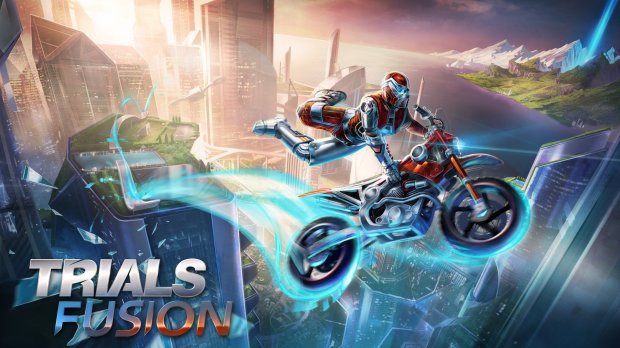
Trials Fusion has not been released too far ago, and RedLynx studios even released a wacky spin-off in the style of Far Cry 3: Blood Dragon since the main game’s release (coincidentally named Trials of the Blood Dragon), but it doesn’t mean the gamers this niche title appealed to can’t dream of a potential sequel that would further explore the unique world and gameplay of the Trials series. The futuristic spin of Fusion gave us the best environment design yet and it would be nice to retain that style in the sequel, but a more grounded version similar to Evolution wouldn’t be a bad one either. RedLynx has no need to change the game mechanics of this series, but expanding the trick system of Fusion could be one of the ways to improve upon that entry.

     5. GRID 3

Following 2014’s GRID Autosport, Codemasters have intensely focused on refining their F1 racing series, with F1 2016 and ’17 coming to earn the titles as the best entries yet in Formula 1 racing. Further, Codemasters effectively rebooted their Dirt series with excellent Dirt 4 and Dirt Rally built on a brand new racing engines. In 2018 or ’19, it is a perfect time for Codemasters to refine their track-focused GRID series, with perhaps a GRID 3 in the works. To produce an excellent sequel, Codemasters could build another GRID entry from the ground up using a new engine. Following from either free-form racing fun of GRID 2 with diverse modes or the track-focused GRID Autosport, Codemasters have potential to achieve great success with their once famous racing franchise. Perhaps a new entry is just around the corner, but so far we haven’t heard any official news regarding GRID 3.

      6. Dying Light 2

The original Dying Light is perhaps the best zombie game you can currently get, and Techland continues to support the title up to this date with free content update and DLC releases. Dying Light’s unique blend of Dead Island and Mirror’s Edge gameplay created a really fun experience, and I’m just one of the many people who keep replaying Dying Light for its fun open-world action mechanics. A sequel that retains all of the original’s gameplay and presents a brand new setting is totally acceptable to see in the next few years, however Techland could also improve on all of Dying Light’s flaws and give us a world greater than the two districts of Haran available in the original. The developer should have all the funds available to produce a quality sequel, and a repeating partnership with WB Games could further assist with the development budget. Many gamers are all up for a similar sequel that would expand on all elements of the original and deliver an even better story and improved gameplay.

     7. Saints Row 5

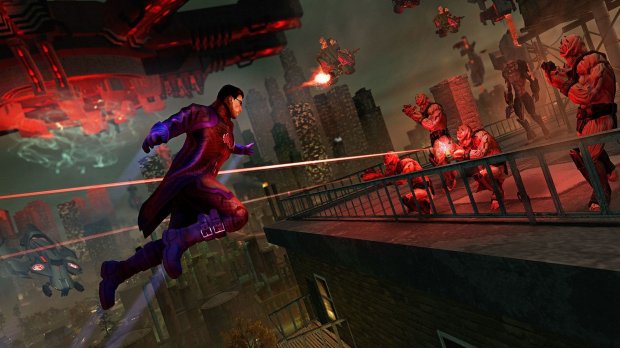
This title is a tricky entry on this list, mostly due to the question “How do you top the insanely fun action game with wacky superpowers and entertaining missions of Saints Row 4?” To their credit, Volition gave us something new with Agents of Mayhem – a new IP that loosely blended Saints Row lore into a Saturday morning cartoon-style plot. It will be a few years till gamers hear of Volition’s next planned release, but a Saints Row 5 has potential to be in the works. It is up for debate what the next entry in the series would do, be it a grounded experience in the scope of Grand Theft Auto or another superhero-style action game, but a full new entry into the Saints Row series would be welcomed by lots of gamers around the world. In my personal view, Volition needs to take time to develop an in-house game engine before moving on to Saints Row 5 if it hopes to compete with the likes of Watch Dogs and Grand Theft Auto. With that said however, Saints Row has always been a unique franchise where sense of humour and fun gameplay prevail over the graphical detail of most major releases.

      8. Rage 2

Rage was a fairly unique shooter that introduced an open-world and RPG elements into id Software’s regular shooter fare, however the game never saw any large economic success due to some major flaws. None of those were deal breakers on their own, but the game’s overall execution did not match to the original vision of a post-apocalyptic open world in a first-person shooter with RPG elements. With Bethesda’s recent economic success and the frequent release of new titles in the publisher’s series, Bethesda should consider taking another stab at its currently shelved IP and perhaps come up with a fully open world shooter with a scope of Fallout or the Elder Scrolls series. Although Rage didn’t receive acclaim upon its release, it was still a fairly unique and enjoyable shooter experience set in a somewhat brand new setting. With both Bethesda’s and id Software’s recent successes, there’s no obstacles for Rage 2 to happen, and hopefully average sales of 2011’s Rage haven’t forced Bethesda to can the series for good. Another attempt at this unique IP has potential to produce a really solid open-world shooter so perhaps Bethesda could bring the IP back in the near future.

      9. Borderlands 3

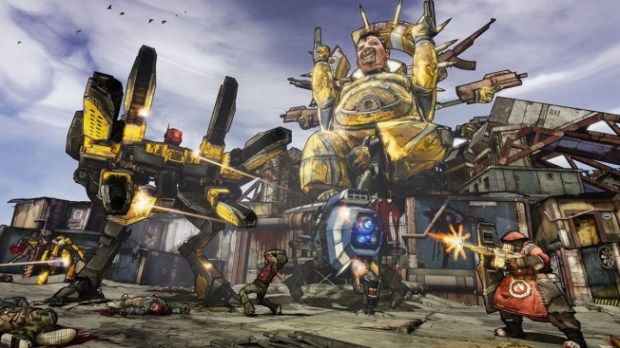
Borderlands 3 is the most likely entrant in this list to happen, as Gearbox not too long ago teased a prototype of a potential sequel based on the Unreal Engine 4. With Borderlands 2’s release in 2012, it is a good time for Gearbox to focus their efforts on producing a brand new entry into the series. Give us even more guns, a better loot system and for god’s sake get rid of that horrible user interface, and most fans of the series would be perfectly happy to see a new release, and will in fact give Gearbox a much needed recovery from the Aliens Colonial Marines scandal that still haunts the company to this year. With that said, Gearbox appears hard at work on Borderlands 3 except they keep it very silent, but a major sequel to Borderlands 2 (not counting the Pre-Sequel entry) would be highly anticipated by many gamers who enjoyed the series. All Gearbox has to do is improve further on existing game mechanics and better yet, introduce an entirely new setting for its RPG shooter series.

     10. Burnout Paradise sequel

This one would be a highly desirable release for all kinds of racing fans, as this stunning crash spectacle has been absent from our systems since 2008’s Burnout Paradise. Criterion games have then changed direction after their average reboot to Need for Speed: Most Wanted and announced their branching out to other gaming genres. What followed since was an announcement of a new IP that immediately went silent, however Criterion has continued contributing to every new Need for Speed entry since then. With their involvement with racing games, Criterion games should consider developing a new Burnour Release that will follow up from Burnout Paradise’s formula. Criterion’s spectacular crashes have been present in every Need for Speed release since 2010, but nothing compares to intensity of Burnout Paradise and its constant fare of detailed crashes. Nothing is as satisfying as seeing your car crumble to bits after a head-on collision at 200 mph. Criterion should consider bringing gamers a new Burnout release to remind the gaming market of the unique flavour of the once popular series. Another partnership with EA and potential use of Frostbite 3 could bring the best Burnout game yet.


Gear Club Review – Most expansive racer on mobile yet

gear-club-unlimited-review.jpg

Developer: Eden Games; Released: October 14, 2016

Reviewed on: Razer Phone, Android 7.0

*I’ve tested the game on Android and have no reflection on the features available in the Nintendo Switch release

Google Play

Gear Club established itself among the best games on the Google Play Store and for a good reason: the game offers a wealth of content for a free-to-play game title and doesn’t necessitate any spending, which brings incredible value to mobile gamers in a no-cost to enter game package. Among racing games especially, Gear Club stands out on mobile as one of the most detailed games available to play and features extensive detail for a free title, which is impressive given its one of the fairest economies in free to download games. All of the features add up to measure this game against the likes of it on the PC platform and one that stands out on the mobile market as one of the best entries to play.

Screenshot_20180119-074346.png

Gear Club comes from Eden Games studios, a name that might be familiar to some for those who played the Test Drive Unlimited series that used to be a major innovation in open-world racing, that is until Forza Horizon kicked it right off the market. Gear Club in turn takes a lot of inspiration from Test Drive Unlimited, although its scope still lacks an open-world format. Instead, we are presented with a wealth of single player content with potential for replayability, in what is the biggest racing game on iOS and Android by far. Gear Club sports an extensive single player campaign that is distributed across a large overworld and a vast array of cars available to choose from. Further, Gear Club has potential for a fun miltiplayer experience with its limited run events and a fully fledged challenge mode to race other people, however I haven’t delved into those to a significant extent. To those looking to kill time over long flights, Gear Club is one of the best games for it, although beware of free-to-play progression systems set in place. The game is free to download, and all content is available for every player, however its progression has a curve to it that is reflective of most free-to-play games. Overall, however, Gear Club includes an expansive single player campaign along with detailed graphics into one of the most fair free-to-play economies to be seen in mobile gaming so far.

Screenshot_20180119-072841.png

Gear Club features one of the most expansive worlds on mobile, even if it lacks openness in its direct sense by being set across a vast map of closed championships, which happen across jungles, deserts and even towns. The world map is designed to be unlocked through progression, so events gradually become available as the player earns stars for career wins and the game goes on. To this extent, there is a plentiful amount of cars to be unlocked that span multiple car classes. Although it is nearly impossible to acquire all the cars in the game by default, each class features multiple sweet cars to select from. Each of the cars is further upgradeable on different stats, and each can also be visually modified to add flavour to favourite rides, and the game’s progression features unlocking different facilities for car upgrades. All of this adds up to an extensive career mode, which is not only centred on events, but also backs up the content through an expansive system of upgrades.

To pay for all that, the game’s rewards system needs to be fair enough to avoid a “pay to play” criticism of many free titles on mobile, and Gear Club rewards players enough to avoid currency walls in its progression. The player never feels forced to spend money on the game, even if the progression becomes slower as more upgrades are demanded by career events, and obtaining multiple cars early on is easy enough to expand the progression curve to multiple vehicles. As such, Gear Club’s very liberal economy provides players with the means to enjoy the game with no requirement for spending real money on it, which plays to the title’s strengths. Overall, I never felt forced to pause the game even when pressured by upgrades, and I’ve always had a car available to race in a championship. Although Gear Club appears specifically designed to be played extensively through a smart economic system, there is enough content to warrant multiple gaming sessions.

Screenshot_20180119-072631.png

The graphics are really detailed, and although Gear Club is still not on par with modern PC titles, it delivers sharp textures and rich detail in all its cars and environments. Given you have a powerful phone to play it on, Gear Club is stellar in its presentation and performs really well on high-end flagships. It looks especially stunning on the Razer Phone, and looks smoother on the UltraMotion display, however any 2K phone will provide high levels of detail. The game’s rich colours expose further detail and textures are some of the best you can get on mobile so far, which helps the game deliver on many of the positives discussed above.

In conclusion, Gear Club is an appealing value proposition for racing fans, and delivers an in-depth experience equivalent to the simulation detail of Real Racing 3, all of which is available for free as long as the player has patience. Paired with the vivid detail, Gear Club presents one of the best game experiences available through the appstore. Finally, the game’s fair economy guarantees no obstacles in campaign progression and the wealth of content will have players coming back for more.

Titanfall 2 Review – Let me just use that ship as a moving wall

709074.jpg

Developer: Respawn Entertainment; Publisher: EA

Released: October 28, 2016; Reviewed On: PC

Core i5-6500 3.2 GHz, 16 GB DDR4 RAM, GeForce GTX 1070 8GB


Titanfall 2 features one of the best single player campaigns I have ever experienced, which says a lot for a series which started as a multiplayer-only game sold at full price. The varied missions frame a short but sweet ride through different locales, each offering new gameplay elements or a unique spin on a standard shooting affair. The Effect and Cause mission particularly stands out, utilizing a time travel gadget to navigate levels between two time frames, but many others contribute to create an incredible adventure. Titanfall 2 has improved on essentially every level over its predecessor, and in a good way. Gameplay largely remains the same, but there’s now a campaign mode, along with a large selection of weapons and titan classes. While I was not down on Titanfall and felt it was okay, the sequel improves on everything to create a fun game with a campaign that just shouldn’t be missed out on.

Titanfall2_2017_07_21_20_23_54_592The story mode concerns you as a rifleman thrust into a pilot’s shoes from the get go, who has to adapt to the staggering change of pace in warfare. This leads to a developing relationship between the protagonist and his titan, where the player even has the choice at some dialogue options, which however carries no impact towards the story. Although Titanfall 2 fleshes out some of the lore for the universe, its the action that takes the front seat. I found the story itself to be largely forgettable besides the interesting relationship between a pilot and its titan that is presented through dialogue, but it was a small misstep considering the gameplay was an absolute blast. Despite the events taking place on a single planet, the game environments are really diverse so you’re never in the same spot as the campaign goes on. Each mission offers something new with no repetition, such as the time travel in Effect and Cause or a titan push in one of the latter levels. The gameplay remains a mix of pilot and titan gameplay introduced in its predecessor, and feels just as smooth as it used to. Although the on-foot gameplay reflects the old-school style of shooters, the titan gameplay doesn’t feel sluggish either and there is enough of dashing and power-ups to make it inherently fun blowing up other titans. The campaign is superb and even includes the best chase sequence I have ever played in its Ark mission, where you actually get to jump between a few ships in motion – simply exhilarating.
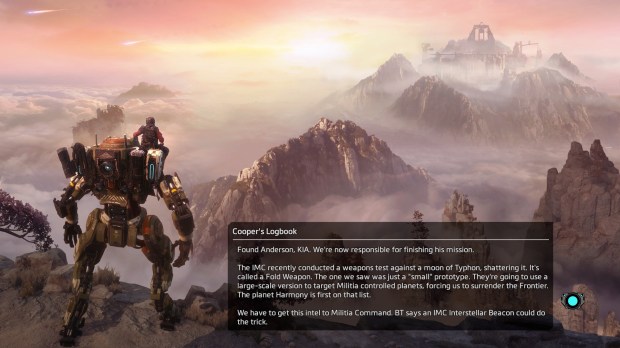
Titanfall 2 brings a lot of variety to the table and succeeds quite well at it with plenty of tools at the player’s disposal. Although the campaign lacks pilot customization, which is hardly needed, but the titan classes are significantly increased from the first game’s 3. Each titan brings in a new weapon and a set of special abilities, which make them best fit for different combat situations. Whether it is having to deal with large numbers of infantry or a group of enemy titans, class switching can be done on the fly, although it takes a slight bit of a menu to do so. Still, at a press of a few buttons, your titan swaps its class for a different set of attributes and then it is back to exterminating more forces. One thing I could possibly complain about is that Titanfall 2 draws a distinct line between its pilot and titan gameplay, at least in the campaign. Embarking into your titan, BT7274 is almost contextual and the game rarely gives you choice whether to proceed using one method or another. Its usually either one or the other, but the game switches them up a lot so that neither of the sections feel drawn out, besides, either is inherently fun.


Titanfall2_2017_07_21_20_25_43_179Titanfall 2’s level design is one of the best I’ve seen out of any game, and Respawn have gone full out to integrate that with the gameplay. The jetpack is never contextual, and all of the campaign missions pack in semi-open levels with secrets to encourage exploration, but as far as I’m aware, the collectible pilot helmets carry no story context in any way. What those levels do bring, however, is a lot of ways to kill enemies and many paths to take for doing so. For example, if you’re boring you could snipe all the enemies from afar, or instead, as I did, run around them like crazy, while alternating between shooting, gliding and punching the remaining guy in the face. Titanfall 2 works great by enabling player freedom in all but some situations to ensure you’re never bored with what you are doing. I was disappointed to see a lack of pilot on titan combat in the campaign, as you’re never given large weapons to dispose of one, which further grows the separation between combat styles. For the length of the campaign, however, it does little to derail the pace of the entire story. A few boss fights are thrown in for good measure as well, which unfortunately only happen between titans and ‘boss’ is essentially a name for an enemy titan with twice as much health and shield as the rest, but it brings some nice challenge to the levels.
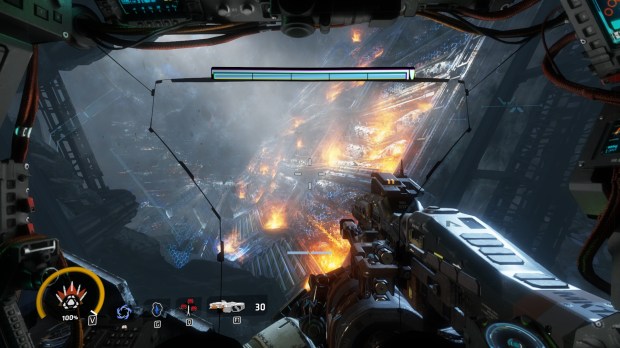
Titanfall 2’s weapon selection is robust, especially in its campaign. Among the many variations on shotgun, pistol and assault rifle, each weapon feels punchy and allows to easily dispose of large numbers of enemy soldiers. In multiplayer, weapons are unlocked through the levelling system as seen in the predecessor, but the choice is increasingly varied. Some weapons feel overpowered, like the EVA shotgun or the smart pistol, which lead to some imbalances in the multiplayer, but they also lead to the campaign turning into a breeze. On that note, the single player is quite easy on normal difficulty and the only few times I’ve died came from either falling or on a rare occasion misjudging how many enemies I’ve had around. For anyone who’s played lots of first-person shooters, challenge comes from higher difficulty presets. Even the mini bosses who are shown to be a formidable threat in their small cinematics can be easily dealt with as long as you dash behind cover when reloading. The multiplayer in turn requires more skill and knowledge of the map to be very successful, along with some team coordination to ensure victory.


Titanfall2_2017_07_21_19_16_00_549Concerning graphics, Titanfall 2 looks quite incredible, which explains the 60 GB space it took on my hard drive. The levels include lots of detail packed into them while the game still runs quite well, although of course system configurations would vary in performance. Something i quite liked about Titanfall 2’s campaign is that level backgrounds are actual places you visit later on, which makes a lot more sense than having them in the backgrounds. The developers made good use of the engine to make the game look fairly close to EA’s Frostbite 3 titles while Titanfall 2 retains its visual style. I wouldn’t call it unique, but the game’s locations show a colour stream rarely seen in most first-person shooters as of late. Sound design is superb as well, alternating between slow atmospheric music and the high-stakes danger scenarios where the music plays a lot faster. The game runs really smoothly and I never experienced frame drops, although at the time of review I had to download the very latest Nvidia drivers to unlock the full suite of resolution options, which I found odd considering my previous update was downloaded around after the time Titanfall 2 came out.


As for multiplayer, Titanfall 2 is very similar to its predecessor, but includes a lot of variety to help extend progression and keep players engaged. Among the varied titan classes and player customization, Titanfall 2 always has something to be unlocked or changed. Unlike the campaign, titan classes aren’t allowed to be switched on the fly to keep the match balance, and only 6 titan classes are available as opposed to 8 in the campaign. Still, the selection and customization are vastly improved over the game’s predecessor, covering both the visuals for pilots and titans, and also skills and character perks. Online matches are fast, which makes it easy to get through using just one titan loadout. And for many, finding a comfort zone in a favourite titan would always be a thing. Titanfall 2 finally allows for customizing the look of your titan, which is no longer confined to the predetermined visuals – a great addition to those who like to have personality in their game. Multiplayer modes remain largely familiar and still combine free running as a pilot and heavy attacks as a titan, though some new changes are welcome. Titan shields are no longer restored on their own, making the machines more fragile than they used to be. Pilots can still climb aboard a titan, but this time they pull out a battery which automatically removes some of the enemy’s health and which can be re-used to give friendly titans a boost. Titanfall 2 encourages teamwork more so than its predecessor, as the original Titanfall was rewarding to individuals rather than the whole team. Multiplayer largely stayed the same, but some new changes make it more enjoyable and the fun of multiplayer is something I’ll keep coming back to.

Titanfall2_2017_07_23_18_42_50_973On the overall note, Titanfall 2 is an excellent first-person shooter albeit with a couple drawbacks, that don’t so much distract from the experience as they leave desiring a little more fine tuning. The game already brings many improvements that players have asked of in its predecessor and features one of the best campaign’s I’ve ever seen in a game, one that paces itself incredibly well and keeps you engaged until the very end. Although its very short, the single player mode provides enough variety to never feel stale, as the player goes from one colourful locale to another. Each level feels unique and many introduce an interesting spin on the regular gameplay. The game is even worth buying for the single player alone, but its online gameplay is also stellar. With its multiplayer, Titanfall 2 further addresses many of the complaints players had in respect to the original game by including customization for both pilots and titans, as well as a larger variety of titan classes to be selected. The customization not only allows to make your titan stand out in the field, but also expands to a choice of multiple character perks and upgrades to diversify playstyles. Titanfall 2 is the right kind of sequel to the original game and all of the improvements make it worthwhile playing, whether you enjoy an exhilaratingly fast campaign or spending hours on improving your multiplayer skills. Either way, Titanfall 2 is an enjoyable experience and I would recommend giving this game a try.
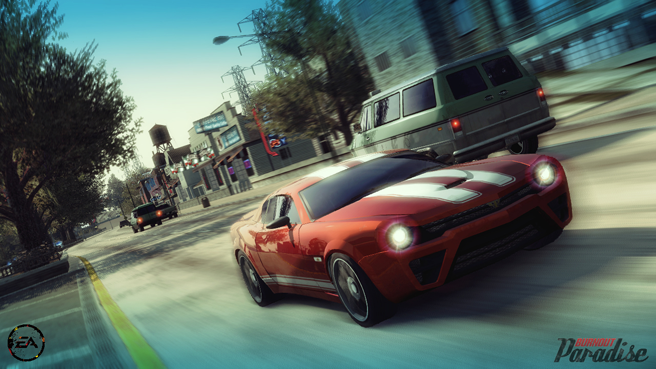


10 Game Series that Need to Make a Comeback

99352.jpg
image source

Over the years, the gaming industry has spawned countless titles that cover about every possible genre to be imagined. Many IPs made it into long-running franchises, that either thrive off improvements or drag the series along with yet another sequel. Among the large number of titles are excellent games which have become venerable franchises, followed by large crowds of gamers, however it becomes easy to overlook some ideas that have been lost along the way. Some franchises lie dormant, or worse, they disappear from the radar with seemingly no hope of getting continued. Many fan favourites have ended too soon, and there is no talk of them ever getting a sequel. Whether they had a great concept or offered excellent entertainment, many games deserve to be continued, and many franchises are still welcome to make a comeback to the current gaming market. I pick some games and franchises that I used to play, and also some that I heard were really good, to make a list of games that players desperately want to come back at some point in time. Many of these, fans would be dying to see again, which makes these ideas worth bringing back. These games have lied dormant over years for multiple reasons, sometimes it’s a company’s bankruptcy or an idea is simply shelved, but their original creations remain good to this day. Here are the 10 series that haven’t been heard of in a while, but desperately need to get a new outing.

Burnout

burnoutparadise-x360-screenshot3_656x369.jpg
Burnout Paradise

Burnout was an extremely fun racing series, which culminated with an excellent Burnout Paradise. The nature of gameplay involved intense speeds and spectacular crashes that set the series apart from other racing titles. Before Paradise, Burnout games have featured a linear progression with many challenges to complete and cars to unlock, and were still a blast to play. Even the PSP titles, Legends and Dominator, although lacking the complexity of other titles in the franchise, still offered a compelling Burnout experience. And Paradise was simply stellar, offering an open-world set within a dense urban city. Challenges were fun, and the added exploration elements took up many hours to complete, plus the soundtrack was quite good, except the song Paradise by Guns N’ Roses is bound to get annoying really fast. Paradise even included a vast amount of cars to race in, and the career offered a lot of content, even if it felt repetitive to complete the entirety of it. On a modern game engine, a new Burnout would look absolutely stellar, especially if it was EA’s own Frostbite 3. Unfortunately, no rumours have been heard about a possible Burnout title, and Criterion Games have been off the news radar for quite a while.

Crash Bandicoot

593030.jpg
image source

Crash Bandicoot has been off the radar for a very long time, and it’s a shame, because those games were really fun third-person action platformers, filled with beautiful locations and interesting characters. The controls are smooth and even the PSP releases that I used to have were filled with hours of content, not to mention that Crash Bandicoot had really neat gameplay elements. The series stood out with its style and mechanics, and gained many fans despite an abundance of excellent platformers on the market. Last year’s Ratchet & Clank proved that people still have a thing for third-person colourful platformers, and we desperately need to see another game out of this memorable series.

Command & Conquer

282337.jpg
image source

Besides its mediocre 4th entry, Command & Conquer is considered by many as one of the staples in the strategy genre, and many especially like the over the top Red Alert spin-off. The series lays dormant since 2010, and although for some time fans were promised C&C: Generals 2, its release would have only upset gamers. EA’s idea of a sequel to Generals was bound to be a free-to-play title with micro-transactions, so its failure to release avoided the series trouble of upsetting the fans, although the 4th instalment somewhat already did so. At present, there is no word of a possible Command & Conquer game, as the EA sits on top of this property, and no news regarding the state of the series have been released either. Maybe when EA finds the time right, we could yet see another title out of this franchise, and if adapted to an RTS, the Frostbite 3 engine would make visually impressive battlefields.

Crysis

319584.jpg
image source

Crysis in many respects was one of the best first-person shooters, combining stealth and gunplay to create the game with many approaches. The first Crysis is still regarded as a PC-killer and won’t run well on anything modern, mostly due to lack of optimization. It was also one of the more innovative shooters of its time and offered a visually stellar island to explore in a semi-open world. Crysis 2 brought the series to consoles, and a strictly linear progression changed the freedom of the previous game to create a more Call of Duty-like experience. With that said, Crysis 2 absolutely nailed its pacing by blending stealth and explosive set-pieces, and by offering an engaging narrative and diverse enemies, the game is fun to replay even today. Finally, Crysis 3 built a blend of its two predecessors, although in the process offered a much shorter campaign. Its semi-open locations offered freedom and additional missions, while the game’s visuals looked stellar. It’s still fun to play these games and the series should definitely spawn a sequel at some point. Crytek haven’t been doing too well financially so we would never know if the series will ever get continued.

Medal of Honor

78322.jpg
image source

Before Warfighter did an awful job at bringing the series into the modern shooter genre, similar to the mediocre reboot of the series in 2010, Medal of Honor used to be an engaging series set in events of World War II. The games are far from polished by modern standards and it already seems like Battlefield is set on track to reinvent these moments of world history. There no longer seems to be an appeal in another Medal of Honor game, and it’s a shame, as originals featured excellent campaigns to match the gameplay, but the unsuccessful reboots might as well have buried the franchise. Medal of Honor could use a revival and best way to do it would be to return to its World War II roots.

Splinter Cell

519184.jpg
image source

Splinter Cell was an excellent stealth franchise that almost got ruined by lazy spin-offs and action-focused titles. Thankfully, Splinter Cell: Blacklist came along and fixed most of the errors, not only returning the series to its roots, but also offering the most polished experience with graphical standards to match. I immensely enjoyed Splinter Cell: Blacklist, which offers multiple ways to play a mission with a varied set of tools and weapons at players’ disposal. Along with that, there is a fun multiplayer mode to be busy with after completing the game’s campaign. Chaos Theory is considered by many to be the best for its open stealth gameplay, and the first three games overall offer a great experience. Not much has been heard since Blacklist’s release in 2013, and although it hasn’t been too long, the franchise is currently shelved in Ubisoft’s future release plans and no rumours have been known so far. Considering the level of polish that Blacklist received, however, a new title in the series would be certainly welcome.

Supreme Commander

212218.jpg
image source

Warfare on a massive scale has never been done better than in Supreme Commander, featuring massive units and diverse factions. The first title is widely considered to be one of the best strategy games of all time, although the series has been let down by the disappointment of the second title, which somewhat improved matters in its consecutive DLC. Supreme Commander was very impressive, allowing players to control large armies with some of the most interesting units I’ve seen in RTS. Among the factions, Cybrans offer badass units capable of not only dealing large amounts of damage, but also looking incredibly cool. Walking ships? Check. A Giant Dinosaur that expels flame? Check. A Huge Spider Bot wielding a massive laser? Also check. On top of that, Supreme Commander offered a complex research tree spread across all types of units, and an entire development is dedicated to the commander bot. Oh, you just had to make sure those didn’t die or it’s over. Square Enix currently holds the publishing rights to the series, however the company is focused on other projects and currently no consideration for a sequel is expressed.

Dune

747145.jpg
image source

Dune is another series I used to play a lot, which went silent a rather while ago. Dune 2000 was an immensely fun strategy game, and it’s sequel, Emperor: Battle for Dune added 3D graphics and more diversity into the franchise. The series features interesting lore based off the Dune series by Frank Herbert, although it never really managed to convey a decent plot. Each of the 3 factions largely played the same apart from special units, even looking exactly the same and only Emperor completely changed visuals for each. The improvements in that title were a great way for the franchise to keep moving forward, but with Emperor: Battle for Dune, the series came to an end. Westwood Studios, who developed the game, no longer exists, and the concept seems likely to be buried. Although many of its mechanics would no longer be considered viable on the field of modern RTS, Dune is a unique series that could use another well-polished title.

Half-Life

4702.jpg
image source

Oh, Half-Life. The internet has spawned a never-ending speculation about development of Half-Life 3, and Valve remains completely silent, continuously working on improving Steam as a distribution platform. Valve haven’t released anything for a while, although many fans desperately want to see a third entry in the Half-Life series. But so far, we’ve just been teased by possible talks of a sequel. The franchise captured gamers’ attention for featuring innovative gameplay and is still considered by many as a staple of the shooter genre. Half-Life 2 was especially groundbreaking at the time of its release, and managed to offer many hours of content to pair with an interesting world. Valve always release high quality games, and we’ve been waiting a long time for this to happen, so the series needs to make a comeback. Come on Valve, where are you keeping Half-Life 3?

Dead Space

256919.jpg
image source

Dead Space used to be a neat horror series with some survival elements, until EA decided to release an action game for its third title instead. Although the original Dead Space was in fact a better horror game, I prefer Dead Space 2 with its level of polish and an intense journey through the depths of the Titan station. The game blends survival moments with fast-paced action-sequences, such as when you’re falling towards the station from the sun relay, and creates a tense experience while offering a lot of entertainment. Dead Space 3, however, fell under the greed of EA, which at the time, considered it best to release an action game, to the appeal of this series. To offend fans further, Dead Space 3 also featured micro-transactions for its crafting system, something unheard of before in a single-player game, and inclusion of Co-op didn’t improve the matters. Dead Space 3 was a step away from the unique appeal of the series, which also sent Visceral Games tasked with different project. Possibly one day we’ll see another Dead Space game, it will likely make no sense to do a sequel, but its universe just waits to be explored.