Most exciting games of E3 2018

e3-2018.png

With E3 2018 about to pass by and already extensive media coverage of game announcements, there are plenty of titles to get excited about for the years 2018-2019. All major publishers accounted for, games revealed cover a wide selection of genres, and while at this point in gaming most are classified under sequels, many are genuinely interesting continuations. Although frankly a good few games were leaked by a Walmart games posting a month before the E3 event, the full reveals during the expo actually showed us trailers and gameplay. Confirming with a few sequels I expected to happen, the E3 showcased many games that I’m really excited for in the coming years. Most of these are bound to become huge successes, and greatly expand on the ideas of their IP, although it is always worth exercising caution before pre-ordering as the industry has taught us over the years. Most of the entries on this list came announced with gameplay trailers aside from a few, and following the press conferences with the gaming media, there is lots of information already available for many titles. To note, this is my personal list of all games that I’m excited about and won’t reflect everyone’s opinion of the games announced over the course of E3 2018.

Continue reading

Music Racer Mobile Review

Screenshot_20180520-114004.png

Developer: AbstractArt; Released: December 26th, 2017

Reviewed on: Razer Phone, Android

Google Play

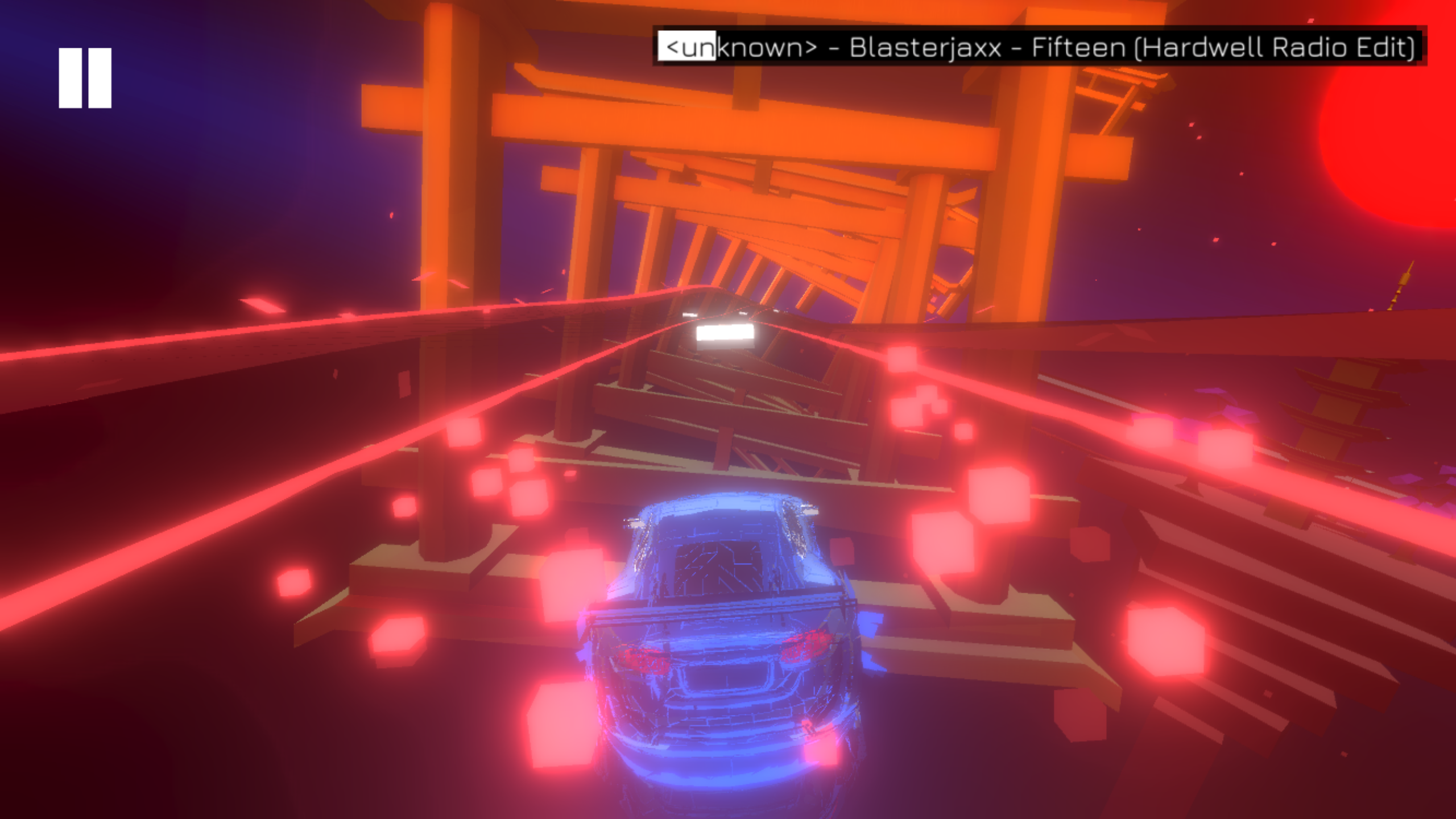
Racing games based on music-generated tracks aren’t entirely new to the gaming landscape, although that doesn’t make quality releases any less interesting. The most notable title that comes to mind is Audiosurf, which existed on PC since 2009 and proved successful enough that it spawned a sequel. On the mobile platform, however, if there were any similar games in the past, they were mostly low-quality clones that didn’t offer any interesting elements. And with a huge music library I carry on my phone compared to either my computer or laptop, I’ve been long wishing for something to come along I could compare to the quality of Audiosurf. Having tried Music Racer, which gets straight to the point with its name, there is finally a game on my phone where I can race tracks generated by my extensive music library. While the game is pretty straightforward, and most could consider it as another Audiosurf clone with similar mechanics, the quality of this release makes it worth discussing on its own. With a diverse selection of cars and track designs, powered by a decently good music track generator, Music Racer delivers a satisfying experience that’s well worth checking out, especially at its free price.

Screenshot_20180520-172102.png

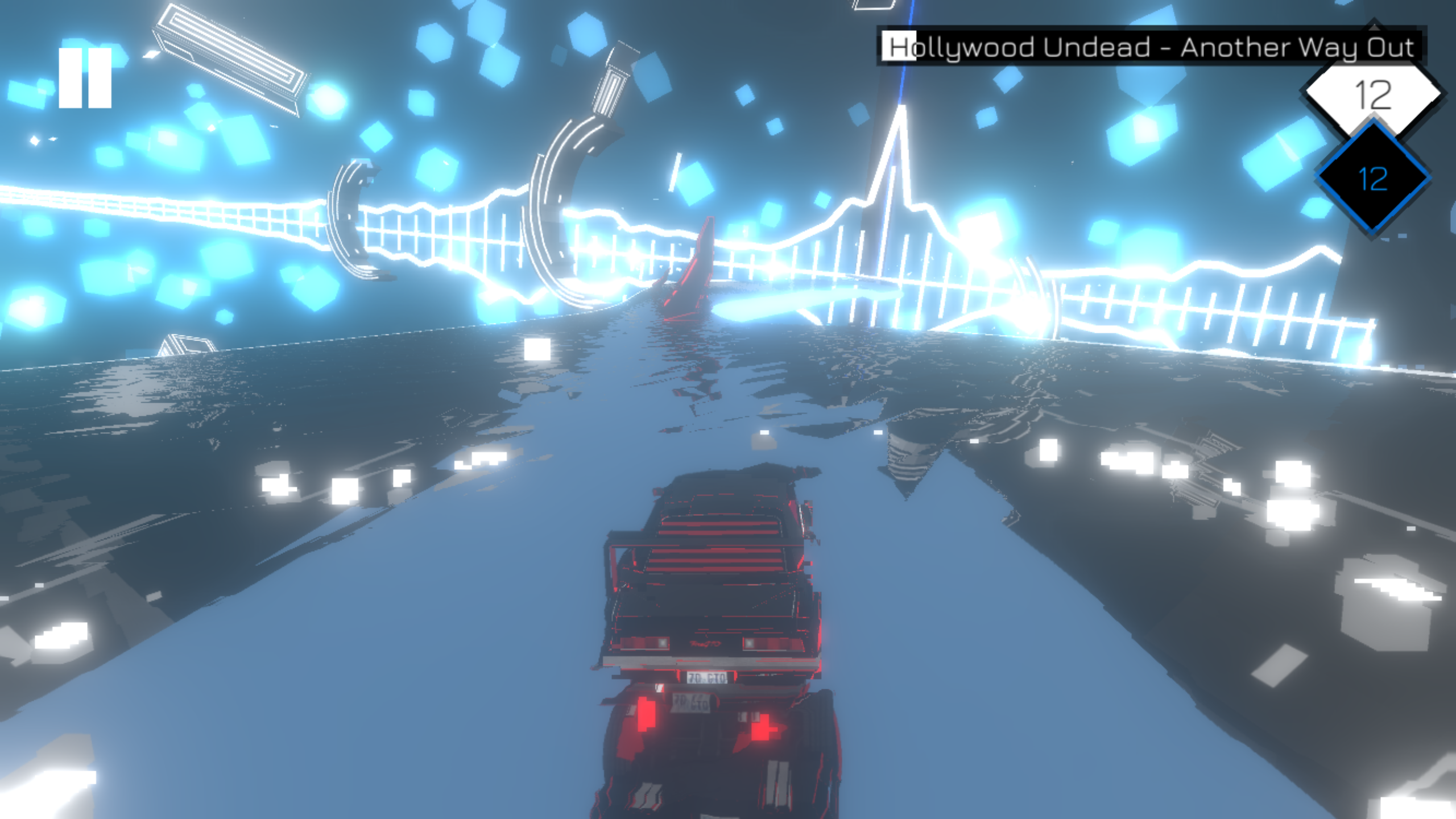
The setup of Music Racer is simple: choose your car, choose the design of track and finally, load up whichever song you like from your music library. From there on, the game generates a racing stage to match the pacing of a particular song. It isn’t the most impressive track creator when compared to likes of Audiosurf, but showcases impressive song matching  for a mobile release. It is frankly impossible to avoid comparisons here as Music Racer takes extensive inspiration and design clues from Audiosurf, however as I want to point out, this isn’t a bad design direction. Racing speed varies depending on how fast a song is, and varies throughout any level to match highs and lows, as well as fast and slow points. To make the experience more interesting, players would collect points between the three linear lines set across a track. Apart from point collection, one has to avoid numerous obstacles that reset the score multiplier, and hitting too many can reset the score. Music Racer isn’t complex in its design nature, but using own songs makes for an engaging experience, even if you’ll be playing the game in short bursts at a time.

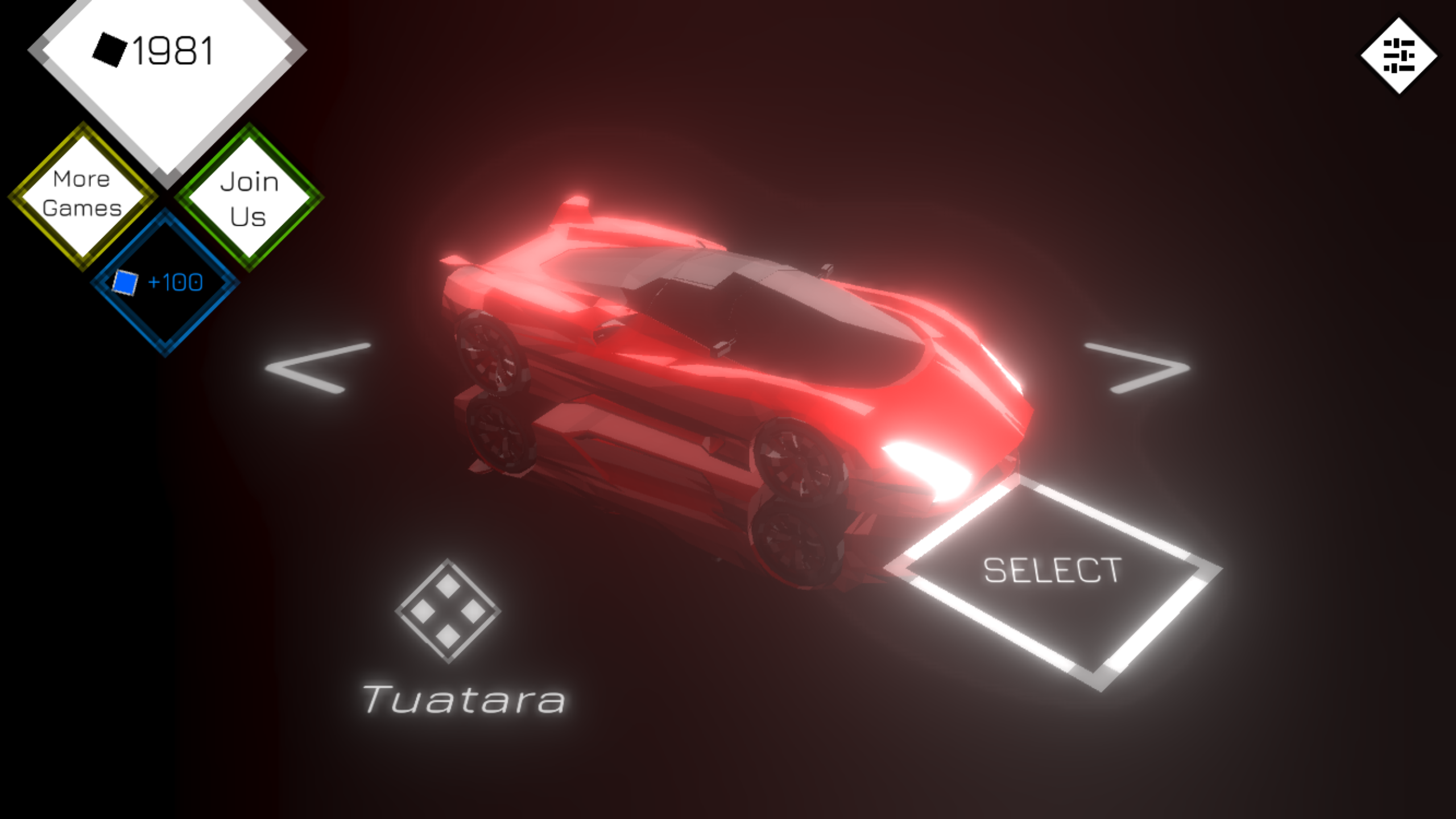
Collected points serve as a form of currency to unlock further race tracks and a decent variety of vehicles, which I found to be a nice touch as it keeps players engaged for the time it takes to unlock everything. This also provides ample diversity to the game experience, as race tracks feature different designs, even if they follow the same futuristic theme. With only three race modes to choose from, Music Racer greatly benefits from having different rides and stage designs. The Free mode exists simply for the enjoyment of user songs, while showcasing the game’s strong design. Normal is what most would be playing to progress through unlocking all of the game’s stages and cars, whereas Hard is the same experience but features quicker speeds and an increase in obstacles. Neither of the three are significantly diverse from one another, and Free mode isn’t worth paying much attention to as it doesn’t earn any points. While I would have liked to see some diversity in actual racing, the urge to unlock all stages and cars is strong enough to engage players for a while. As I’ve mentioned before, this will probably be a game best played in short bursts rather than over long sessions.

Screenshot_20180520-113916.png

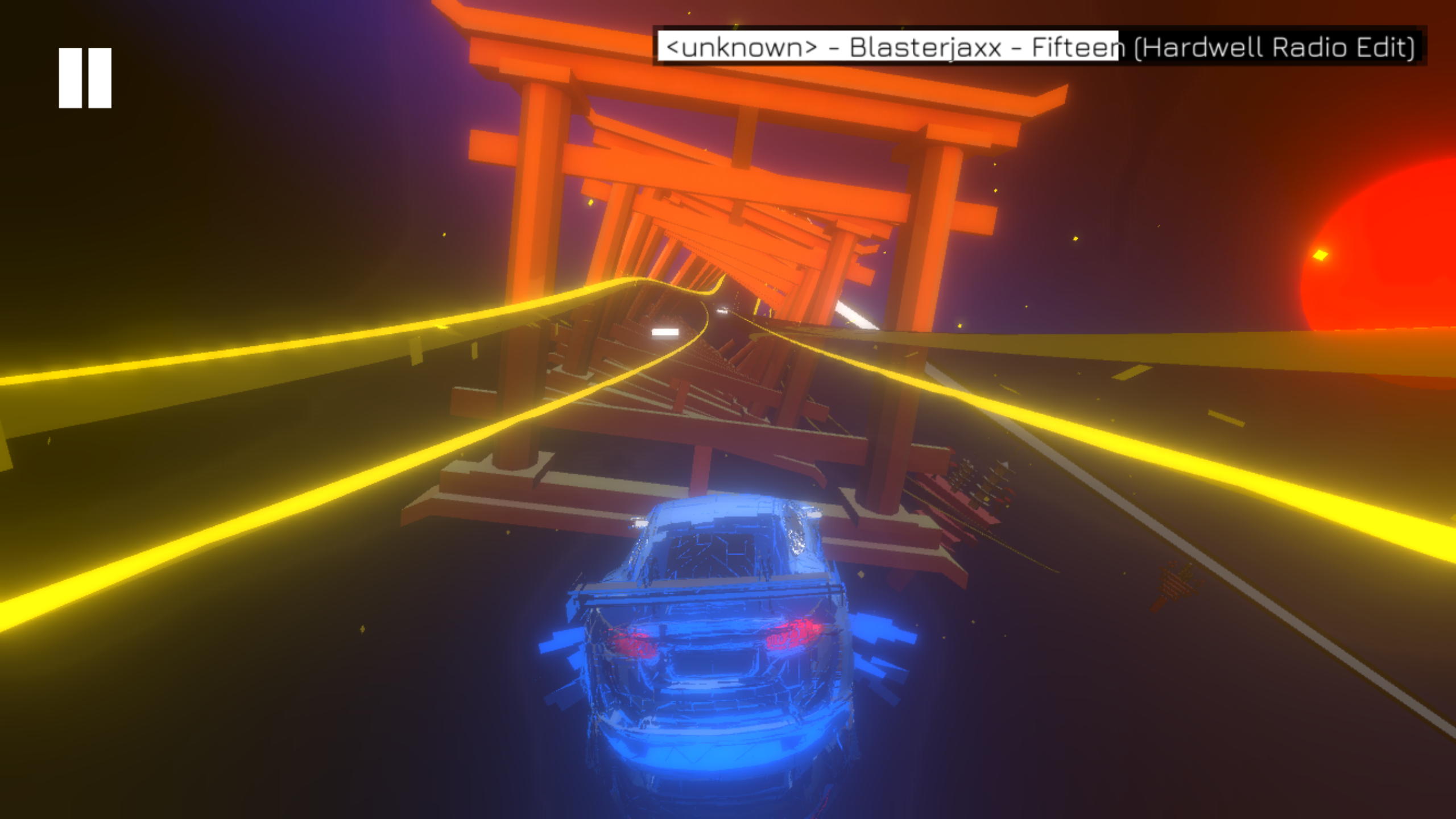
A neat feature I found is how Music Racer shows progress in a song through an advancing white bar over the song title. I imagine most won’t need to be reminded how far along they’re into a song, but useful over long music tracks. Built with the Unity engine, the game’s graphics actually look really great for a small download that Music Racer is, with detailed models and diverse vibrant colors. Some track designs do lack legibility, however, especially those created with dark shades, which makes them worth trying out just once and then abandoning altogether. Most of the game’s car selection is modeled after real-world vehicles, although there are a few oddballs like a racing bike and what I can only assume is a flying mechanical bird or dragon. The garage is fairly diverse, and vehicles feature some nice effects matching their color scheme. Among the standout visual designs is your ride breaking into a million tiny pieces when hitting an obstacle, and then forming back together within milliseconds. Music Racer also boasts a good amount of visual options to make the game playable on lower-end smartphones, as well as giving the ability  to disable some visual effects to decrease strain on the eyes. There is a lot to like about visuals, and diversity helps to make the game as enjoyable as it currently is.

There is a small flaw to point out, however, and that is the presence of ads. These aren’t frequent, and don’t intrude on the gameplay whatsoever, which makes these ads a very minor issue. I applaud the developers for placing ads after a race and sometimes in the menu screens, as it would make the game a disaster otherwise, if the ads infringed onto the racing itself. Given the game’s free-to-play download, the ads are forgivable, however I would personally prefer to pay a few dollars to the developer and purchase a non-ad version. While this doesn’t appear to be an option at the moment, it’s something many would like to be implemented as well, based on Google Play Store reviews. The ads that play after each race are optional when taking a closer look, and players can choose whether to watch a 30-second ad for a small currency reward, or skip it altogether. This smart implementation of ads stands out given how most free mobile titles jam them in wherever they please. Overall, ads aren’t a big issue in Music Racer, but I would like to see the developer implement a paid version without any ads at all.

Screenshot_20180520-114139.png

Music Racer is a fun driving experience, allowing players to use songs from their music library to generate a racing track, with a music background to listen to. With this title, the mobile platform has a contender to match the unique setup of Audiosurf on the PC platform. As most have larger music libraries on their phones than on computers, this is a great game to play in short bursts while on the bus or waiting somewhere. With impressive visuals for its small size, and the experience available entirely offline, Music Racer’s quality is comparable to, if not better than many racing games on the platform, even those that come from big name publishers. If the design idea here appeals to you, I can definitely recommend Music Racer to many, and it’s free download doesn’t require any purchase whatsoever, even if presence of ads makes me wish for a premium paid version.

Resident Evil 7 Review – Return to Survival Horror roots

re7_2017_02_09_20_49_36_949.jpg

Developer, Publisher: Capcom

Released: January 24th, 2017; Review Platform: PC

System Specs: Intel Core i5-6500 3.2GHz, 16GB DDR4 RAM, Gigabyte GTX 1070 8GB


Unlike its recent predecessors, Resident Evil 7 is a truly horrifying game experience. By reintroducing survival horror gameplay into its stale series, Capcom brought back the things everyone loved about the series in the first place. However, to adapt to modern horror tropes, Resident Evil 7 features a first-person perspective that brings it closer to likes of Outlast and Amnesia. While it does take some inspiration out of those, the game also sets itself apart by handing players guns to remove the feel of playing hide and seek for hours on. And unlike the action-oriented RE5 & 6, the 7th installment doesn’t shower you with loads of ammo and explosives, which here are very scarce. With twisted villains that are not only terrifying, but also very dangerous, I always felt on edge crawling through sprawling locations and scavenging for any bits of ammo I could find. Resident Evil 7 ultimately returns to survival horror roots and is both the best Resident Evil game by far and one of the greatest entries in the survival horror genre.

re7_2017_02_09_18_55_01_650.jpg

First appearances are usually deceiving

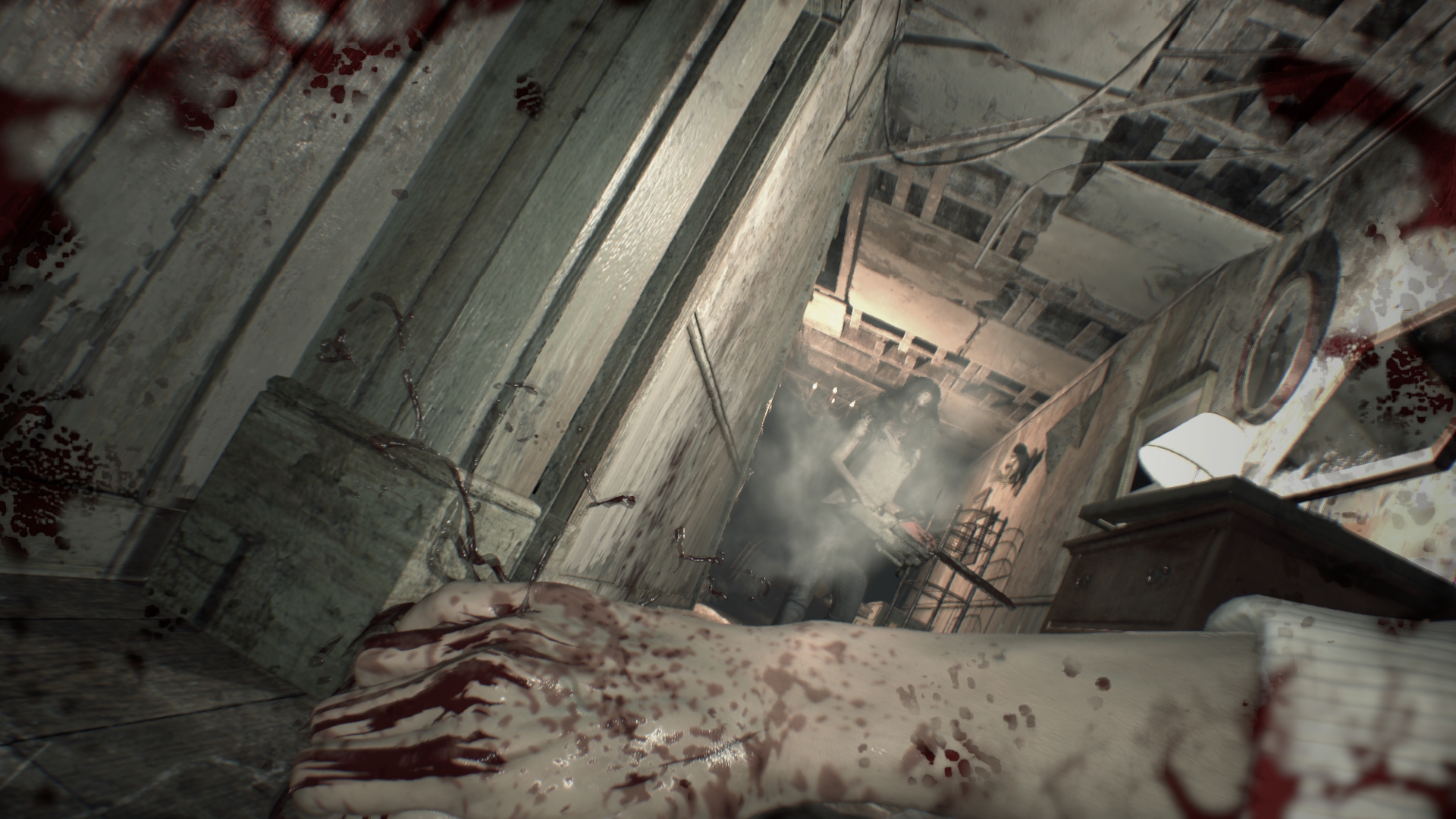
One of the game’s major highlights is the first-person perspective, which brings out the best in the atmosphere and art design. Resident Evil 7 is very grim, and it’s creepy locations are filled with various traps and enemy encounters. While new to the series, the first-person view is a very welcome change of pacing, especially given how well it integrates into the Resident Evil formula. If you own a Virtual Reality headset, the VR Edition is the best way to go, however is not necessary to fully enjoy the title. Even if you play it on a regular screen, Resident Evil 7 packs in enough visceral animations and creepy tension to unnerve even the most resilient. The sight of your protagonist getting his leg cut off with a chainsaw, for example, is one of the most brutal scenes in horror gaming, and that’s only one of many.

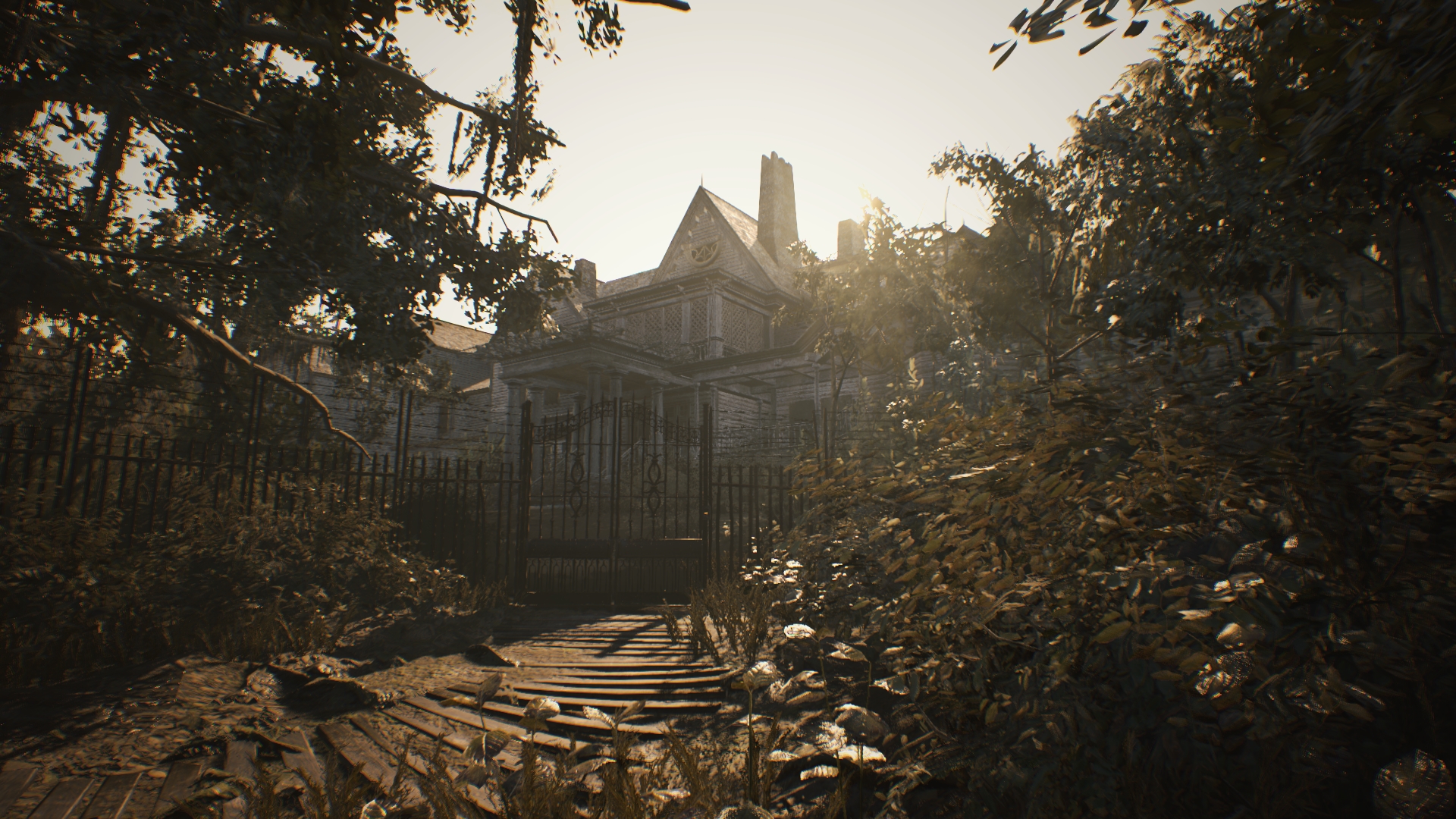
Set in rural Louisiana, Resident Evil 7’s setting is unnerving from the moment you get there. With seemingly abandoned houses that you soon learn are not quite empty, the atmosphere is very grim. Developers paid particular attention to level design, which shines at every step with environments filled with incredible detail. Resident Evil 7 also brings back the series’ focus on exploration, with supplies scattered throughout and some emphasis on puzzle solving. The latter aren’t particularly inspiring to those who love RE 1 just for those, but are fun in their own way, even if simple. As there are countless challenges to face getting to particular keys or items, solving those is not exactly a walk in the park.

re7_2017_02_09_20_17_20_926.jpg

Ethan, why did you not bring a weapon with you in the first place?

The plot is established as something entirely new for the series, however features some subtle references from the overarching Resident Evil universe. I appreciated having an entirely different protagonist from the rest of the series, even if Resident Evil is not a franchise I got into until recently. Ethan Winters doesn’t have military training or troops at his disposal, and ventures out to the Baker mansion simply for reasons to find his wife. Missing for three years, she sends out a video message to Ethan warning him to never look for her. While his ignorance of the warning may seem like a bad starting point for the plot, especially given how he goes there without any means of self-defence, it transitions well into a much bigger story. Without spoiling further, I’d point out that the story is very much worth paying attention to. Long time fans of the series would also appreciate game design references, where the Baker property itself is fairly similar to the Spencer mansion of the very first game.

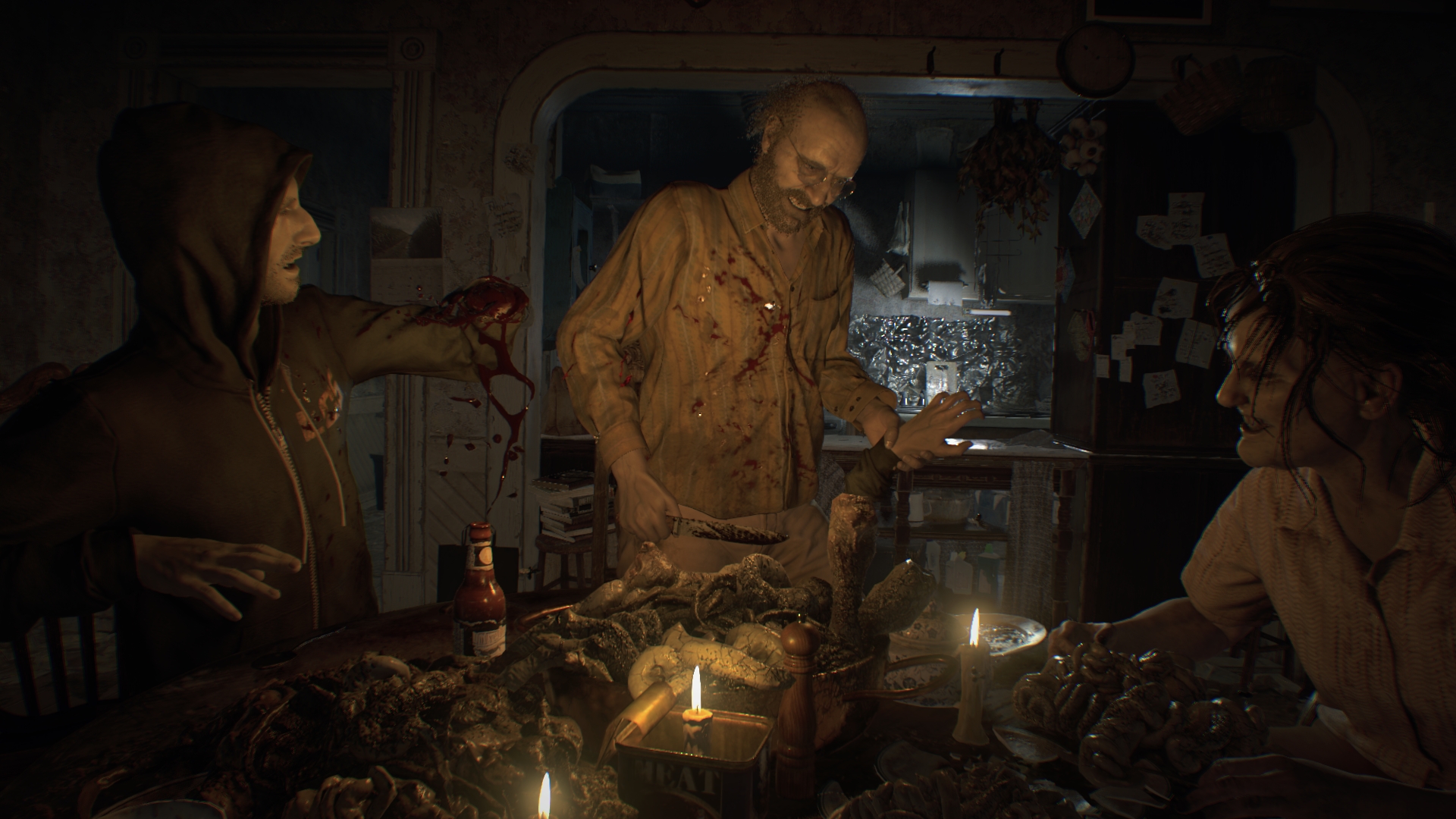
The members of the Baker family that oppose the journey of your protagonist Ethan Winters are twisted beyond measure. Their introduction scene is one of the best in gaming at setting up villains, and each is absolutely out to get you. Jack Baker, who I almost believed could never be killed, follows you whenever you go in the introductory act and takes up a third of the game with some of the best moments. Just when you think he is gone, he shows up again at most unpredictable moments, and getting rid of him is beyond satisfying. Then there’s Marguerite, who unleashed deadly swarms of bees. Lucas, who sets up wicked traps to challenge players beyond logical measure, rounds off the act and is deadly in his own way. The game feels noticeably weaker in its latter third when you deal with the Baker family, which is somewhat of a shame as they are a major highlight.

re7_2017_02_09_20_24_51_777.jpg

Jack Baker wouldn’t care its his own son’s hand he’s cutting off

While Resident Evil 7 provides plenty of weapons to deal with enemy threats, I never once felt overpowered in my playthrough. Ammo is very scarce , and bosses are heavily resilient to damage, which makes enemy encounters intense. To fill the gaps between villains, Resident Evil 7 brings in standard enemies, which aren’t particularly inspiring in their motions, or scary. In latter part, they feel like a design drag and the game tends to stumble at overloading you with ammo as well. While having guns in your arsenal doesn’t particularly provide for a sense of security, they are a great mechanic to have. In the genre full of games that don’t provide players with the means of defence, Resident Evil 7 strongly succeeds. It could have been tempting for developers to overload players with guns and ammo, their limited use doesn’t ruin the pacing by any stretch.

Exploring RE 7’s locations is an experience filled with tension throughout the 25 hours it took me to complete the story. Without ever forcing jump scares onto players, the game’s pacing is ideal for survival horror titles. Enemy encounters are frequently broken up by exploration of both it’s indoor and outdoor locations. While running into foes rarely took me by surprise, other interactive elements provided for some spectacular horror moments. To flesh out some of the backstory, and also aid in discovering clues, are videotapes hidden in a few spots. These not only allow to progress through certain sections, but also feature some intense moments. Without wishing to spoil, I found these to portray some gruesome and surprising moments, which enhanced the experience further. For exploration purists, Resident Evil 7 features coins as a certain form of currency, which are few in the game, but unlock some high-end weapons and upgrades. Finally, the checkpoint system is very similar to that of Alien: Isolation, where players can only save during certain points in the game. This necessitates careful exploration as the protagonist is still very fragile.

re7_2017_02_17_21_31_20_797.jpg

Limited inventory makes item choices meaningful

Resident Evil 7 is an excellent addition to the long-running survival horror series, and brings the experience back around to the “horror” part. While aside from the first-person view it doesn’t deliver anything we haven’t seen from the series, it is a much needed departure from the few recent titles in the Resident Evil universe. An emphasis on limited supplies and careful exploration keeps players on edge, and the game is packed with terrifying sequences throughout the entire campaign. This isn’t just a hide-and-seek affair either, as Resident Evil 7 features guns to help you progress, however these never ruin the pacing due to ammo scarcity. A decent variety in those also allows to experiment over multiple playthroughs, and the game is one of the best horror experiences to keep coming back for more. If you somehow haven’t picked this title up yet, I’d encourage doing so, as Resident Evil 7 ranks among the best horror games currently on the market. It is also the best Resident Evil game by far, and offers a welcome change in perspective, as well as a good departure from the action-focused 5th and 6th entries.

Dying Light: The Following Review – Improved Zombie Slaughter

DyingLightGame_2018_04_16_16_36_14_412.jpg

Dying Light: The Following sets an example of how game expansions should be done, and almost feels like a proper sequel rather than DLC content. Set in the outlying countryside of Harran, it provides a vast landscape entirely different from dense urban regions of the city. With vast stretches of open road, the expansion leans on its newly introduced vehicle gameplay, which sets it apart from main game’s parkour-focused action. Players are free to jump into it at any point in time, as The Following is accessible from the main menu screen, however I’d recommend diving into it at least halfway through Dying Light. Progression carries completely over, so time investment in the main game pays off, and provides you with better equipment and skills. With addition of the buggy, The Following integrates well into the existing framework, and new elements feel like they’ve always existed in the first place. An interesting plot and a vast open world set the back tone for this expansion, which proves to be an excellent improvement over the main game’s central mechanics. With a diverse set of additions, this expansion is worth taking a look if you enjoyed Dying Light’s diverse set of action and survival mechanics.

Continue reading

Citizen Promaster Eco-Drive Altichron Watch 2017 Review

IMG_20180411_165240.jpg

The Citizen Promaster Altichron 2017 Release is hands down one of the best analog watches for the outdoors.

The updated for 2017 Citizen Promaster Altichron is an excellent addition to any sports or outdoor enthusiasts’ watch collections; and with a useful set of features in its movement, represents one of the most streamlined and durable Eco-Drive pieces made by Citizen thus far. With a rugged construction, comfortable strap, and a very readable dial, the Altichron makes for a perfect watch to those looking for a sporty fashion piece; or an outdoor watch, to which Citizen introduces handy altimeter and compass features. Keep in mind my review is of the updated model for 2017, as the Altichron name has already existed in the Citizen line-up, and my focus would be only on the 2017 release model. With a surprisingly light fit, where you wouldn’t expect a watch this thick to wear so comfortably, the Altichron imposes a big presence on the wrist, yet it never feels heavy to become a burden. After owning the watch for about 2 months, here are my impressions of the Citizen Promaster Altichron timepiece and why I think all watch enthusiasts should consider adding this one to their watch collection.

Design:

IMG_20181027_184008.jpg

The Altichron goes well with any black clothing

The packaging of the watch wasn’t really worth talking about, as at a $700 CAD price, I wouldn’t expect watches like this to deliver on fancy boxes, so the design is the starting point of discussion. Although it is worth noting that Citizen’s round boxes are a nice touch. The Citizen Altichron offers a nice contrast with its black strap, dial and the rotating bezel against the stainless steel construction of the case. The outside of the dial has a crown, two pushers and what I can assume is the air pressure gauge that allows the watch measure altitude up to 30000 ft, hence the name Altichron. The watch is very practical, and with this timepiece, Citizen have finally nailed a casual sporty look that goes along well with practically any outfit, including a black suit. The case diameter of 46 mm might sound large on paper and is definitely noticeable I will add, however the watch still wears surprisingly light and for some would look smaller than the measures suggest. The Altichron’s design heavily resembles a diving watch, both in terms of readability and depth of the dial, however it doesn’t offer any diver-specific features so those looking for a diving watch need to look elsewhere (Citizen offers some Eco-Drive divers as well). The case is 200 m water-resistant, however, so you can easily swim with it and for minimum diving, it can at least provide a clear time reading.

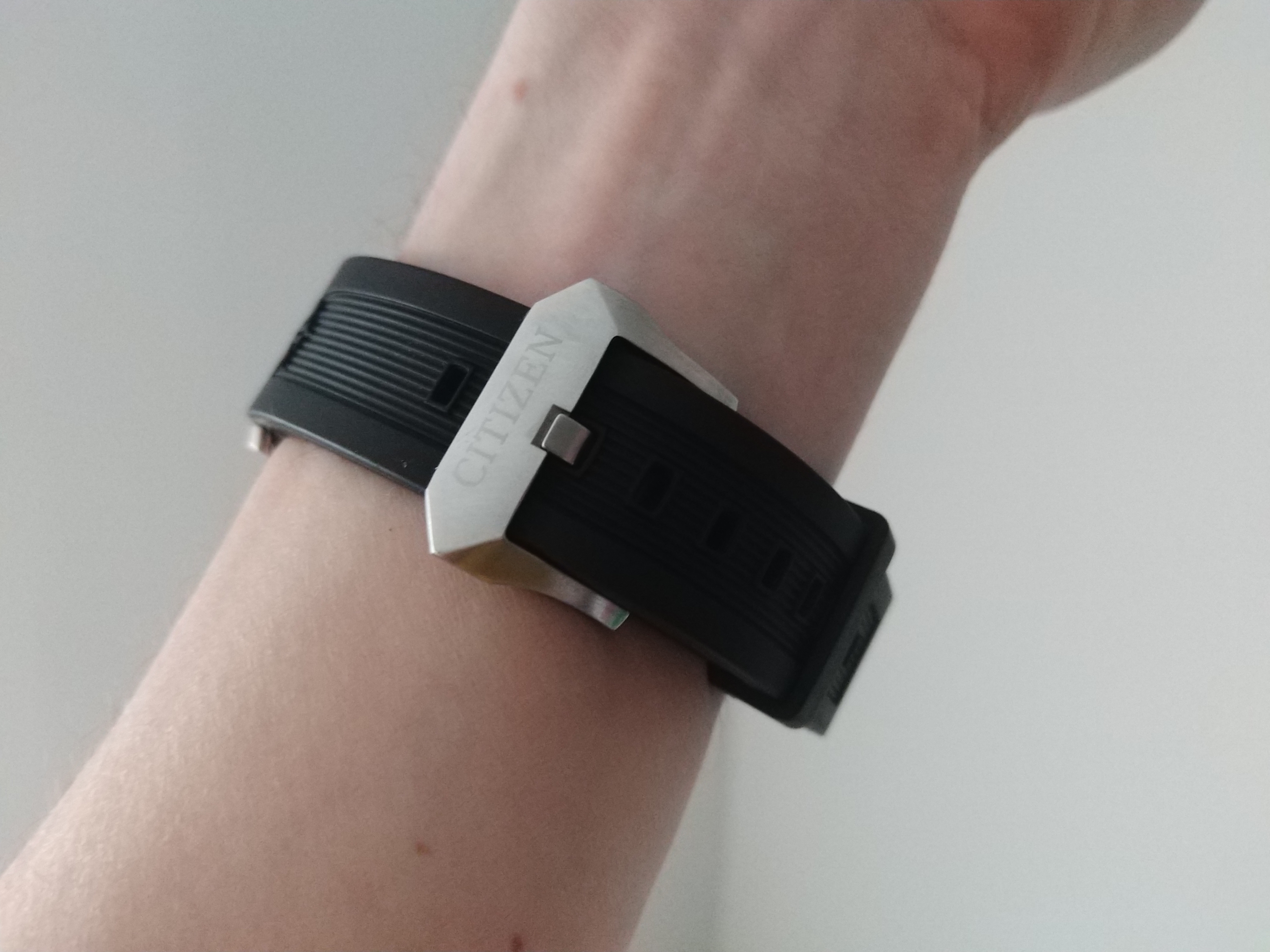
Additional comfort comes with a polyurethane strap that features a metal clasp, making the watch adjustable to any size of wrist. Even on my small wrist, the watch fits rather well, and the fact that it’s not a steel bracelet saved me the trouble of removing additional links (which i’ve had to do on my Bulova Curv). Unlike with a rubber or silicone band, the material used here is barely noticeable, and at times, I wouldn’t even notice the watch was on my wrist (it’s very very hard not to).With the Altichron’s decent thickness to accommodate 5 hands, it wears surprisingly comfortable, which is largely due to light materials, but also the strap. The said strap can be fully adjusted to preference and wrist size, as some might prefer a slightly loose fit over a tight one, but in technicality, it should fit just about anyone.

Dial Design/Features:

IMG_20180411_165303.jpg

The watch dial deserves a separate category, not simply because it looks great and is easily readable, but also with a stellar set of features it offers, there is a lot to discuss here. Many would find the Altichron as absolutely busy, and it is; I’ve seriously never seen so many hands in an analog timepiece, and a deep dial on a watch that’s not even designed for diving. With that said, i never had issues reading the dial, whether in the sunlight or the dark, which says a lot for a watch that features 5 main hands. Perhaps the dial is very clear due to excellent contrast between a black dial and bright white hour/minute/second hands as well as hour indicators. Either way, the 2017’s Altichron can be read clearly anywhere. Citizen have also gone full out with luminous paint, which glows light blue in the dark both on the hour/minute hands, and small markers by the hour indicators, which I find really neat. Surprisingly, one could clearly tell the time in full darkness – that’s how much luminous paint there is, which only serves as an upside to an outdoor-style watch.

To break each of the dial functions down, there is a thin running seconds hand, and two thick hour & minute hands. Below those sits the altimeter function along with the compass, aided by a rotating bezel to display direction. A smaller sub-dial at 9 o’clock measures altitude at up to 32000 ft compared to the main hand’s 9000 ft limitation. The Altichron can also be used as a pilot’s watch to some extent, however again it wasn’t explicitly designed to do so. Then at 3 o’clock there’s the date position, which comes in handy on a busy watch like this, although most Citizen Eco-Drive pieces include that feature. The solid choice of colors the brand has put into the watch really shines, and red compass and altimeter hands are well contrasted against the dark dial, but also against the white time hands. All in all, it is one of the best watch designs I’ve seen, and I personally think it would appeal to all sorts of watch lovers, ranging from casual to even dressy, however most would probably use it as a sporty or outdoors watch.

Movement:

IMG_20180411_165320.jpg

The Promaster Altichron is powered by Citizen’s Eco-Drive 3290 cal quartz meter. With the company’s signature Eco-Drive technology, which features a solar cell under the dial sapphire to capture small rays of light, which keeps the battery running. In simple words, according to Citizen, wear this watch semi-frequently and you won’t have to replace the battery as often as with other quartz watches or at all. For quartz movements, there isn’t much to talk about, as those are the most common watches available on the market, and most know how it operates. The Altichron is no different aside from the Eco-Drive technology, and I’ll add that Japanese brands especially have almost perfected the quartz technology better than their Swiss counterparts.

The Citizen Altichron features a solid steel caseback, so there is no way to see the movement, but then again it is a $700 watch we are talking about. There is a nice Citizen Eco-Drive logo that takes up most space, which I found to be neat. The caseback is completely sealed to provide that 200m depth resistance, and I wouldn’t recommend trying to open it yourself if the watch ever needs a battery change or repair. With a durable case and high-quality quartz movement, the Altichron is likely to last for many years if not decades, which makes it great for collectors also, however since it’s not a limited edition, would likely not be worth much in the future. However, that is not a downside, and many are bound to enjoy wearing or simply just looking at this watch, as Citizen have gone full-on mainstream in their design, and more simplistic than say the Altichron Cirrus released in 2014 as a limited edition.

IMG_20180411_165356

Likes:

  • Solid case construction
  • Easy to read dial
  • Comfortable wear, light fit
  • High quality durable Eco-Drive quartz movement
  • 200 m water resistance
  • Compass feature

Dislikes (I personally found nothing to dislike about this watch, however in my review I account for potential buyers and what they might find as a downside):

  • 5 hands make the dial very busy Some might be thrown off by the thickness, however the watch wears very lightly
  • 46 mm diameter case wears somewhat large but I haven’t noticed it
  • Personally, none

Final Thoughts:

IMG_20180411_165500.jpg

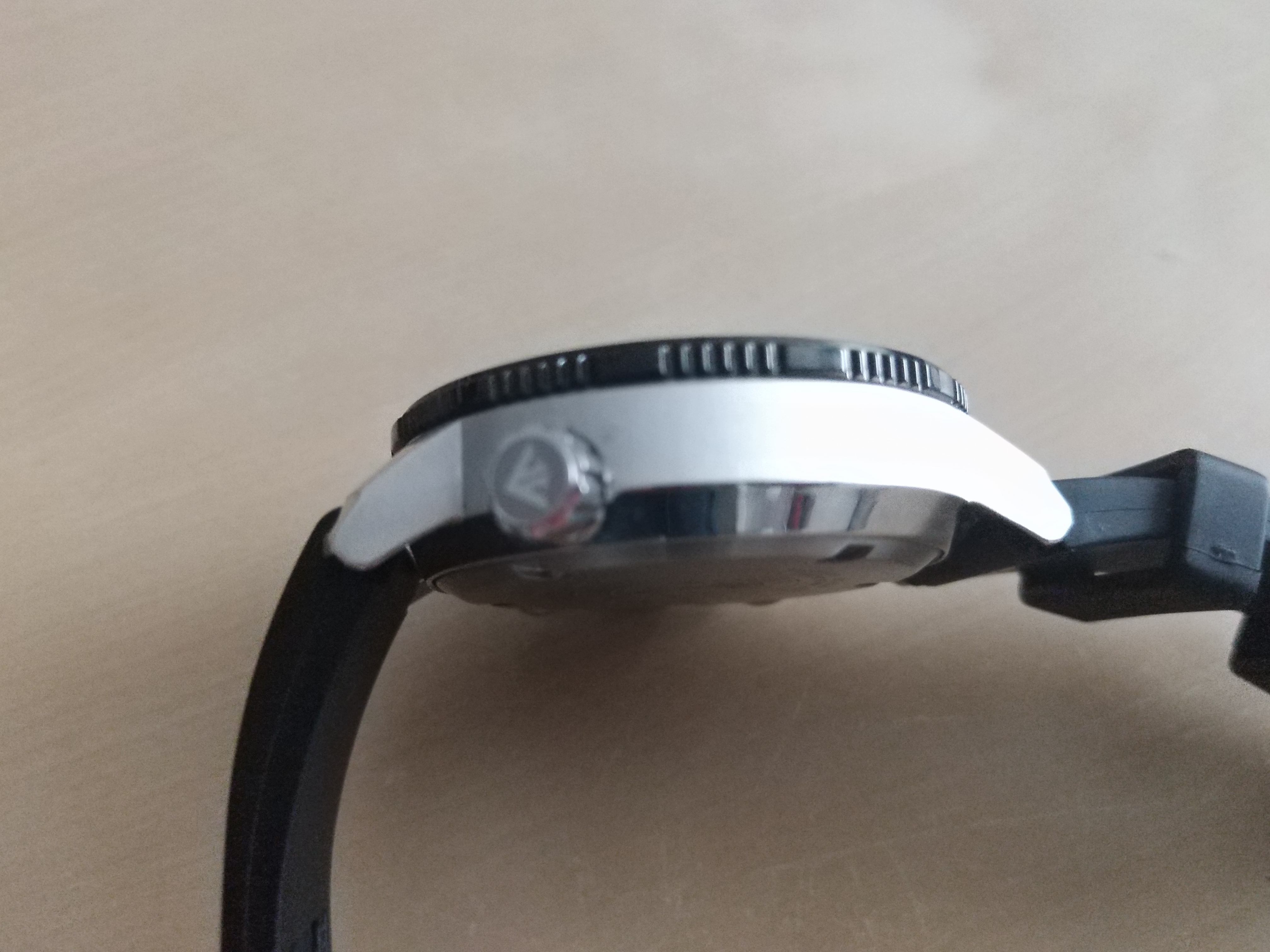
The case appears rather thick when looking at the watch

The 2017 Citizen Eco-Drive Promaster Altichron is an excellent watch, with a durable Japanese quartz movement, and a design that would appeal to different kinds of watch enthusiasts. Whether you’re an adventurer or just a casual watch wearer, the Altichron offers the necessary functions for mountain-climbers and hikers, but its design is the main appeal, as the watch goes along nicely with any kind of outfit. Despite the busy dial, it is easily readable, and looks spectacular in the dark with bright luminous hands and hour markers. With a date dial for added measure, Citizen have created an everyday watch that is bound to last for many years to come. If I were to rate it out of 10, I’d give it a solid 9.5, and I can easily recommend this watch to anyone, as the design is very mainstream and at a price around $700, the Citizen Altichron is not a large investment, but it’s an absolutely worthwhile timepiece.

Available at retailers: Hudson’s Bay, Jomashop, Amazon

Best Racing Games on PC

NeedForSpeedPayback_2018_03_14_17_04_06_886.jpg

The Racing genre has existed on PC since the inception of video gaming (not quite right at the start, but a little bit past Pong), and always offered a diverse set of disciplines and gameplay types. This genre covers about every racing discipline taken from the real world, ranging from illegal street racing to tough-as-nails Spa 24 hours competition, and beyond that, there are many futuristic and other creative titles to make the genre as widely available as possible. Now you can even play car soccer in Rocket League, or drive massive 18-wheelers in likes of Euro Truck Simulator 2 – the genre has it all for everyone. Among the endless games and disciplines, however, the racing genre can be quite overwhelming with hundreds of games to select from, although only the very few make it among the best racing titles: those that focus particularly good on the specific thing they do. I’ve compiled a list of my personal favorite picks that are completely worth gamers’ time and money investment, and these titles represent the best in video game driving and competition. Here are my best picks for the best racing titles on the PC platform.

Burnout Paradise: The Ultimate Box/Remastered

BurnoutParadise_2018_04_05_17_50_18_601.jpg

Burnout Paradise is an incredibly fun racing playground that doesn’t hold players back through endless cutscenes. I really enjoyed its free world design, as instead of endless sub menus, Burnout Paradise does everything directly in-game. As the series was already popular and known for its high-speed racing and spectacular crashes that Criterion Games are so good at, setting Paradise in an open world with diverse sets of events and collectibles created one of the best open-world designs at the time of its release (2009). Burnout Paradise was unique for those elements, and very few if none racing releases have offered gamers anything similar to the charm of blasting through Paradise City to then get taken down or crash into a wall you failed to see seconds before. With high-speed cars and intense fun, Burnout Paradise continues to shine to this day as one of the best racing games. On PC, The Ultimate Box edition still holds up really well with high-res textures and stellar framerates, now we just have to wait for the Remastered version to pop up on Origin. From what I’ve read so far from PS4/XOne reviews, Criterion have nailed the remaster perfectly, and I can’t wait to see how the PC version shapes up.

Need for Speed: Hot Pursuit (2010)

ss_57f9e8e68351a9f4cfb66cc7e07af7ba14248269.1920x1080.jpg

If you want to experience high-speed chases between racers and the police, 2010’s NFS Hot Pursuit is your best game to go for. Sorry NfS Rivals, but you simply didn’t live up to the promise despite your Frostbite 3 engine. Hot Pursuit still holds up really well too, and Criterion’s signature crashes are more spectacular than ever in this title more so than in their other releases. Hot Pursuit offers two separate single player modes, however there is no story to be found here, which worked excellently as NFS games tend to be bad with plot anyways. With wild police chases across the gorgeous Seacrest county, you’re always guaranteed to have fun, and Criterion Games’ signature crashes are still spectacular to this day. Within the two career paths available, the map is dotted with racing events, and packing a diverse set of cars, Hot Pursuit still holds as my favorite in the series so far. The Seacrest county police department are insanely equipped with most exotic cars, which always brings fun to race events, and not only would players get to use them, but also go up against them in pursuits. NfS Hot Pursuit is still spectacular, and it is a shame it’s open world is completely void of activities, however for the single player, it is absolutely worth getting.

Trackmania Turbo

Trackmania Turbo appeals to a certain niche of racing game fans, particularly those who enjoy competition and actively engage in the modding community, and Ubisoft’s racing series has developed a steady fan following. While I haven’t played any game prior to Turbo, its refined experience and unique design offers something new to those seeking a more challenging racer than their Forza or GranTurismo. Trackmania Turbo is all about racing against the clock on tough tracks, and only after I’ve transitioned to the more difficult levels, did I discover just how painfully challenging this game can be. Finishing just within a split second past the gold medal can and will be infuriating, especially after 20 or so prior tries, however Trackmania enables quick restart at a press of a single button. It doesn’t offer a traditional racing experience, but don’t be quick to dismiss the game for a bad racer. For those who enjoy competition against the clock and their friends’ times more so than the single player AI, I’ll definitely recommend picking Trackmania Turbo up.

Trials Fusion

Trials Fusion is not a conventional racing game in a sense, although I’ve enjoyed it far more than most games out of this list. RedLynx’s motocross racer (if it can even be called that) is a unique blend of fast-paced racing and increasingly complex difficulty curve, which has always been a staple of the series in the past. Fusion is not only the best looking game in the series, but also its most refined and complete experience yet. Set in a futuristic dystopia, Trials Fusion has a surprisingly interesting plot, and while the background dialogue is limited at its best, it fleshes out more about the events in the world. Along with that comes some of the best visual design I’ve seen in gaming in general, and by that I don’t mean the graphics, but rather the excellent art design the team over at RedLynx created. To add, Fusion features a brand new trick system for the series, as well as diverse motorcycles and even a quad bike, and its DLC content is an excellent addition to the basic tracks available. With lots of challenge, but also fun to be had, Trials Fusion shines, and while the studio had a large misstep when they released Trials of the Blood Dragon (see what they did there?), I hope the studio comes back strong with a better successor for the series.

Project CARS 2

For motorsport purists, Project CARS 2 offers one of the most authentic racing experiences in video gaming, and with about 30 licensed tracks and 150+ cars, there is lots of challenge to be found. While it doesn’t have a straightforward career mode, Project CARS 2 gives players opportunities to create their own racing seasons spread across multiple racing disciplines. It isn’t a juggernaut of Forza Motorsport, but the quality of production Slightly Mad Studios came up with is spectacular, and don’t forget the studio has dabbled in EA’s NfS Shift games in the past. Project CARS 2 also has more option for steering and handling than most could handle, but that’s the beauty of it – you can make the experience as easy or hardcore as you like, although I’d still recommend playing it with a steering wheel setup rather than a controller. All in all, Project CARS 2 is a worthy contender to likes of Forza and GranTurismo, and offers racing fans something a little more extensive than 800+ car lists, and succeeds on those merits as with fewer cars, it is more focused on individual handling and the racing experience.

GRID Autosport

ss_86b8d6e6fb589d931b961f0f4615b48e99c89542.1920x1080.jpg

For those who can’t handle the serious racing model of Project CARS but still want to enjoy a competitive motorsport experience, GRID Autosport is the next best thing and offers a slightly less complicated ride. With Codemasters’ expertise in arcade-style sims, GRID Autosport delivers a fun racing experience spread across 5 distinct racing disciplines, some of which aren’t featured in racing sims far too often, and of course, GRID still offers closed street tracks. With a diverse selection of cars, GRID Autosport is a very accessible racer with competent single and multiplayer modes, and even has split-screen on the PC which is an extremely rare occasion on the platform. The studio has since focused on its excellent Dirt and improving F1 series, although GRID is not off the table in the future. It was a hard one to choose between GRID 2 and Autosport as they’re very similar in visuals, gameplay and handling, however this title takes the list as the better racing title in the series. All GRID games are excellent really, and you can often find them at really cheap prices. At this point, I’d be hoping to see another entry in the series at some point soon with an even better experience.

Forza Horizon 3

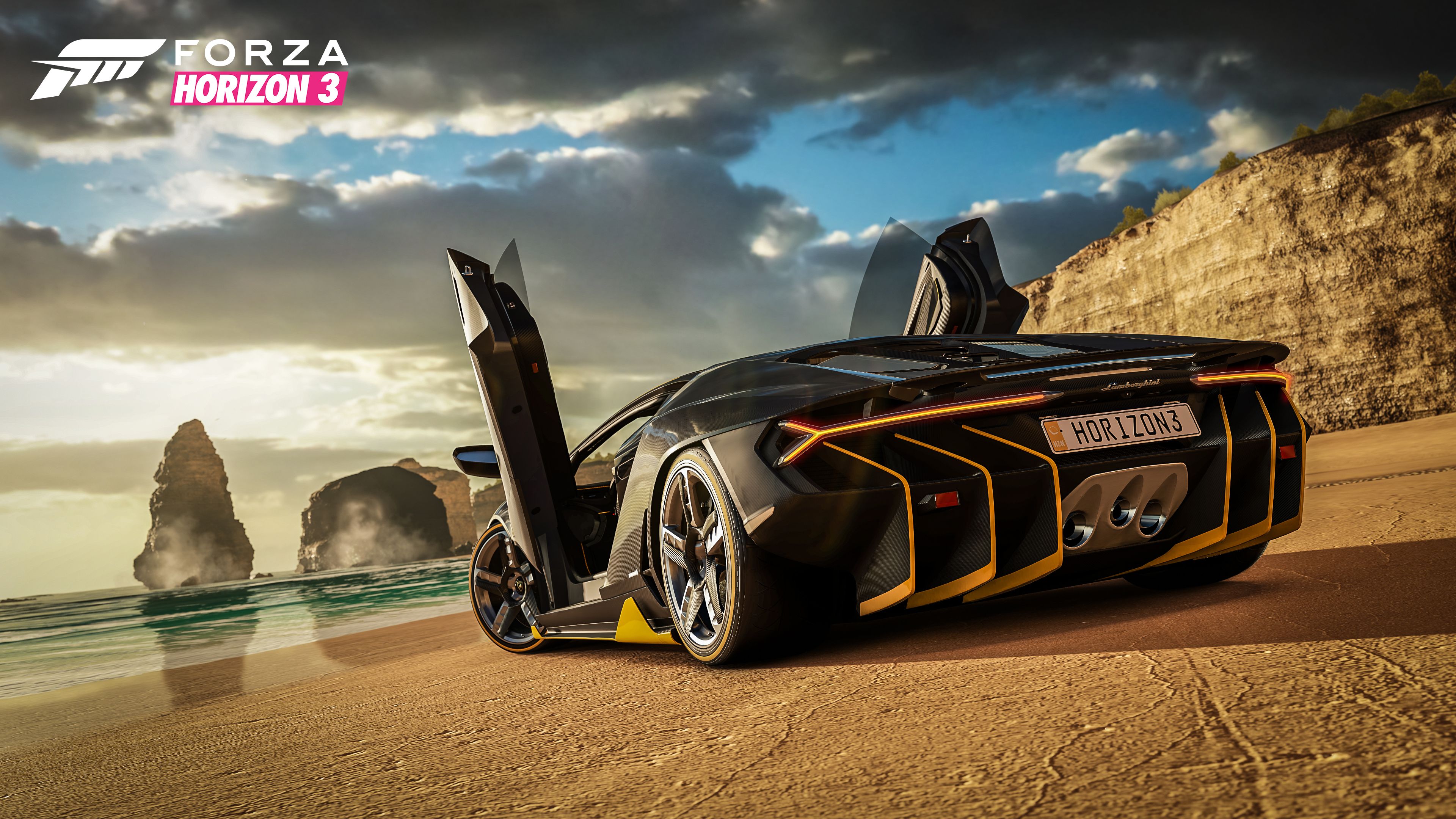
Have you ever wanted to go off-roading in a Ferrari but that’s too expensive in the real world? Forza Horizon 3 has you covered, and it is the ultimate racing playground for the kids in us (with the Hot Wheels expansion that’s literally what happened). Set in beautiful Australia, Horizon 3 is an entirely open world, so you’re free to go anywhere in any car available to drive, and with plentiful of side activities and hidden collectables, trying to 100% the game would take at least about 40 hours or so. Featuring some of the world’s most exclusive cars that can be driven across vast beaches, busy cities and gorgeous rainforests, Horizon 3 is the ultimate arcade racer, and features a large map full of things to find. Available on both Xbox One and Windows 10, Horizon 3 gave PC gamers one of the best racers on the platform, even if the game’s exclusivity to the Microsoft Store takes a drag when something doesn’t work. Knowing Windows 10, I’ve ran into those quite often by myself, and the game won’t let you proceed at all past the starting menu simply because it failed to log into Xbox Live. But aside from those gripes, Horizon 3 is an excellent sandbox racer and there simply isn’t a better open world game currently on the market.

Need for Speed: Most Wanted (2005)

In the street racing world, EA has failed to topple the success of its 2005 Most Wanted title for years, and while the game certainly shows its age and can’t be digitally purchased, for those who held on to the game might still be able to play it on modern systems. Yes, the resolutions would be low, but NfS Most Wanted is a better street racer than older Underground or newer games like 2015’s NfS reboot (still decent but it had frustrating flaws). With a nicely done career mode and a diverse set of cars, which to be fair are more limited than most gamers will be used to, but with each customizable car and a fun city to explore, there’s plenty of charm and personality in Most Wanted, and the soundtrack has some of the best music selection in an NfS game. Taking down the bosses and outrunning the cops was entertaining, and the plot had some nice twist points presented in quality cutscenes. Ah, the good old days. It’s a shame they haven’t come up with a better street racing game since then, although EA could greatly benefit from a remaster for this title.

Forza Motorsport 7

With Motorsport 7, Microsoft again made its juggernaut racing series available in the Windows app store, and while the experience is held back by the now annoying UWP platform, there simply isn’t another racing game with a 700+ car garage on PC. Forza has always been an excellent racing simulator, which up till recently was confined exclusively behind the Xbox platform, and Motorsport 7 improves on many aspects of its predecessors, with better visual detail, effects, and a longer career mode than found in Forza 6 before it. With an extensive career mode across various car disciplines, Forza 7 pushes to be the most accessible game to draw in new players, and with additional challenge of intense rain effects and night time races, the game is at its best on PC especially. Although it comes at a price of 100+ GB download, which is never ideal for gamers with slow internet speeds, Forza 7 visually looks spectacular, and graphics aside, it also offers hundreds of tracks and just about every car variety existing in the world. If you ever want to race a jacked up Ford Transit van on the Nurburgring, consider it possible in the Motorsport 7.

DiRT 4
dirt4_2018_04_05_17_49_09_594.jpg

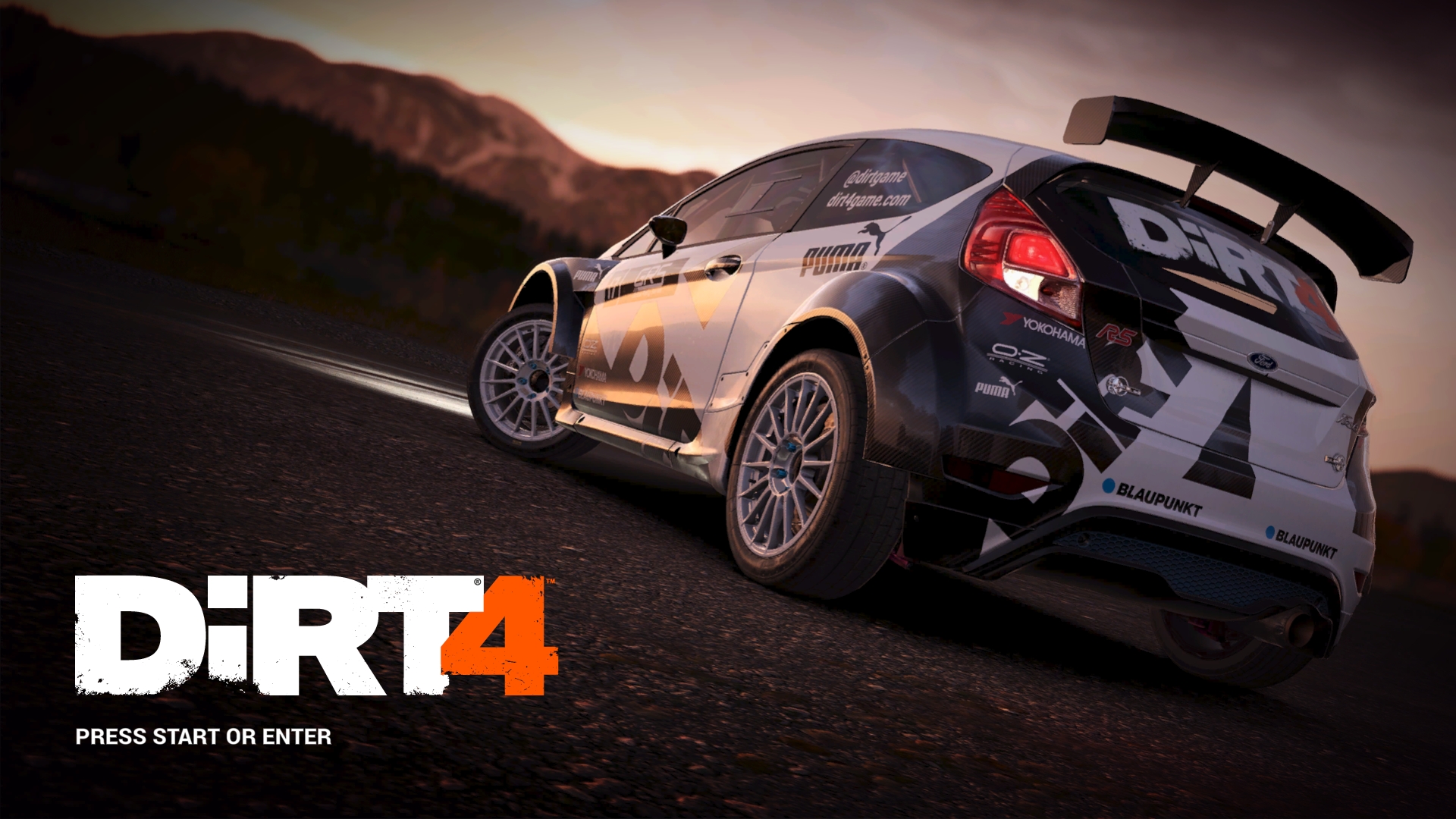
Since DiRT Rally released in 2015, Codemasters have been returning the series back to its original Colin McRae roots, and now with DiRT 4, they now offer something in between the serious DiRT Rally and the past arcade entries, which also happens to be their most feature-complete title yet. With two distinct handling models (I’d recommend going for the more challenging of the two), and an excellent track generator technology, DiRT 4 features an extensive career mode with endless possibilities for rally stages and includes around 40 of world-famous rally cars of the last 5 decades. With a sweet multiplayer mode added in for good measure, DiRT 4 is a solid gaming experience that doesn’t just focus on rally events either. For added measure, Codemasters included the TrailBlazer events where you compete in race-spec trucks, as well as the official Rally Cross mode. The only thing missing is the Hillclimb mode from DiRT Rally, which is a shame, but perhaps it wasn’t the developer’s intention to include it in the slightly more casual 4th entry. Either way, I can definitely recommend DiRT 4, as it is easily the best title in the whole series.

Shift 2 Unleashed

ss_48440271827c9c6ca0e96746c7cde4d122395807.1920x1080.jpg

Before Slightly Mad Studios went mostly independent, they worked with EA to produce some of the highest points in the long running Need for Speed series: NfS Shift and Shift 2 Unleashed. The original offered EA’s take on the racing formula established by GRID, which also blended arcade and simulation racing into one to appeal to more gamers and offered a good balance between a solid career mode and intense multiplayer, but released in 2009, has since been mostly forgotten. Shift 2 Unleashed that followed drastically improved the original’s gameplay and structure, including an expanded car selection and a detailed career mode. What I loved the most is you were free to visually customize your car similar to older street-racing titles, and some of the best designs are possible to create with countless modification options. Without clearly defined racing disciplines, and available performance enhancements, Shift 2 Unleashed appealed even more to arcade racing fans than GRID made possible. Slightly Mad’s title played more casual, and with a superb handling model, was one of the best arcade-sim racers on the market. It still holds up well and can be grabbed from either Steam or Origin at ridiculously low prices, which is already enough of a selling point to try out this game. Shift 2 Unleashed remains an excellent racing game, and while the more recent Project CARS titles certainly took the crown with extensive simulation options, Shift 2 Unleashed is fun in its own.

Euro Truck Simulator 2

eurotrucks2_2017_05_10_20_03_31_762.jpg

Sometimes fierce racing competition can be exhausting and you just simply want to drive down a highway at normal speeds listening to the radio, the Euro Truck Simulator 2 is about the closest driving game that represents the idea. Yes, you’ll be driving a big truck across Europe with a single task to manage your company and deliver goods between urban centres, but the experience is oddly satisfying and the menial tasks actually help unwind as hard as it is to believe. As a PC exclusive, Euro Truck Simulator 2 is extremely customizable, and gameplay can be dialed far back to simply sit back and relax, but at the same time, one could opt for playing this game entirely with manual transmission and on a steering wheel setup. The best thing, of course, is custom music in the radio, which brings your own music to the game, and while you drive across long stretches of road, the feature comes in handy. While it is completely the opposite of arcade racing games, and it can be odd to play a driving game with a certain set of rules, Euro Truck Simulator 2 is an extremely detailed and satisfying experience, with far more depth than just driving a truck.


 

Shadowgun Legends Review – Best FPS you’d currently find on mobile

Screenshot_20180328-173539.png

Developer; Publisher: Madfinger Games; Release Date: March 22nd, 2018

Tested On: Razer Phone (Snapdragon 835, 8GB RAM), Android 7.1

Google Play

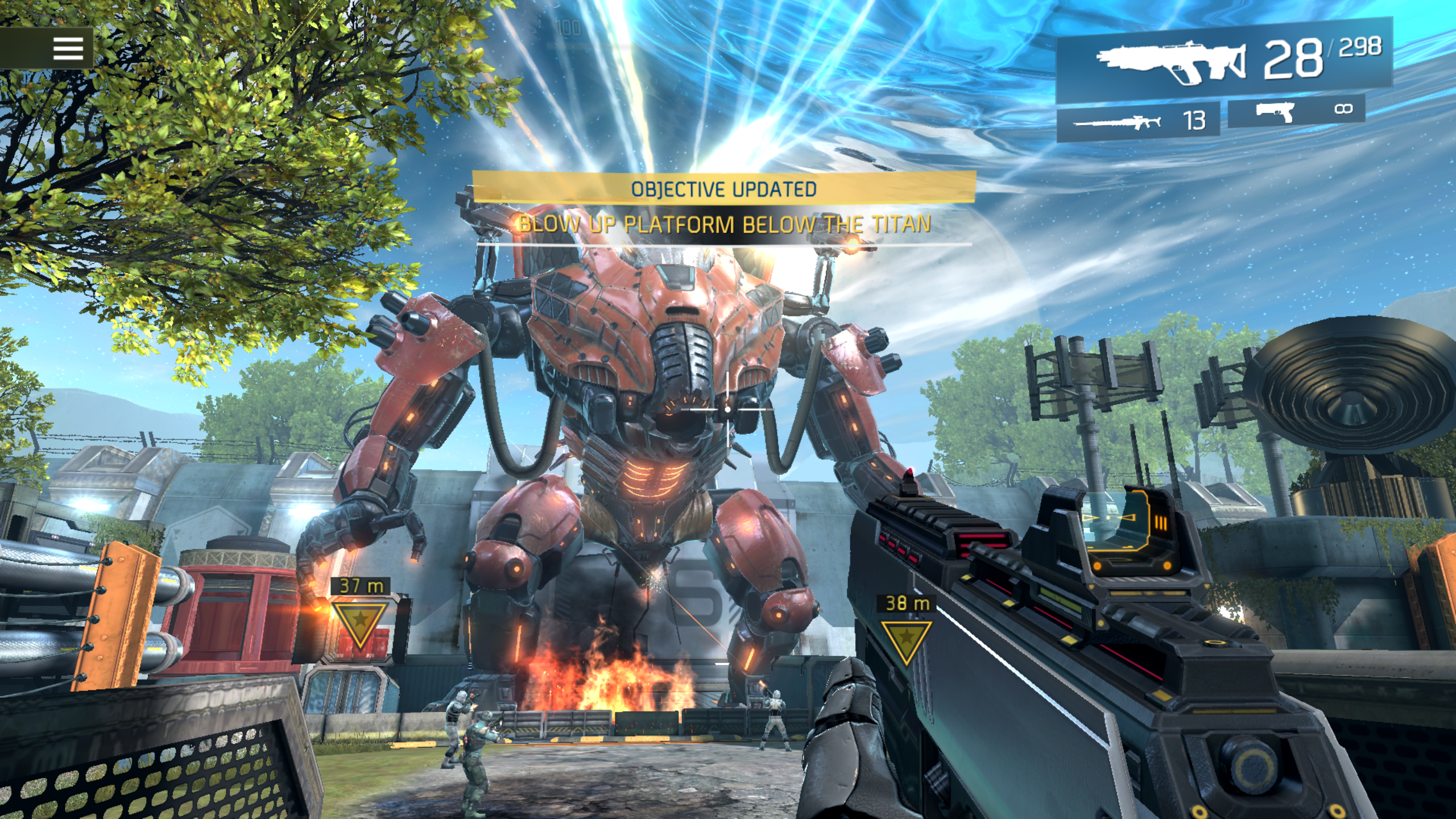
Shadowgun Legends completely blew my expectations out of the water, and being familiar with Madfinger Games’ previous instalments in the franchise, I was very surprised at how much effort the developers have put into completely changing the game. Shadowgun Legends feels unlike any other game before it, and fills a niche currently absent from the mobile games market. Think of it as a toned-down Warframe or Destiny 2 on the bigger platforms, and that’s Shadowgun Legends in a nutshell. On the moibile, the closest reminder is Gameloft’s N.O.V.A. 3 linear shooter, which is a somewhat old game by today’s standards. The mission-based gameplay from a central hub has allowed the developers to create something fresh for the franchise and the mobile platform in general. As a free-to-play package, it is a very enticing deal, and the game doesn’t force players to rely on micro-transactions, as those exist only for the purpose of cosmetic items and premium currency. Given the game’s PvE nature, plenty of loot can be gathered in many of Shadowgun’s story and side missions, eliminating the need to spend real currency on in-game purchases, which plays to the title’s strengths. To add, Shadowgun Legends looks and plays similar to most AAA titles found on the PC and consoles, and I can easily say that it’s the best looking game on the market. Madfinger games have certainly been improving their first-person shooter and visual experiences, with Legends representing their best efforts so far. The game is quite a looker, and shines on high-end phones, not only presenting crisp visuals and smooth framerates, but also featuring the highest amount of particle effects I’ve seen in a mobile shooter. Shadowgun Legends is an excellent FPS game, and while its free-to-play nature is bound to create obstacles in progression, the fluid gameplay and addicting missions makes Legends a big hit on the mobile platform. Add in its free price, and there is no reason to not give this game at least a try, and I can easily recommend Shadowrun Legends for those in a market for a first-person shooter on the go.

Screenshot_20180328-174024.png
Environmental detail is simply stellar

If you’re familiar with previous Shadowguns, then Legends feels like a completely different game to the first two, and one that’s best executed overall. The first Shadowgun was a linear third-person shooter with a short campaign and not much else to offer. The follow-up DeadZone took a different approach, offering a free-to-play online deathmath or team v team gameplay, but it did retain the look and combat of its predecessor. Shadowgun Legends steps into a completely new direction, and features hub-based gameplay along with a switch to a first-person perspective. Out of a free game, I would not expect such level of detail put into Legends, and while some would no doubt find its structure to be quite repetitive with similar missions, there are also plenty of exciting moments to be had playing it. Shadowgun Legends uses the same player progression systems seen in many MMO titles, which includes access to different levels of gear, extensive skill tree, as well as a wealth of customization options available to purchase in-game. While repetitive mission design might serve to the detriment of the game, its close relation to games like Warframe and Destiny 2 that specialize in PvE events and gameplay will draw many players in, and the addicting gameplay loop will keep players occupied over extensive periods of time.

Shadowgun Legends features a single hub town, from which all missions can be accessed on the fly through the galaxy map, and these range from simple defense/eliminate missions that only take 2 minutes to complete to extensive story missions that require longer attention. The mission design can be summarized as highly repetitive, however having played Warframe on PC with the same progression loop, I can easily say that Shadowgun Legends makes up for the repetition by enticing players with better gear and quality combat experience. The game constantly pumps out new gear through quest rewards and enemy loot drops, and is pretty generous with the content it has on offer. You can buy better items from vendors for either standard or premium currency, and of course, if you wish to have any customization beyond paint for your armor and guns, you’d need to spend some real money on currency to gain access to those items. But as mentioned before, one doesn’t need to spend money on Legends to still enjoy it for many hours. After multiple hours of playthrough, the game feels very familiar to Destiny (take either the first or second one) in many ways, including restrictive story progression in favor of additional ‘grind’ quests, however keep in mind that Shadowgun Legends is available on the go and doesn’t cost any admission price.

Screenshot_20180328-173910.png
This shiny town is where you’ll be spending time between missions

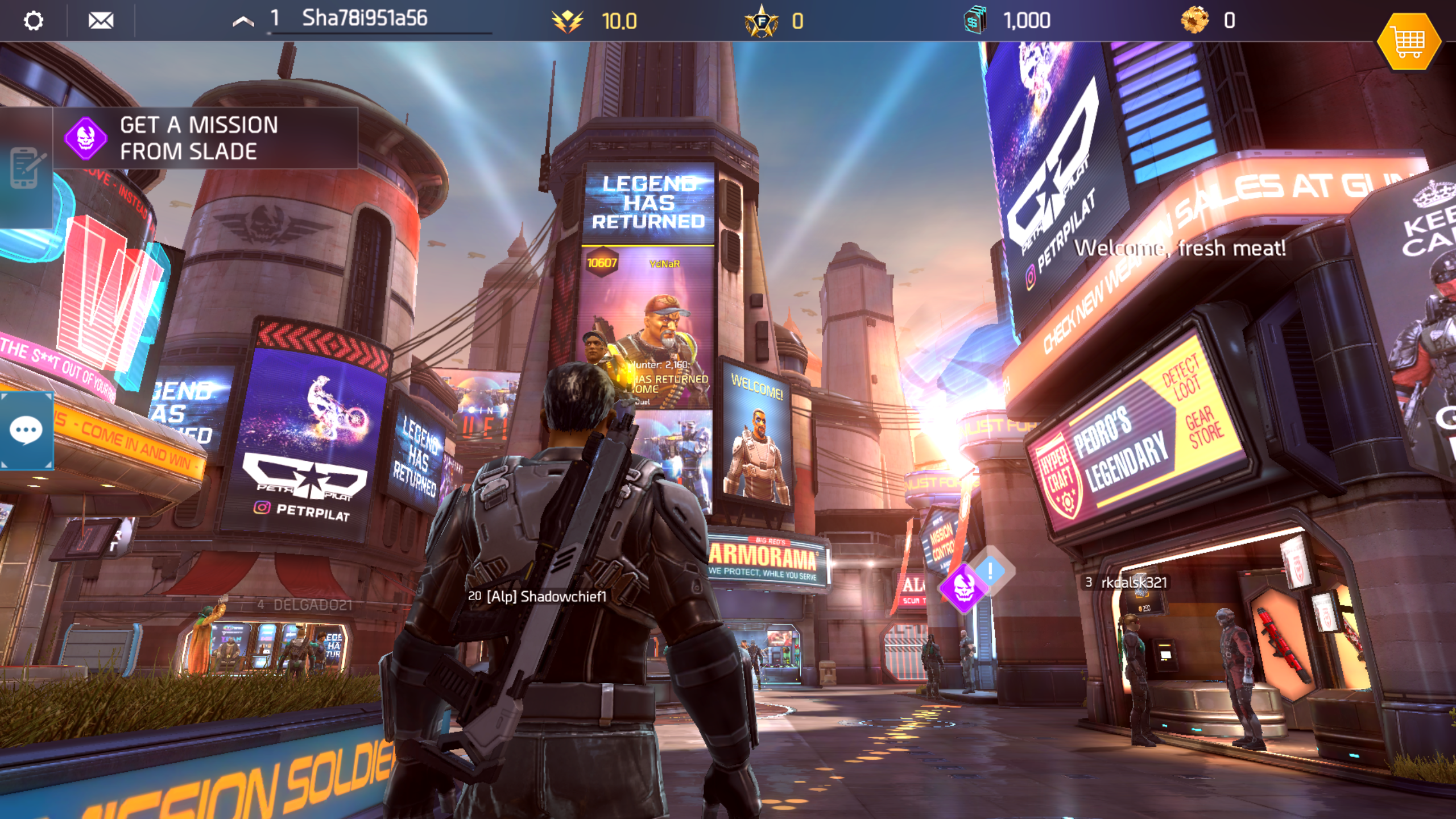
Madfinger Games have done a really great job at focusing on the visuals for this game, and it looks absolutely stellar on high-end mobile devices. Texture resolutions are very sharp, and the game has the best vegetation detail across all mobile releases of the recent years: seriously, take the time to look at the grass in the hub town and you’ll see what I mean. And textures are just a beginning of this visually impressive package. Shadowgun Legends tends to gravitate towards Michael Bay-style explosive action, and every mission gives an opportunity to see some of the best particle effects by far in mobile gaming. Everything from lighting to environmental detail absolutely shines, and the game features a few diverse locales to make sure players don’t get bored of the same missions they partake in on the same maps. Having to render only a single open hub town, Legends takes full advantage of the assets from Unity Engine to create some spectacular environments and game effects. Did I also mention this is the best-looking Unity engine game I could find on mobile? No? Well, Legends absolutely is, and I’d go as far as to say the game is comparable in graphics to some modern titles on the PC and Consoles. If that wasn’t enough, Legends has the best set of animations that apply to both the player character, as well as the enemy AI. Interactive segments really showcase the animation quality, and even pulling levels is quite satisfying to see, until you’ve seen that same animation about 100 times. Shadowgun Legends as a visual experience is simply unchallenged on the mobile platform, and while quite a few recent releases on mobile such as Gear Club (my review) and PUBG (my review), they are far from competing with the quality of Legends. If you have a high-end phone or tablet, then Legends is one of the best, if not the overall best lookers on mobile systems.

Shadowgun Legends takes players across multiple planets, which brings diverse locales to be seen across the campaign. The scenery change is always nice, although after a few grind missions in the same environment, I was getting bored of the sights. That’s not to say Legends has bad environmental design. In fact, it is the opposite – the level of detail here is the best I’ve seen in a mobile game, which helps Shadowgun look stellar on high-end flagship phones. And the effort didn’t just go into environmental backgrounds either, and shows in everything from character models to highly-detailed guns and even animations are as diverse and smooth as I’d be expecting from a high-profile PC game. Which makes it pretty sweet that Shadowgun Legends is free, however that brings many gripes along which I discuss further into this review. Surprisingly, all these graphics still take up under 1GB of storage, although Madfinger Games’ releases have always been fairly condensed in size. Still, the environmental design showcases some of the best detail and variety I’ve seen in a mobile shooter, and while it’s sci-fi premise looks awfully similar to N.O.V.A. 3 by Gameloft that itself took inspiration from the Halo series, Shadowgun Legends stands its own with a wider range of game mechanics. The hub-based mission design is rare to see on mobile, and while I’m not a big fan of 2-minute long missions, which amount to about the same time as a few loading screens when hopping between the hub and confined linear levels in different locales. But overall, this all works really well, and there is plenty of content to keep players invested over longer periods of time, as many would enjoy Legends’ solid gameplay.

Screenshot_20180328-174357.png

The brief plot there is concerns humanity being oppressed by a superior alien force, although can easily be missed because of the gameplay structure. Hub-based mission design never really leaves room for any story development to happen, and lack of voice over in at least main mission briefings doesn’t help by much either. Shadowguns are known as skilled mercenaries in this universe, and as one, the player completes a variety of story missions, side challenges and takes part in surprisingly many multiplayer modes. You wouldn’t really care about the plot here, plus Legends feels awfully similar to Halo, Destiny and N.O.V.A. in its plot setting and development, and as such, there are far better stories to be seen even on the mobile platform. As Shadowgun Legends is free, expect a progression curve that takes a while to complete; story missions are broken up with side quests and quick challenges, and while it does offer diversity away from the main plot, the grind required to access further plot missions often slows the game down to a complete halt. Whereas the main plot missions are generous with their XP rewards, side missions tend to reward players much less, and on numerous occasions, I found myself grinding side missions or dipping into multiplayer just to unlock that next story bit. Not that it’s a necessarily awful design, as the gameplay in Shadowgun Legends is very solid and while it does require grind, the game doesn’t force micro-transactions. The game is one of the best shooters on the mobile platform, although it is bound to find competition from the likes of PUBG Mobile and Fortnite when it comes out. The PvE-based mission design works really well along with Legends’ central hub, which makes the game fun to play both in short bursts and over longer gaming sessions.

The central town in Legends grants access to everything from missions to new gear. It serves as a central hub, where players start off to venture into either single player missions or the various multiplayer modes Shadowgun offers. It’s the only semi-open location featured in the game, and even then, it is limited to a few interactive spots and characters, however that is understandable on the mobile systems. Not that there is anything to do in the hub besides selling looted gear and picking up missions, so there are no complaints against the game in regards to the linear structure. It is easy to tell Legends borrows many elements from the likes of Destiny and Borderlands, with first-person gameplay, various rarity levels of loot, and the focus on constantly improving player stats. Again, this isn’t a bad thing as such games weren’t available on the go, and Legends fills that niche perfectly. In addition to endless piles of gear, there is a giant skill tree, which suggests a very high level cap, although I doubt the game has enough single player content to support that, and those interested in maxxing out their characters would resort to multiplayer. Decoding holograms or opening loot boxes is the easiest way to get paint for armor and weapons, which offers players an opportunity to personalize their Shadowguns.

Screenshot_20180328-223621
you can deck your character out in pretty much anything

Legends is fairly generous with loot, and after extensive browsing through the game’s visual shop, I determined that premium currency is used for cosmetics only, so doesn’t offer players who spend real-world money any significant advantage. For those obsessed with accessorizing characters, be prepared to spend some amount of real-world currency. With that said, there is one element the premium currency affects most, which is loot box keys. Gold loot boxes contain a high chance for rare items, however require a keycard to unlock unlike regular chests. After a few hours of play, I have 3 sitting in my inventory with no way to unlock them, which I see as a problem as more and more of those loot boxes are accumulated. Oddly enough too, Legends is missing a daily rewards system (apart from currency contracts with certain payouts), and to use its wheel spin feature, one again needs the premium currency. It’s not the best design, as the wheel spin does contain a chance for keycards to those gold chests I noted above. Forcing players to spend real-world currency on something with a random chance of reward (hello triple A gaming loot boxes) is not an ideal system, and like many other free-to-play titles on mobile, Legends could have done with a free wheel spin per day. Apart from these major gripes with premium currency, however, there is no reason to spend real-world currency at any point as the game provides enough rewards.

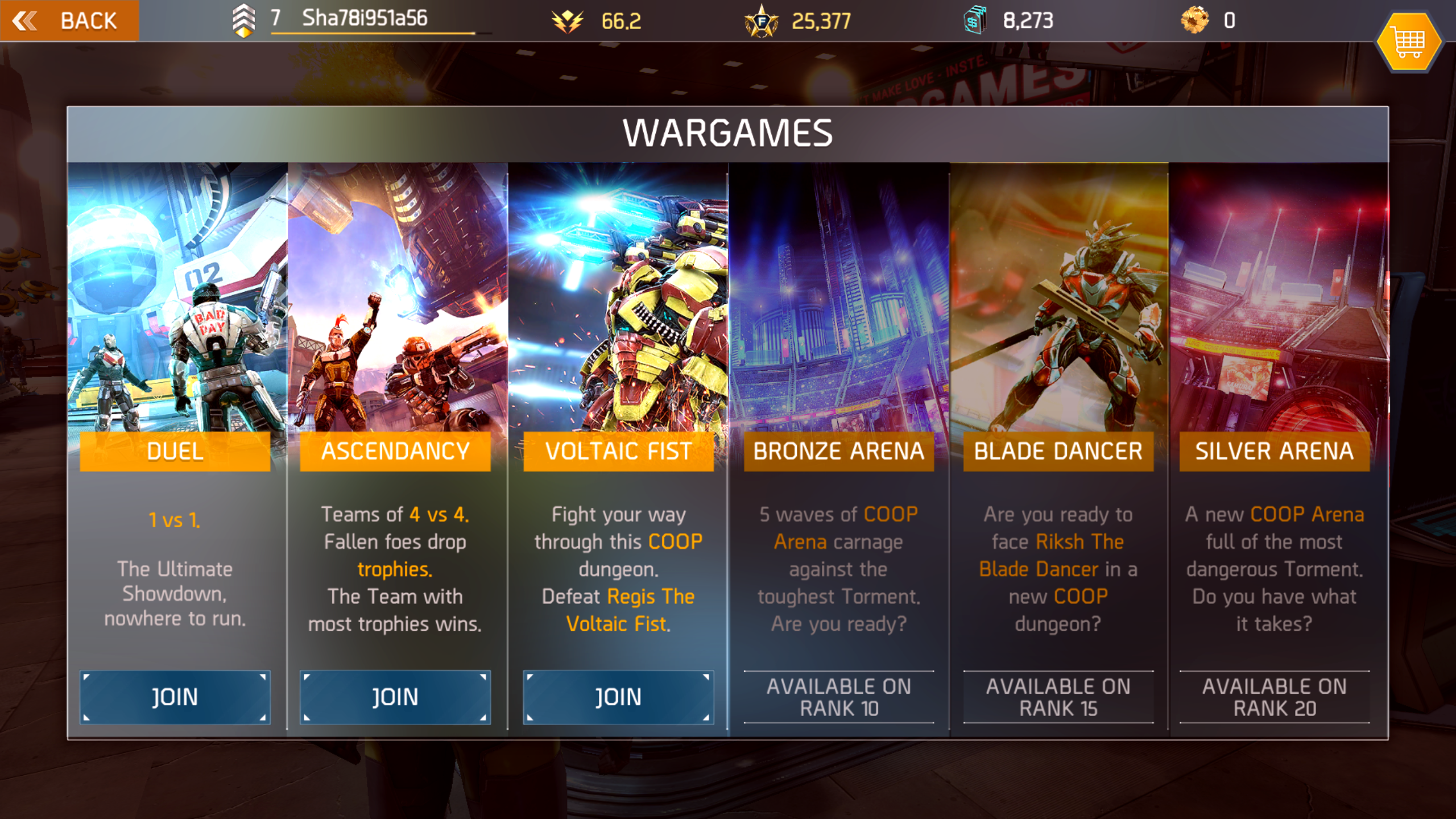
The multiplayer mode is fairly diverse, and offers players a selection of 6 different modes, which include both PvP and PvE systems. There are 6 models in total, including a co-op dungeon, 1v1 and team vs team modes. It’s a diverse set of multiplayer events, and given Legends’ recent launch, servers are plentiful with other players, who are even rendered real-time in the game’s hub town. Legends offers a set of emotes for quick gestures and also message communication, however that appears to be limited to the hub town so far, as I’ve found no means to communicate with others during actual missions. When missions require player coordination to unlock something, it can be frustrating when others on your team aren’t paying attention, and hopefully it’s something that can be addressed in future updates. A proper communication system can certainly be useful in co-op, as well as team vs team modes. The latter 3 co-op arenas are gated behind lengthy progression, which lessens their appeal, however based on description, they are meant for skilled players, so taking time with the game prior is fairly important. With the diversity of content that Shadowgun Legends offers with both its single and multiplayer modes, the game is currently one of the best shooters available on the mobile platform, and also Madfinger Games’ most ambitious project so far (read here).

Screenshot_20180330-092955
6 multiplayer modes available in total (co-op and PvP)

With release of Shadowgun Legends, the mobile platform finally has a title to contend with likes of Warframe and Destiny, and the game is also one of the best lookers across a vast range of games on Google Play. The fluid first-person shooter mechanics combined with a loot system and skill progression creates a unique experience on mobile, and the addicting gameplay loop contributes to longevity of the title, which is important considering fierce competition of releases on the mobile systems. With an extensive single player campaign broken up with side quests and challenge trials, Shadowgun Legends is the most ambitious FPS title on the platform so far, and its free price can’t be ignored, even if it does bring numerous gripes with the game’s slow progression curve. In addition to being a stellar shooter, Legends is also an excellent looker, with visual detail coming very close to the graphics of some PC and console titles. Environmental design deserves extra praise, and the diversity of environments is excellent for a game of this scale. While it is not a completely perfect game, and the progression presents some extensive grind in places, the gameplay more than makes up for it with diverse environments and excellent FPS mechanics. As a free download, I see absolutely no reason not to recommend this game. Madfinger Games did indeed deliver on their “most ambitious title yet”.

*all screenshots captured in-game

Assassin’s Creed Origins: The Hidden Ones Review

ACOrigins_2018_03_25_18_41_17_709.jpg

Developer: Ubisoft Montreal; Publisher; Ubisoft

Release Date: January 23rd, 2018; Reviewed On: PC

PC Specs: Core i5-3500 3.2GHz; 16 GB DDR4 RAM; Gigabyte GTX 1070 8GB


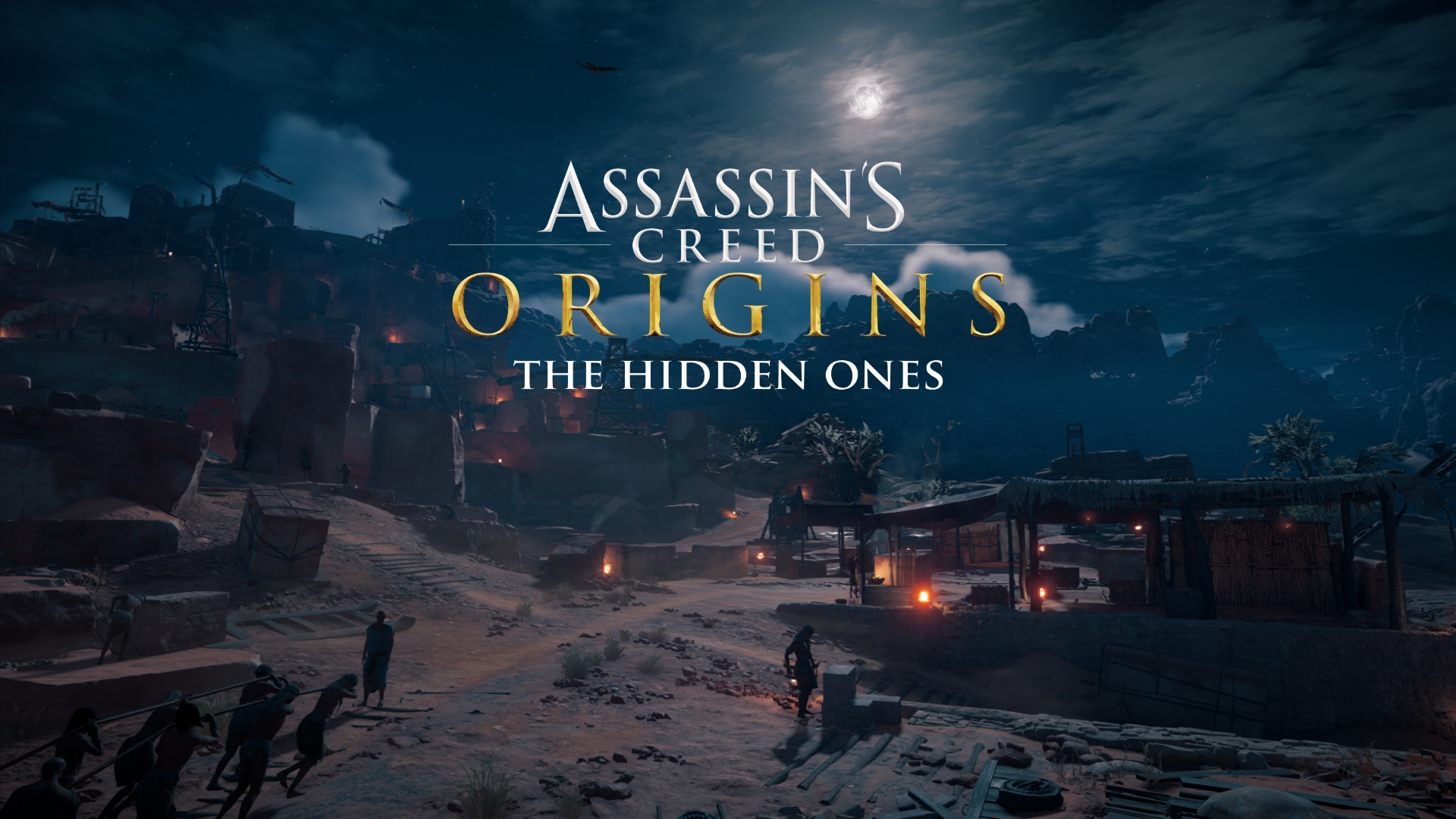
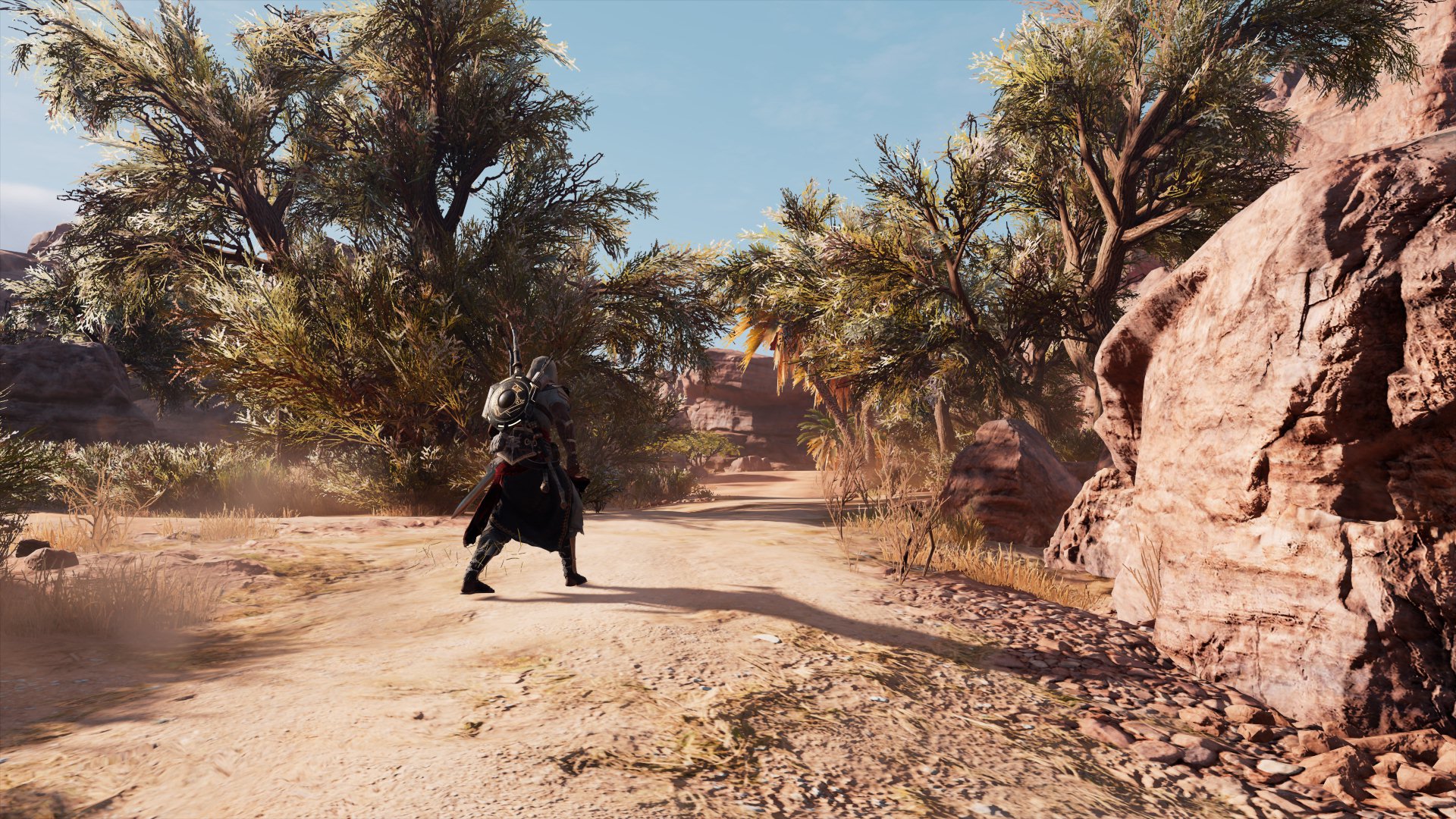
Assassin’s Creed Origins: The Hidden Ones adds a 10-hour chunk of additional content to the base game’s progression, although it doesn’t offer radical improvements or unique content that can’t be found across the vast map of ancient Egypt. With a short and simplistic premise to its plot, the Hidden Ones lacks the surprises I’ve seen in the original main questline, however I wouldn’t call the story here boring by any particular standards. Along with a new region, The Hidden Ones brings the same activities from the main game: treasure locations, enemy camps and side quests are plentiful, and once again, revealing the map is done by entering a region. The Sinai oasis doesn’t differ much in types of biomes present on the map from the base game, however it is a significantly more mountainous region which sometimes necessitates more climbing than one would like. All in all, it is more of the same like the main game, which isn’t necessarily a bad thing as Origins is an excellent game to begin with, but The Hidden Ones perhaps plays it too safe for the most part, and won’t offer players any radically new content. But if you wanted more of Assassin’s Creed: Origins, then The Hidden Ones offers a new plotline spread across Sinai’s 3 sub-regions and with added exploration and side questing, offers around 7-10 hours of additional content for the game’s fans to enjoy.

20180325184336

The Hidden Ones takes place 4 years after the conclusion of the main plot, and tasks Bayek with travelling to the Roman-controlled peninsula of Sinai to assist the Hidden Ones (or the Assassins’ Brotherhood in this game) in distress. The plot’s premise starts fairly basic, with 3 main targets to eliminate from the offset across 3 main quests (which I should add are very generous with the amount of XP they reward the player with), and then grows a little more through a few additional quests that lead to the head of the 3 main bosses from before. There are few surprises along the way, and the Hidden Ones has some interesting twists, but other than that, it is a very familiar structure to the base game, but the plotline is much simpler. The recommended starting level for the Hidden Ones is level 38, which only takes a few levels to get to upon completion of Origins’ main plot, however I’d point out that the best time to start this DLC Is around level 40-41. The main quests go from level 39 to level 43 in a quickly manner, so some might want to start the DLC at a later point in character progression, as enemy camps usually feature enemy captains at +2 levels than the main character, at least in my playthrough.

The new region of Sinai is comprised of 3 sub-areas, with 2 village settlements and numerous unknown locations to visit, which range from destroyed temples to large-scale Roman citadels up in the mountain ranges. Visually, the location is no different from any other region in AC Origins, although due to the base game’s vast diversity in regions, the DLC feels rather bland given its made up of mostly mountainous regions. These might be minor complaints, but considering it is a DLC piece, smaller diversity would be expected. No major cities exist in this region, which feels a bit like a step back as there is no detail to be found in the game’s settlements apart from the vastly-detailed temple in the upper settlement on the map. Still, given that the following DLC Curse of the Pharaohs features a large-scale city, as well as plenty of supernatural elements. The Hidden Ones plays by the book: kill 3 bosses followed by eliminating their over-arching leader. As I’ve mentioned above, the Hidden Ones doesn’t offer anything radically new to the player, however it is still a solid piece of additional content for those who may want to enjoy more of the Origins gameplay but have completed 100% of what the game had to offer.

20180326174937

The exploration aspect still remains interesting, as are additional quests the player can pick up to level up before the next main quest. There are still quite a few question marks to find across the region map and many enemies to fight along the journey. The enemies are exclusively Romans, however enemy diversity is still all accounted for, ranging from weak archers and topping out with giant guards with towering shields. The tension of infiltrating enemy camps in stealth still remains, especially if you aim to avoid detection entirely, and increases when you do screw things up. Combat requires precision and skill just like before, but in a fort, you’re sometimes bound to be stuck up against 7 enemies with shields along with a group of lesser foes (it happened to me once and I barely avoided getting killed). The Hidden Ones really doesn’t differentiate much from the base game, and while it does offer a few more hours of plot and the same exploration and challenges of the base game, this DLC plays it completely by the book, which is still not a bad thing. There isn’t much else that comes to mind when talking about the Hidden Ones, and it is just a short chunk of content for those who wanted more of AC Origins, which brings me to wrap up this review.

20180325192225

The game’s Photo Mode allows to capture some incredible screenshots

Despite some complaints I have with the Hidden Ones, it is a very well-rounded piece of additional content to enjoy, and completing its additional tasks is still as interesting as before. Side quests are designed in the meaningful way, which is where AC Origins really shines, and very few include the annoying escort quests we’ve come to expect from Assassin’s Creed, however NPCs in this title certainly have the courtesy to match the player character’s pace. The new region doesn’t offer anything new at all, and looks quite the same as the base game’s biomes, but it is not a bad thing for a small DLC pack. The region of Sinai still packs plenty of enemy camps and different tombs to explore, and with all side questing, takes roughly 7-10 hours to complete that counts as a considerable chunk by usual DLC standards. All in all, it’s worth getting if you really enjoyed Origins and there is plenty of content on offer for the price, but don’t expect it to offer any radical improvements or the mystique plot available in Curse of the Pharaohs. While the Hidden Ones plays everything safely by the book, it still succeeds at what Origins did best and that is never a bad thing if you did enjoy Origins. It’s a decent chunk of additional content that offers more of the same, but given how well the base game has been made at the start, I’d take more of AC Oigins anytime and would recommend it to others.
StarCraft Remastered Review – The Definitive Way to Experience the original Brood War

StarCraft_2018_03_22_00_14_10_426.jpg

Developer, Publisher: Blizzard Entertainment

Release Date: July 30th, 2017; Reviewed On: PC

PC Specs: Core i5-6500, 16GB DDR4 RAM, Gigabyte GTX 1070 8GB


StarCraft Remastered feels instantaneously familiar to those who would have sunk hours into the original Brood War 20 years ago, and through an extensive set of visual upgrades, Blizzard has improved significantly upon the game without altering its gameplay formula. It may be a hard sell for new players, given the continued success of StarCraft 2 on PC throughout the 8 years of its existence and Blizzard showing no intentions to stop with the updates, but StarCraft Remastered offers something different: a chance to experience a popular PC classic running on modern systems with support for up to 4K resolutions. The Remaster offers a plethora of visual improvements, all of which serve to enhance player experience, however the gameplay was left completely unchanged, which in some cases can serve to StarCraft’s detriment more than its advantage. Seeing a similar design philosophy, few differences can be drawn between StarCraft Remastered and its original release apart from visual upgrades, although the excellent execution of the re-release makes it a definitive version to experience, and frankly, StarCraft Remastered proved to be a large success as Blizzard still tends to enjoy an expansive fan following. StarCraft Remastered is not ideal, and drawing comparisons with StarCraft 2, the gameplay left me with something to be desired, however with that said, StarCraft Remastered is a perfect nostalgic trip into my childhood, which makes the flaws apparent in this version barely noticeable as it would for many players.

StarCraft_2018_03_22_00_15_12_117.jpg

Texture detail is noticeably sharper

StarCraft Remastered looks about as good as you’d expect from a sprite-based real-time strategy, and even sharper textures do not mitigate the outdated visuals. Despite that, the improvements are sharply noticeable, from extensively improved detail in the units and buildings to smooth sailing 60 fps framerate. Those improvements alone make the game worth its retail price, and while the original Brood War has been updated to support modern systems and is available as a free download, the two experiences share little in common overall. StarCraft remastered of course offers extensive resolution options that match modern standards and is certainly far more enjoyable in full screen mode, while the increased framerate additionally benefits the gameplay to a significant extent. The completely original gameplay, on the other hand, leaves some improvements to be desired in places, such as AI pathfinding or the ability to control more than a dozen units at a time, however preserving the original Brood War experience in full was perhaps the leading idea here. Frankly, the remaster proved to be quite successful, and Blizzard’s expertise shows through and through when comparing the updated release side-by-side with the original. Add in an updated multiplayer mode with fairly stable servers and a proper ranker ladder system, and StarCraft Remastered is the definitive gateway to experience the original game, which surprisingly aged quite well for a sprite-based RTS.

The extensive array of visual improvements is immediately noticeable, and StarCraft Remastered’s graphics convey that most effort has been directed toward this part of the game. While if won’t offer an extensive menu of options we’ve come to expect from all major PC releases, StarCraft features all modern resolution options for visual scaling, and given its age, the game is not a particularly demanding system hog. With an additionally upgraded framerate, StarCraft Remastered runs incredibly smoothly, and comparing with the original version, this is one of the best improvements overall. While the original gameplay doesn’t exactly demand fast response times, the better framerate is a nice feature to see, and a fluid 60 fps is a significant leap forward from the sluggish-feeling original. Texture detail shows a significant improvement as well, and the increased resolution of assets allows to see the units in much sharper image quality than before. Pitting the remaster against the original reveals extensive graphical improvements, although in 2017/18, the game has no hope of visually competing with other major releases, but then again, that wasn’t the point. Although these two improvements are major centers of attention in StarCraft Remastered, digging further reveals additional visual improvements that can be quite pleasing for the eye. Character models in briefing screens have seen significant remodeling, and instead of static images, these are now fully-rendered 3D objects, and among other non-significant improvements, add to the overall flare of the game. Again, StarCraft Remastered is not bound to impress anyone despite its upscaled visuals, but significant effort shows throughout to demonstrate Blizzard’s continued dedication to this series.

StarCraft_2018_03_22_00_15_41_933.jpg

Game systems remain completely identical to the original, and while StarCraft Remastered feels significantly behind its successor in terms of pacing, one has to consider that Blizzard didn’t just opt to release the original’s campaigns in StarCraft 2’sengine. The gameplay holds up quite well, making the game just as challenging and addicting as before, except now you can battle it out with other players online once more. To some extent, offering no improvements whatsoever serves to the game’s downside, and the AI’s glitchy path finding in particular leaves something to be desired, as larger groups of units can easily get stuck around base structures. At the same time, the remaster abides by the “don’t fix if it’s not broken” rule, and frankly, few things needed to be fixed with the game 20 years ago in the first place, which indicates just how well the original design holds up in modern gaming. StarCraft Remastered succeeds in completely preserving the original’s core game experience, which can be attributed to fan feedback over the years, and while similar gameplay is found in the original, the remaster is absolutely the definitive edition of the game to experience. There are still some issues present with the original gameplay, however, and the army selection size could have been much bigger than a dozen units at a time like it is in StarCraft 2, which feels really awkward here when controlling massive groups, but for the sake of retaining the original gameplay, it doesn’t detract by a lot from gameplay. And while the move to avoid gameplay change can be questionable, as some elements could have brought this already-excellent game up to par with modern strategy titles, however the original game works well with Remastered graphics, and StarCraft: Brood War remains one of the best RTS games on the PC platform.

The original Brood War’s gameplay remains intact in the remaster, although feels somewhat slow by modern RTS standards. Just like its successor, StarCraft pits zerg, terran and protoss against one another in melee, custom, or free-for-all matches, with a full-feature campaign that is quite worth playing. All of the original game’s maps made it into the Remastered release, and there is a lot of diversity to be found in maps, which range from 2 to 8 players and some even have unique attributes. Compared to StarCraft 2, the original’s game mechanics are far less streamlined and micromanagement intensive, although the strategic element remains in full, with plenty of variety in unit builds to change up the gameplay. StarCraft Remastered’s additional improvements include a simple, but effective multiplayer ladder, which ranks players among multiple leagues similar to what’s on offer in StarCraft 2. While it may not be an extensive overhaul some hoped, the fact players can still enjoy the vanilla StarCraft experience on stable servers speaks of Blizzard’s dedication to the massive e-sport title and even StarCraft 2 is now almost a decade old. With all improvements combined, StarCraft Remastered proves to be the definitive version to experience the original game, and both improved graphics and original gameplay make it a fun RTS to play versus AI or other players.

StarCraft_2018_03_22_00_23_13_736.jpg

StarCraft Remastered doesn’t change the original’s formula to any extent, and fans of Brood War will certainly appreciate playing the newer version. While the original StarCraft can still be enjoyed on modern systems and is available as a free download, the remaster streamlines the experience by bringing improved graphics, increased framerate and updated multiplayer components. With an admission price of under $20, it isn’t a hard sell, and while newcomers might want to be cautious coming to this title from StarCraft 2, fans will appreciate the original experience that’s been preserved in a better visual package. The gameplay shows its age, and won’t be for everyone, especially as its much less fluid than StarCraft 2’s game mechanics, but if you grew up on the original StarCraft and Brood War, then I can definitely recommend StarCraft Remastered. It is the best way to currently experience the game, and modern resolution scaling with a smooth 60fps make the game look fairly decent on computer screens. Blizzard’s decision to preserve the original gameplay ultimately paid off, and while even I prefer the streamlined features of StarCraft 2, the remastered edition still puts me on a nostalgic trip into my childhood. And 20 years following its release, the original StarCraft is still a fan-favourite and holds up really well among modern games with the Remastered edition.

PUBG Mobile Review – Your favorite battle royale now available on smartphones

Screenshot_20180315-235932.png

Developer, Publisher: Tencent Games

Released: March 20th, 2018

Reviewed On: Razer Phone, Android; Specs: Snapdragon 835, 8GB RAM

Available via: Google Play

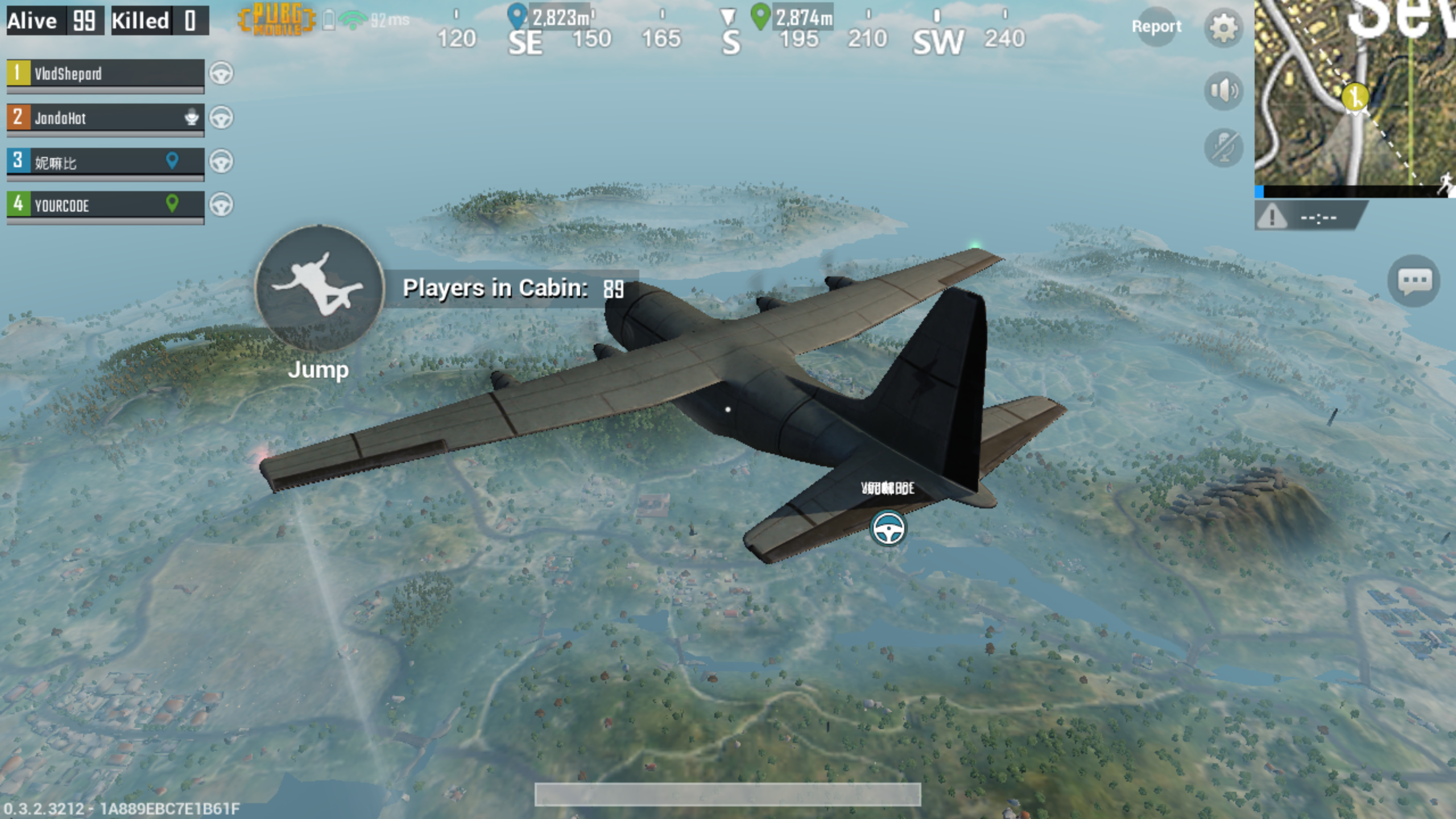
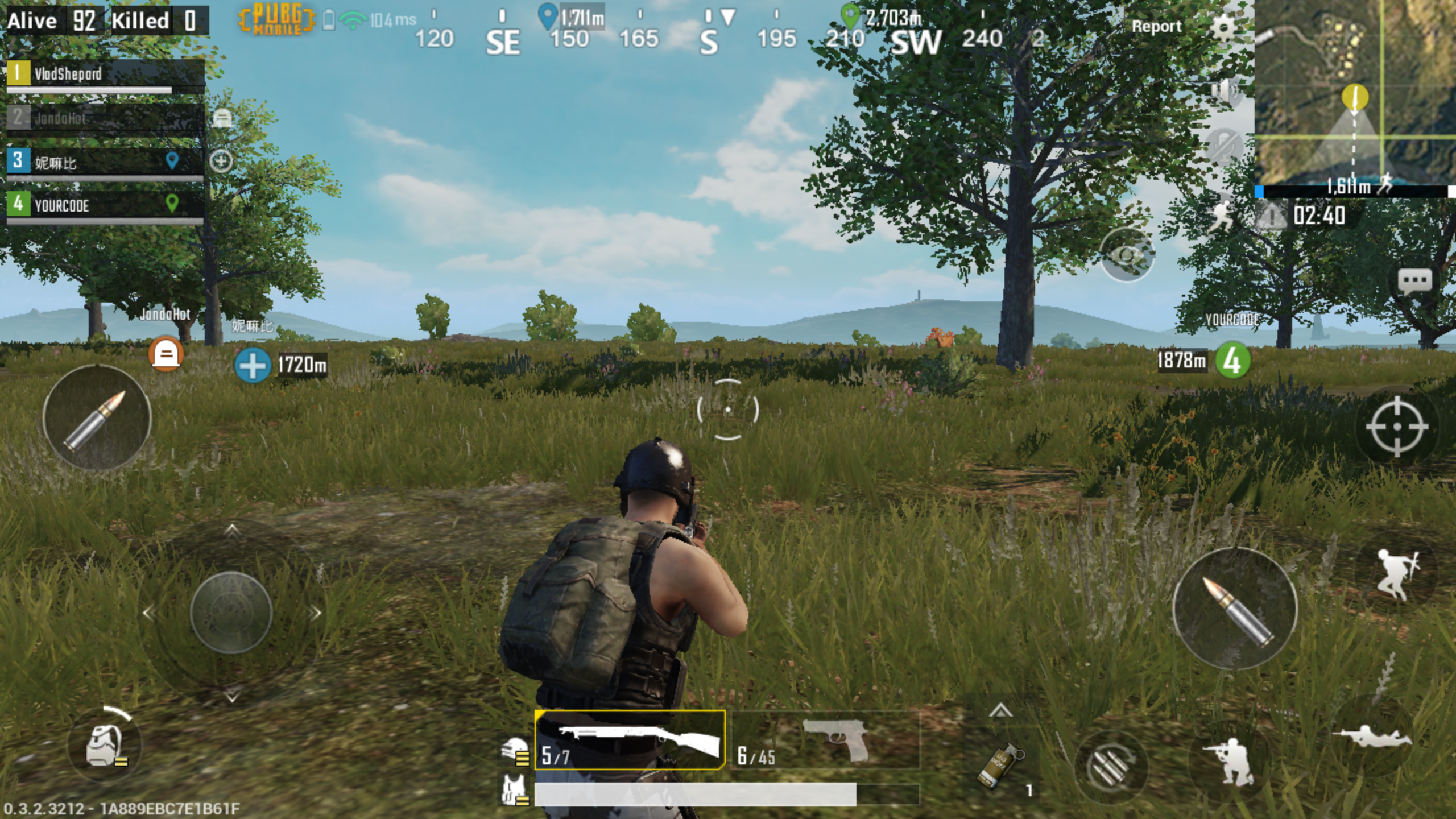
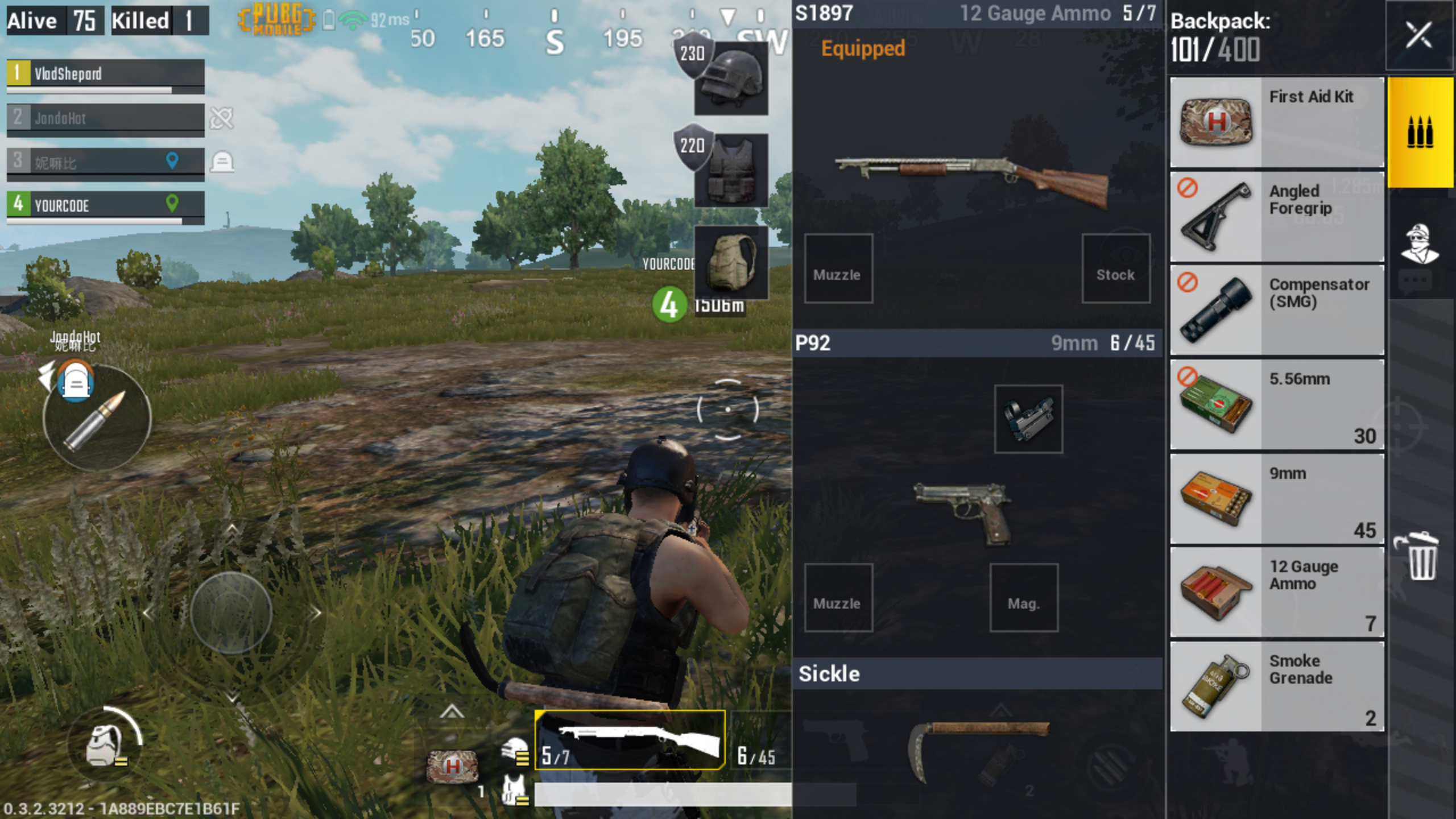
It is fairly unusual to see a recent game ported to mobile devices, and one that’s as popular as Player Unknown’s Battlegrounds. Launched in the US and Canada, PUBG Mobile brings to the table the full set of features available in its PC and Console versions, albeit at a severely reduced level of graphical detail. While looking unimpressive, PUBG Mobile still manages to impress with its battle royale multiplayer experience and on flagship phones, the game handles smoothly despite an extensive set of animations and reasonable graphics for the mobile platform. In addition, the entire experience is available as a free download, which is a fairly great bargain to begin with, and PUBG Mobile excels the quality of most gaming titles available on Android and iOS. As I haven’t played PUBG on the PC platform, I will discuss all of the game’s features in this mobile review, as well as contrast the mobile version in places it differs from other release builds. But on the whole, PUBG Mobile is a faithful port of a popular game that retains all of the original gameplay features and its free-to-play asking price is a strange, but worthwhile proposition for mobile players.

Screenshot_20180316-000141.png

Tencent Games surprisingly succeeded at adapting the original Battlegrounds’ formula to touch-screen controls, and PUBG Mobile handles surprisingly well even on smaller phone screens. It is not completely ideal, and the screen comes off quite busy which can be an annoyance when playing the game, as the numerous control keys occupy the screen and ultimately reduce players’ field of vision, however I never found the visual buttons to interfere on my gameplay. On a 5.7” wide screen, PUBG Mobile looks fairly decent, and the player field of vision is expansive enough to notice most elements of the world. Enemy spotting can prove to be difficult at most times, although not completely impossible, which makes for additional tension in the 100 player free for all matches. The gameplay experience is not designed for everyone, and there are some flaws to be seen in the systems PUBG offers, but there is something enjoyable in a game that offers different gameplay with each multiplayer match. PUBG’s uniqueness is something fresh for both major home and mobile platforms and while the mobile version lacks behind in graphics, it still offers all the features found in the $30 Battlegrounds release on the PC and Consoles.

PUBG Mobile just like its bigger counterparts is a multiplayer battle royale third-person shooter with tactical elements and has 100 players battle it out on a large island map. The trick is to keep constantly moving, as the player dome decreases over the period of time, pushing the players towards the center of the map as player count gradually reduces over time. It’s an interesting game mechanics, although we are seeing it more often with the likes of PUBG and Fortnite, which is also bound to release on mobile platform sometime throughout the year. After a soft launch in Canada, PUBG Mobile is now available as a free download on the Google Play Store and the Apple store, which is a convenient pricing release, but also raises numerous questions since the game on other platforms retails for $29.99. With only reduced graphics, PUBG Mobile offers an excellent third-person shooter experience on the mobile platform, with few games to match its overall quality.

Screenshot_20180316-000834.png
PUBG’s island map is very vast, which makes hunting enemies interesting

PUBG’s controls take a little while to get used to, and rotation feels significantly slower if you’ve played the PC or Console versions. All player actions are represented on the main screen, and PUBG includes a diverse amount of animations that look fairly impressive on a mobile device. With additional inventory management elements and a large weapon variety, PUBG Mobile really shines on the platform with a feature-complete gameplay rarely seen out of the Google Play Store titles. To balance for difficult controls, the game additionally features auto-aim, which is helpful to target other players but won’t eliminate the challenge of playing it on a touch screen. Controls are intuitive enough once a little time is spent with the game, however PUBG mobile would greatly benefit from a controller such as the MOGA Pro, which will greatly expand player capabilities to a significant degree.

On a decent flagship device, PUBG plays quite smoothly, which can be a surprise given the fact the Xbpx One version still handles the game on the poor end of things. Between 3 graphical presets, the game automatically selects the best running option, and of course on the Razer Phone (read my review here), PUBG runs flawlessly with detailed graphics detail. There won’t be any Razer-specific features to be found, and at least so far, the game won’t benefit from the phone’s smooth 120Hz framerate. PUBG handles smooth enough to be running at 60 fps in its multiplayer matches. At the same time, the graphics are noticeably weaker and the levels of detail are severely lacking in the port compared to original versions, however it is to be expected considering the full PUBG experience has been replicated on the mobile platform. Building interiors are mostly missing, and the game’s textures look very bleak when compared to the major game. With that said, on its own, PUBG Mobile doesn’t look too bad for its platform, however players would need a decent device to experience the game in its best quality.

Screenshot_20180316-000530.png

PUBG additionally features gathering elements of a sort, by dropping the player practically naked from the plane above, and forces competitors to seek out weapons once they hit the ground. The weapons are distributed at random, and while so far I discovered plethora of supplies inside the buildings during each match, although the game’s random nature guarantees unique matches for at least half the game. PUBG Mobile includes only one large island map from the two locations available on PC and consoles, although its scope far exceeds most gaming levels.  These can be quickly traversed using vehicles, although those are spread at random and can be difficult to locate out in the open, which makes them fairly rare to use. For some added simplicity, PUBG Mobile includes bots in its multiplayer matches that allow lesser skilled players to acquire kills that would otherwise not be available. The multiplayer matches are very stable, although I’ve experienced some crashes during my playthroughs, but overall the experience handles solidly and for intense multiplayer matches, the connection works great enough to run without lag.

PUBG Mobile has been significantly streamlined to make it playable on new devices, and while it means that many of the original’s game systems are fully automated, some of it works for the better of the game. The player character automatically picks up weapons, ammo and any attachments, which simplifies the gameplay, however as the game auto-equips weapon attachments, you’ll more often find yourself with an unwanted mod for weapons you’d prefer to use. And in the middle of action, last thing one would want is to fiddle in the inventory, as PUBG doesn’t get paused by pulling up the inventory or the map screen. To its credit, PUBG Mobile’s simplification serves to the game’s advantage, and with lesser micromanagement, players can focus on the action in front of them. On top of that, PUBG Mobile’s user interface has been further modified to suit the mobile systems, with squad teammates being displayed in the direction screen in their relative distance. And apart from improvements, PUBG Mobile carries over all of the Battlegrounds’ gameplay systems that look quite impressive on the Android platform. At the current moment, PUBG Mobile doesn’t feature cross-play with the PC and console systems, and even across mobile, bots occupy beginner servers to allow new players gain skill over time, however it is still the same battle royale game that exists on more powerful gaming systems.

Screenshot_20180316-000804.png

Given it’s available for free, I was going into PUBG Mobile in a sceptical mood, especially expecting micro-transactions or some sort of a slow progression system that would necessitate additional spending. But nope, PUBG Mobile not only didn’t need to introduce any of the gameplay-ruining elements, and even over multiple matches, I’ve never experienced a single ad in the course of the game. That is quite impressive, given every free-to-play game tries to exploit the player in one way or another, and even full-price AAA releases have been toying with the idea lately (we all remember the giant Star Wars: Battlefront 2 controversy that was the biggest backlash against loot chests). In any event, PUBG Mobile can be applauded for avoiding any of these temptations of the mobile market, and does away with any annoying elements of free-to-play releases. It’s quite strange to see a leap from $30 retail price on the PC and consoles to completely free on mobile, which is bound to attract more players over. despite the mobile platform’s limitations. PUBG Mobile also offers weekly leagues and daily login rewards, which are the only things present that relate to mobile gaming market, but surprisingly, they actually make the game more fun than its PC counterpart from what I’ve heard.

PUBG Mobile offers a full-feature experience unlike any other platform, and benefits greatly from preserving the qualities of its release on the major home systems. At the free to play price point, it is hard to beat what’s on offer here, and PUBG’s unique multiplayer experience makes the game worth replaying over multiple instances, and on the go, this shooter delivers a stellar experience. Although the game’s graphics leave something to be desired, its qualities lie in survival gameplay and the varied shooter experience that forces 100 players against one another in the ever-shrinking dome, and the exploration element is necessary to make sure players are given enough tools at their disposal. The expansive map makes action rare, which may be one of the only few downsides to PUBG’s gameplay, however eliminating other players is extremely satisfying in this last-man standing multiplayer shooter. And at the free price point, there is an extensive array of features present to make the game stand out among the general output of the free-to-play industry on mobile. PUBG Mobile handles great, and if you have a powerful phone to play it on, the experience is very satisfying.